Two years ago I was honored to have been one of the recipients of the Suffrage Science award. Launched in 2011 by the Medical Research Council Clinical Sciences Centre, this program involves heirloom jewelry, originally designed by art students at Central St Martins College, being passed down from one ‘generation’ of women to the next.
As I wrote about at the time, I received my brooch from the broadcaster and writer Georgina Ferry, who had received hers from the biographer Brenda Maddox. Unlike all the other branches of the Suffrage Science tree, ours organically became dedicated to those who write about science, both in fiction and in fact.

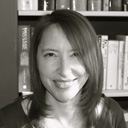
When it became time to nominate my successor, the choice seemed obvious.
Pippa Goldschmidt, a former scientist, has a PhD from the University of Edinburgh and several years of postdoctoral research experience in astronomy at Imperial College London. In true ‘two cultures’ style, she also has an MLitt in creative writing from the University of Glasgow, and has been writer in residence in several scientific establishments.
I first encountered Pippa in 2009 when she submitted a short story to LabLit.com, the science/culture web magazine that I founded and edit. It was beautifully written, funny, and with an underlying trace of melancholy – which I now know are hallmarks of her literary style. Her first novel, The Falling Sky, was shortlisted for the Dundee International Book Prize and follows a woman astronomer struggling to make sense of her life, both in and out of the lab.
Her collection of short stories The Need for Better Regulation of Outer Space was longlisted for the Frank O’Connor International Short Story Award. Her short stories, poetry and non-fiction have been published in a variety of magazines and anthologies, and also have been broadcasted on Radio 4.
She says that her stories tend to be inspired by “real, imaginary, and bizarre aspects of science.” I think it is enormously important to encourage and inspire writers to deal with science and scientists in their fiction, and Pippa adds a strong voice in this literary endeavour.
I was niggled with a bit of imposter syndrome at the awards ceremony at the Royal Society last night, because all the other women giving and receiving awards were there because of their amazing scientific achievements. But then, I reminded myself of the power of words to inspire and enlighten people about scientific research – not just as a palatable way to impart scientific information, but (much more importantly in my view), to illuminate the hidden world of scientists and breathe life into a profession that is often misunderstood.