In which we struggle: mental health in higher education

It is no secret to anyone who works in a UK university that our students are struggling: statistics from 2010-2011 suggest nearly 6% have reported a mental health condition. Confidential surveys reveal a much higher number; for example nearly 60% disclosed a mental health issue in 2002.

This is a worrisome plague for any academic who works closely with students and cares deeply about their plight. But I sometimes worry that amidst this tsunami of student distress, another storm is brewing which is less recognised and for which the mitigations are much less developed.

I am referring to issues amongst us academics ourselves. A recent survey on the mental health of higher education staff concluded that their mental wellbeing was poorer that what is seen on average in other professions. Nearly 80% felt that their mental health was not viewed to be as important for the university as productivity, with the same proportion saying they needed to “work very intensively often or always” and about half, facing unrealistic time pressures “often or always”. (I am surprised by the latter figure – who are these mythical 50% who do not?)

Anyone within the system will feel the truth behind these statistics, and will know someone who is struggling (or will be struggling themselves).

Meanwhile, a recent government report emphasised that many UK universities are in serious financial trouble, the obvious remedy for which is to admit more students. Yet if increased student numbers are not balanced by more academic staff, they just become straws heaped onto the camel’s back. Unfortunately, the opposite is happening: academic staff are actually being cut.

Like everyone else, I’m feeling the pressure. In fact, approaching a 20-year anniversary at my current university, I can’t remember any period when I felt more overworked and stressed: everything is more pressured, more critical, closer to breaking point. I know from the back channels and corridor conversations with my colleagues that we are all feeling the pinch, and some of us are struggling more than we might let on in public. In fact, I sense an undercurrent of danger in the current situation, and wonder how long it can go on. The university tries its best, suggesting “wellness initiatives” like growing tomatoes from seed or joining the college choir, but ultimately, the only thing that will quell this epidemic is an easing of workload. And I can’t see that happening anytime soon.

I don’t have any magic solutions. I think if you are struggling, you need to find someone to talk to – a colleague, a friend. Try to form supportive networks. No matter how underwater you may be, take the time to do things for yourself: sleep, read, exercise, be with friends and family. If none of this works, seek professional help, such as it is.

If you yourself are okay, keep an eye on your colleagues – often they hide their struggles, because we are taught early on in our careers not to show weakness or vulnerability. Secure your own mask, and then help others.

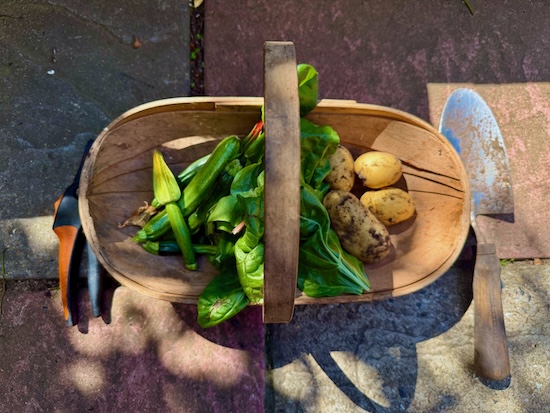
I still maintain that, despite everything, academia is one of the best jobs in the world. We are set loose in a garden of the mind and asked to harvest its fruits. Yes, we battle daily with pests and weeds and inclement weather, but every once in a while, something perfect ripens amidst the jungle of chaos, and the whole endeavour has been worth it. We just need to make sure that we can fight the things that stand in our way without losing the sense of curiosity and joy that attracted us to this crazy undertaking in the first place.

Posted in Academia, Students, The profession of science, Work/life balance | 1 Comment

In which we keep below decks – for now

Everyone I know in academia is hanging by a thread.

The profession has always been fraught, but in the past few years I’ve sensed an edge of desperation in many of my colleagues, especially those who heavily teach. We have been facing rising student numbers every September, each new term a stress-test of what is theoretically possible. And yet each year, it makes me proud that we give more of ourselves to maintain the excellence we always somehow manage to deliver. Colleagues who both teach and run research teams, and/or have clinical or hefty administrative roles, are even more encumbered.

In theory there might be a tipping point beyond which we simply break, but thus far, most manage to remain resilient.

Or at least I hope so. Thinking about it, it might be difficult, sometimes, to recognise when a colleague is in danger. I think and hope that most of us have a support network to buffer all this, but in my experience, there is a tendency in academia to put on a brave face. Few would like to admit publicly that they are anything but successful, efficient, confident and fearless. Some are happy to confess their difficulties one-on-one over coffee or a quick corridor chat, and I find myself spending a lot of time ministering, because I am a good listener and I genuinely want to help. The truth is, however, that sometimes I struggle to find a listening ear for my own troubles, someone who is going through similar things and can truly relate, unlike a non-academic friend or family member whose support is dearly appreciated, but not always enough.

Or I do identify that specialised sympathetic ear, but end up hesitating: everyone is just so busy; do I really want to make someone else’s load heavier by dumping my issues on them? Isn’t it better for them if I just steer clear?

I have been going back and forth over this dilemma for the past year, as I navigate the choppy waters of my own anxieties. My biggest worries involve lab finances, securing team continuity with sufficient grants, and supporting departing team members to successfully land their next position. But on any given week, there are dozens of other bitty items and snippets of bad news: collectively, they form sizeable waves that threaten to upend my craft.

Like any good scientist, I’ve been experimenting with how best to deal with it. In the past, I seldom shared anything, mostly because my network was paper-thin, the place where I was embedded not being conducive to those sorts of relationships (enough said). And I got pretty good at being self-sufficient: it was lonely at times, but largely effective. But the problem is, those muscles need exercising, so if you start to rely on others, you forgot how to be that tough lone wolf. I visualise these two opposing parameter spaces as ships: one small, claustrophobic and solitary, but perfectly safe; and the other more sprawling, effective and comfortable, but with unreliable decks that might shatter at any time, because they rely on input from, and trust in, others – others who are barely holding their own ships on course. There must be some balance to be struck between these two extremes, but thus far I have not quite managed it.

At the moment, I’m hunkered down in my confined space, hoping that the current storm will blow itself out with minimal damage to my vessel.

Afterwards, maybe I’ll decide to come up on deck and ignite a distress flare.

Posted in Academia, Research, Staring into the abyss, Teaching, The profession of science | Comments Off on In which we keep below decks – for now

In which no scientist is an island – but that’s what we signed up for

I’ve washed up on the shores of another weekend, almost limp after two weeks of protracted stress. Throughout this, my unsettled, cortisol-fuelled moods have mirrored the erratic nature of the recent weather: violent cloudbursts, hailstorms, rainbows, periods of brilliant sunshine dazzling off the wet London pavements. I see the world, often, through an edge of hunger, as sometimes I fail to find the time to eat properly. Things are supposed to be easing off academically this time of year, yet I find myself just as crushed under a too-long list of urgent deadlines as ever.

In this fortnight period, two grants were funded and one was submitted. I recently tallied up the lab’s manuscripts in various stages and counted a whopping seventeen: one in press, four in various stages of review, four about ready to submit, three in preparation and five in progress where I appear as a co-author: no wonder I’m feeing the pressure. I’ve given an invited talk at the spring conference of the British Society for Antimicrobial Chemotherapy, am herding some changes to my course through the approvals process, and continue to field lots of queries from prospective undergrad students who still haven’t made their decisions. Coursework marking is starting to peak.

Amidst all this, my team members are generating large amounts of data and seek me out for ideas, advice, and my blessing – some days are so intense that I return home with an aching, over-exercised brain that can no longer perform, and which sadly cannot sleep through the night. I feel simultaneously at the top of my game and yet hopelessly behind. Sometimes, it is only the words of encouragement from my most trusted colleagues that get me through the day – even as I worry that relying on that support is somehow a dangerous weakness.

It has got me to thinking about how lonely it is to be a lab head. We are not really prepared, let alone trained, for the intense responsibility of looking after a bevy of young, hopeful and talented individuals who are relying on us to keep the money flowing and the papers on track amidst the never-ending chores of teaching and admin. It is an intricate juggling act that requires tough decisions – intellectual, financial, strategic – and there is usually never just one obvious solution. Yet we are expected to navigate these dangerous waters with very little support. Things get easier with experience, but even today, I am sometimes confronted by one of my team asking me, What should I do?, and the honest answer is, I have absolutely no idea.

I was talking this over with a friend recently, and we came to the conclusion that the problem with modern science is that, generally speaking, most of us are so busy chasing the next grant that it is a concentrated struggle to deal with the experimental programmes to which one has already committed. I liken it to spending hours crafting the perfect meal, but never having a chance to sit down and enjoy eating it. For this reason, I am very careful to budget in a large amount of regular time to meet with my crew one-on-one, to make sure things keep on track. But it is not easy, and the time pressure I’m under from my collective academic portfolio means that a lot of work spills over into evenings and weekends – and indeed to other odd times. (Just yesterday morning, I found myself having to sit down on a bench on the District and Circle Underground line platform at Victoria, my laptop wired up to my phone signal, bone tired amidst the blur of commuters rushing past left and right, to dash off some last-minute grant edits to a collaborator.)

The solo PI existence isn’t optimal, even though everything in academia is wired to facilitate and reward that restrictive model. The informal solution is to find like-minded collaborators who can complement your skills and take on some of the intellectual burden – and for whom you can do the same in turn. I am very fortunate to have hands-on collaborators who help both to ease my load and also offer free therapy, but ultimately, we are all of us alone in this wonderful, frustrating and utterly bizarre profession.

So if you feel as if you might be making things up as you go along, do not despair. Seek out your allies, keep them close, and never, ever give up.

Because after the hailstorm, there will almost always be a rainbow.

Posted in Academia, Research, Scientific papers, Scientific thinking, Teaching, The profession of science, Work/life balance | 2 Comments

In which the road forks and the future splinters

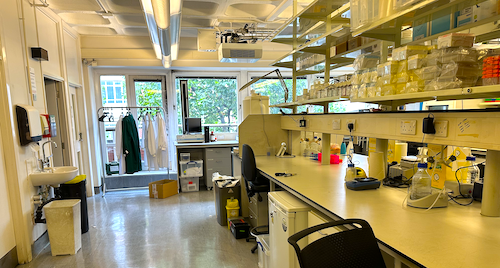
A lab with bright light coming through the window

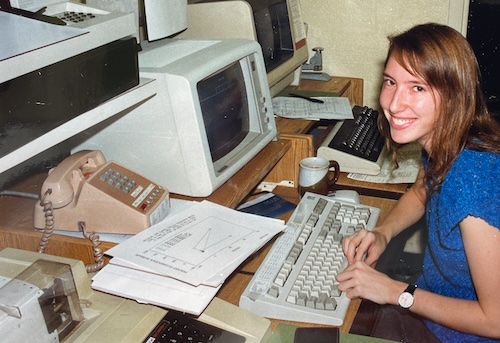
The end of a long road

It’s that time of year when prospective undergraduates are considering their various offers to study at university. As the Admissions Tutor for a large BSc programme, I’ve been spending a lot of time fielding hundreds of queries by email. And as a novelist, I am particularly sensitive to the backstory behind all these raw dramas – each a young person, often wanting to become a scientist and struggling with this pivotal decision in the face of a world that seems too big to truly know the right answer. In their minds, this choice is one of the key inflection points of their lives.

I keep my responses helpful and professional, but what I really want them to know is that no decision is right or wrong – that their life will unfurl and bloom no matter what they decide. There is no control twin to take the other path, against which outcomes can be compared. It can all swerve off-script but then eventually, come out right.

This is what I don’t tell them:

Once upon a time in a land far across the sea, a little girl dreamed of becoming a scientist.

The dream came from literally nowhere: no family member had ever expressed an interest in science, and she knew no role models personally that might have ignited this spark. She watched documentaries on public television, and devoured books about science from the library, including a fictional series about a boy who solved scientific mysteries with a supportive (though disappointingly submissive) female sidekick and a nutty old professor. One of her first memories was a flickering black-and-white square with faraway voices talking about small steps and giant leaps.

She collected fireflies in jars, swooped butterflies into her net and looked at planets and moons through her father’s telescope. She studied hard and did well at school, suffering the small cruelties doled out to students who enjoyed learning. She gained a liberal arts degree at a prestigious undergraduate institution in the Midwest, majoring in Biology but broadening her viewpoint with a wide variety of other courses, from archeology, geology and literature to Ancient Greek, linguistics and ethnomusicology. She waved placards at demonstrations, played tenor pans in the school’s steel drum band and – living in the shadow of a massive government loan – was able to afford food and toiletries only by working multiple odd jobs on and off campus: drawing advertising posters for the college catering company; doing admin at a local art museum; scrubbing the excrement from mouse cages in the science building. Each afternoon she parked her rusty bicycle outside the massive concrete cube of the main library and spent more than eight hours a day studying.

In her final summer of university she spent a few months in Bethesda, doing research at the National Cancer Institute. The viral papilloma genes she studied made no sense to anyone, a vast black box of mystery. Today it all seems obvious, but then, she felt like no one would ever understand – and that was exciting, but it also made her a little wistful. She cultured cervical cancer cells, treated them with cytokines and chemotherapeutics, and did flow cytometry with a middle-aged tech who liked to slurp icy soft drinks from a straw as she operated the machine. During one bomb threat evacuation, she looked up from the lawn and through a window high above, saw firemen trying unsuccessfully to pull a resisting white-coated researcher from his experiments.

The summer was long, and hot in more than one way; during one lab mishap, she spilled radioactive iodine-125 (half-life, 59.49 days) onto her favorite boots and some grim-faced white-coated men came to take them away. (“When can I have them back?” she asked. “In about 150 years,” came the terse reply.) She doesn’t remember how she got home in stockinged feet, but does recall that the postdoc in charge of her got a bad telling off from the department head. This wasn’t the same post-doc who sneeringly told her that girls made terrible scientists, so why was she even bothering, and convinced the department head allow him to use her as a slave, photocopying hundreds of articles from heavy journal compendiums in the dim NIH library stacks.

There was never any question that she would earn her PhD and become a jobbing scientist. The path was as well-lit as a motorway, pointing in only one direction. She got into her first-choice graduate program in the Pacific Northwest and finished six years later with half a dozen papers and several postdoctoral job offers – one made on the spot at a poster session at a high-profile East Coast conference. The future seemed bright.

The postdoc in London started out well, but somewhere along the way it all began to unravel. The lab head decided to move his lab to America eighteen months in, and she didn’t want to go back. She moved to the Netherlands for love and joined an exciting start-up company. Four years later the venture went bankrupt and the dream seemed over. Unemployed, the novels started pouring out of her as if she was possessed, but she couldn’t find any lab willing to gamble on someone on the dole. Eventually she accepted that the road had ended, and went into scientific publishing back in London, the only place that still felt like home. Many years later she found her way back to academia, and after a few false starts, found the line of research that finally clicked.

Fast-forward to now, and she is well-established, enjoying the culmination of all her dreams. Maybe she has never been happier, caught in the confluence of having the right team, sufficient funding, the perfect experimental system, the ride-or-die friends and collaborators, the international standing, the few years’ distance from a toxic situation that nearly broke her and – after two decades at the university – the proleptic appointment that has finally given her career security.

So many infection points, so many agonising decisions – but in the end it all came out right.

If only somehow had told her, early on, that it would. That no decision is the wrong one, that an infinite number of paths lead to happiness.

She probably wouldn’t have believed it.

Posted in Academia, Careers, Nostalgia, Research, The profession of science, Women in science | Comments Off on In which the road forks and the future splinters

In which I come home

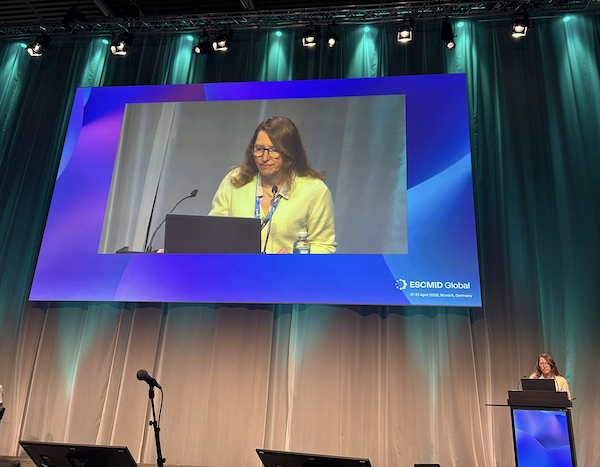
Jenny at the podium about to give a talk
Over the past few weeks, I’ve been caught in the flurry of the early-spring conference season, crisscrossing continents to take part in that most ritualistic of scientific pastimes: networking, giving talks, sliding through poster sessions, drinking bad coffee from steel containers, frequenting foreign bars, fighting jetlag and never quite getting enough sleep in a series of anonymous hotels. Business travel, something that I used to love, has now become a chore whose ending I anticipate.

Conferences were much more exciting as a young, early-career researcher, when every contact felt like an instant friend and every new city, a gift. Travel memories as a PhD student and postdoc are branded into my mind, sporadic but intense: a smoky basement bar in Kyoto. Eating street food in the sulphur-yellow air of Beijing. The leafy greenness of Cold Spring Harbor on Long Island. An ocean-side bar in San Diego, a wine cellar in Berkeley, a snow-heaped square in Boston. A boat on Bingen am Rhein, or on the Seine under a flashy Eiffel Tower. A monastery in Sicily, where the Franciscan friars rode mopeds around the estate and made morning bowls of perfect lattes and decent red wine with dinner, clay tiles flying off the roof and smashing on the courtyard during a windstorm heavy with Saharan dust. A chilly afternoon in Philadelphia with snowflakes spiralling down when, still unbeknownst to me, I carried a child that I lost a few months later. Swimming in the hot air and cool sea with other delegates in Sorrento. Stifling summers in Washington DC, in Columbus, Ohio, drugged crickets whirring in breathless hot nights. A ferry to Bainbridge Island off Seattle; a cliffside venue in Portugal; a winter restaurant with flickering candles in Copenhagen. How privileged my life has been, and how strange to now feel the same privileges to be burdensome.

When you are young, everything feels like an adventure, and your fellow travellers, like comrades in arms. When you are older, you retire to the bar with the other aging principal investigators to enjoy academic gossip and a quiet drink before tucking yourself into bed by 10 – but wake to WhatsApp messages on the lab channel, full of videos of your team riding a mechanical bull under disco lights at 1.30 AM in Nashville. And you wonder when that transition happened, and feel a little pang of loss.

But it is the domestic situation that holds my heart in thrall. When I leave my garden, I feel like I’m saying goodbye to a close friend, and when I return home, I mourn having missed the peak of this tulip variety or of that bluebell, and marvel at the three-inch layer of goosegrass that has overwhelmed everything else in my absence. My son, aged 12, going on 40, has somehow grown two inches and become twice as articulate. Time pushes forward, relentless and inevitable, whether I am there to witness the transition or not.

In the abstract, I know that scientific travel is irreplaceable. No hybrid lurking can replace the flesh-and-blood interactions of a few intense days of scientific exchange; no publication can substitute for a senior author up on the podium, publicising its highlights, and no email exchange can supersede the warm, spontaneous dialogue that happens when two or more academics put their heads together and scientific sparks fly. I’ve returned from my travels with a list of new ideas and a half a dozen potential collaborations under discussion, and I look forward to seeing how those pan out.

And yet…as I sit here on my back patio in the fading afternoon light of the weekend, I am weary of my travels and relieved to be home, the quiet center where all of my fervent ideas can rest.

Posted in Academia, Domestic bliss, Gardening, Joshua, Nostalgia, Research, The ageing process, The profession of science, Work/life balance | Comments Off on In which I come home

In which sadness serves a purpose

It’s one of those weekend afternoons when the garden is almost too beautiful. Too much. I sit here under a blanket on a deck chair in the blustery wind, trying to write, but all the songbirds have forgotten I’m here and they’re putting on a show. Robins, tits, dunnocks, wrens, starlings seethe around the feeders, splash in the fountains. In the terraces beyond, the sun is too bright to make out more than a rainbow blur of blooming.

Everything feels touched by sadness: cherry blossoms ripped prematurely off their branches and falling like rose confetti. A once-perfect orange tulip, sagging and dishevelled. Ovoid pink magnolia petals scattered across the newly sown vegetable beds. Even the fresh green tree leaves, soft as a baby’s skin, seem coded with their inevitable senescence, already foreshadowing the tired and dusty look they’ll adopt in high summer.

Of course the sadness is not an intrinsic part of these things I see. The sadness is firmly in me today, and has been these past few weeks, a filter through which all else is processed.

I am not talking about depression: to my knowledge, I have never suffered from that particular malady. My occasional low moods are not crippling, and I can bear them with little effort. Like many other people, I suppose, sadness is something that just happens from time to time. There is usually not a cause I can pinpoint. Probably it is physiological: insufficient sleep, or the aftermath of a solid stretch of excessive stress, or the consequences of sometimes being too busy to eat properly. Or there is a triggering event that on the face of it seems trivial, except perhaps it synergises with a memory of another time when something more serious was afoot, and my brain cannot tease them apart, decanting the past into the present. Sometimes I wake from tragic dreams, but while the feeling lingers, the story behind it slips away just out of reach.

There is also, of course, the ticking clock. Aging increasingly makes me feel existential. My son and I were once part of the same body, glowing and heavy with possibility, but now, his rushes towards independence and a seemingly infinite future, while mine slips away from me, becoming something foreign and strange as my own future telescopes ever more tightly closed.

Sadness can be many things. But today, I’m thinking about sadness as fuel.

In my life, I’ve been privileged to have experienced several protracted periods of sadness that catalysed a major espisode of artistic creativity and productivity. These were not merely casual “suffering to sing the blues” moments, but months of blistering fire.

The most prominent of these was when I was made redundant from the biotech company in the Netherlands. After an entire lifetime of working insanely hard to pursue my dream of being a scientist, I was suddenly wholly unoccupied, home alone and on the dole. In short, I went from sixty to zero so fast that you could almost hear the cartoon screeching, see the black marks stretching out on the road behind.

After such a shock to the system, not being sad would have been inappropriate. For a few weeks, I did hardly anything, retreating into myself and trying to work out how I could regroup and carry forward with my life. But then something strange happened, strange and wonderful. I’d been writing before that time, but suddenly, writing was all that I could do. I wrote the moment I woke up, I wrote all day, I even woke in the middle of the night to scribble notes in a pad beside my bed.

The rare few times I was coaxed away to do something social, a situation where I couldn’t turn to my laptop or where it would be rude to daydream about plots, I deeply resented the intrusion. The only exceptions were activities that fed the creative fire: novels, poetry and art that resonated rather than distracted. I remember almost having a religious experience at a pre-Raphaelite exhibition in Groningen called “Fatale Vrouwen”, and being so devastated by the ending of His Dark Materials that I couldn’t function for a few days. For my own solitary writing breaks, I’d pace a habitual quadrant near my flat in De Pijp: north along the River Amstel, across the Nieuwe Amstelbrug, south on the other bank and then across the Berlagebrug home. Walking past the houseboats on the Weesperzijde, with their tidy flower gardens, entire scenes of dialogue would channel through me like my own conscious brain was surplus to requirements. The characters didn’t just have a life of their own: I was sharing my body and brain with them – all at once.

I felt like a comet hurling through empty space, a heart of stone with a long tail of burning plasma. The words were in the tail, searing themselves onto the pages. I finished the first draft of my second novel in only a few weeks. It is probably the favourite of the three I published, and perhaps not surprisingly, it is steeped in sadness.

Sitting in the garden now, this period feels like a lifetime ago – verleden tijd, as the Dutch would say. I was young then, and my future was still nearly as infinite as my son’s. I’ve not had a true comet moment since. I find myself wondering whether I ought to ceremoniously abolish this sadness, try to make a fresh start, shed some burdensome stages in the pursuit of a more stable orbit. (As I write, NASA’s Artemis II mission is just about to swing round to the far side of the moon, so perhaps space metaphors are on my mind.)

But then I consider that my emotional load, my existential night terrors, are also part of a full life. Would it truly be better to try to paper over those honest cracks? I doubt it. Instead, I should channel my old periodic friend, sadness, into the creative life of the mind: my writing, my art, my music, my scientific theories and future experimental plans. Even if I don’t catch fire this time, a seam of sadness may at least make things more interesting.

In the meantime, I sit in this garden and I watch these birds, and the confetti rains down on me.

.

Posted in Art, Nostalgia, Staring into the abyss, The ageing process, Writing | 1 Comment

In which we tell a story: on metaphors in science and life

There is such a stark divide between those who understand scientific complexity and those who urgently need or want to. The onus falls on the former to translate their messages in a comprehensible way. Perhaps it’s a radical claim, but even though communication is a two-way dialogue, I believe that the blame for anything lost in translation lies squarely and one hundred per cent with the communicator. There is, in short, no excuse.

As my teaching winds down for the academic year, I’ve just given my last undergraduate science writing workshop – a sort of gun-for-hire side hustle that, via word-of-mouth, has gradually spread across multiple modules offered by the Faculty. These interactive sessions are not so much about technical science writing, although I do cover those aspects, but rather the strategy needed to engage readers of any level of understanding.

While I cover a lot of the basics, such as the importance of clarity, balance, brevity and understanding the needs of the audience to whom you are pitching, I think my most important lessons lie in two areas: strong story-telling, and creative techniques for achieving that in the most engaging way.

My own personal way of understanding the world involves a lot of imagery. I am forever making little sketches in my notebook, when I plan experiments or try to understand a particularly complicated paper. There is nothing that brings me more joy than a clean whiteboard, multiple colours of pen and a conducive group of colleagues happy to brainstorm. The paper just accepted for formal publication from one of my postdocs started out life as an ink drawing on a cocktail napkin in a restaurant. Pictures and mind maps allow me to boil down complexities into visual constructs, herding the elusively abstract into something tangible and, therefore, knowable. Just as you cannot teach something you don’t know inside-out, you do not truly understand a concept if you cannot draw it.*

(*Exceptions may apply to disciplines such as cosmology or quantum physics! Fortunately, most biology is reassuringly tangible.)

How, then, do we draw pictures with the written word? The MVP on the bench is clearly the metaphor. In my workshops, I show them examples from the popular press – for example, pieces by Tom Whipple of the Times (a master craftsman), or from the Guardian science desk – where metaphors are such common workhorses that they appear in every single piece. I invite my students to magic up metaphors for biological phenomena. Some are easy: the infiltration of immune cells during an inflammatory response, for example, being readily likened to the fire service being called in to quench a blaze. Others are hopelessly abstract and require more thought.

I encourage my students to avoid metaphors that are so overused that they have become clichés. Prime example? The powerhouse of the cell. (Pity the poor mitochondrion, eternally type-cast and never given a fresh take!) Or those cursed building blocks of life. I present lists of metaphorical scientific terms that are so ancient and established as proper scientific nomenclature that we have forgotten that they were ever metaphors in the first place: transcription; translation; proof-reading; editing. Funny, isn’t it, and pleasingly circular, that so many of our scientific terms are derived from writing itself?

Metaphors are so useful that I put them to work to help understand my everyday life and the interactions I have with people, institutions and the demons of self-doubt that crawl out of my brain at 3 AM. My journal is full of them: tiny narrative universes of possibility. I cannot imagine my world without them.

So this is why I want my students to understand the power of metaphors, and to deploy them liberally whenever they are struggling to get across their own scientific stories. The battle for truth may be lost, but in some ways, we have no choice but to keep fighting.

Posted in Academia, Research, Scientific papers, Students, Teaching, Writing | 1 Comment

In which we build the perfect scientist

The work universe bubble at home

They say it takes a village to raise a child. But I’ve been wondering recently what it takes to raise an independent scientist. Specifically, I’m thinking of the “valley of death” between a postdoc and a well-functioning group leader with a team.

A senior colleague once likened the transition from the former to the latter as “escape velocity”: the difference between milling around on the launchpad with too much fuel (ambition/ideas) and not enough hardware (the rocket ship and crew that will actual propel you into a stable orbit). It’s a brilliant metaphor, which he presented to me after the disappointing news that my major fellowship interview had not been successful.

At that moment, more than a decade ago now, I was despondent, on temporary contracts and about to enter into a massive teaching commitment to earn my keep at the university – a teaching commitment that I still bear. Although it was a long time ago, I still recall the mix of emotions: relieved that at least I could carry on taking home an academic salary and trying to grow my lab, but wondering how on earth I would manage to succeed with such little protected research time – research time I had to actively buy out from my multiple grants, all stitched together to create a day or two a week.

Fast forward to now, and the good news is that everything turned out for me. Against the odds, I managed to craft enough competitive grant funding to secure my salary and to hire a sizeable team long-term. I’ve maintained a group of between 5-7 people ever since, alongside my own salary buyout, through a combination of very hard work and not a little luck. Collaborations turned out to be key: when I stopped acting like a lone wolf and started seeking out like-minded individuals, more opportunities opened up. Today, I operate within a small but close-knit group of collaborators who share my values, interests and (unexpectedly importantly) sense of humour and fun*, and who also embody a Venn diagram of complementary and unique skill sets.

(*One of my colleagues, who I consider especially wise, once told me that they had long ago resolved never to work with people who did not bring them joy or could not share a laugh. I promptly adopted this as my new mantra and have never looked back. Life is, frankly, too short to work with assholes. These I have shed with the utmost relish.)

I am now privileged to act as a mentor to more junior scientists who are where I was a decade or so ago. They, too, often feel despondent and pessimistic about their chances. Sometimes, like I did, they think about bailing out of the profession altogether.

I, personally, have done the experiment. It’s rather inferior to a randomised control trial, as there is no “control me” who took alternative paths. Instead the study design is what is known as a longitudinal “crossover”: I have been a scientist, and left research for publishing, and returned. It is not perfect, but I know that when I clipped my wings and tried to bow out of science, I had a more stable life, but I was ultimately unhappy. And I quite soon realised that I had made a grave mistake. Returning to research made my life more difficult in some ways, but also, overwhelmingly, more fulfilling and happy.

Revisiting the original question, what does it takes to raise an independent scientist? I think the most important thing has less to do with intellect and resilience, and more to do with home environment. Succeeding at academia is very difficult if you do not have a supportive home life and good work-life balance. I have been blessed with a family who understands my need to travel and to work hard. Although I sometimes feel guilty when I have to fly away, work late or spend time on my computer on the weekends, this guilt is entirely self-inflicted: nobody ever makes me feel that I am not doing enough, and we have wonderful experiences working around my constraints. I even have time to pursue my hobbies, albeit on a rather restricted schedule: making music, learning languages, writing, sketching, ham radio, gardening. As a result, my home life is grounded and fulfilling, yet I still manage to get everything done.

But it’s not just about a permissive and supportive home life. None of this would be possible without the lab team behind me. The more senior members look after the more junior members, and all of them keep the lab running effortlessly without me needing to intervene much, or sometimes even to think about it. The older members hand over to the newer ones to ensure continuity. For this, I am eternally grateful: a village, indeed.

There is, of course, a gap between the “team of one” and the fully functional team that even the most supportive family or home life cannot bridge. For this, only the luck of a few successful grants can really fill that gap, rewarding you with the team who will shoulder the quotidian load and free yourself for more advanced tasks like publishing papers and dreaming up more grants.

Escape velocity.

And the secret formula? Engaging with collaborators and submitting as many grants as humanly possible – meaning that for a time (months? years?) your own work-life balance will invariably suffer.

Whether it is ultimately worth it depends on the outcome, and the temperament of the individual in the midst of their own particular career experiment. For me, it was: for others, it may not.

Sometimes you just have to do the experiment.

Posted in Academia, Careers, Domestic bliss, Nostalgia, Research, Staring into the abyss, The profession of science, Work/life balance | Comments Off on In which we build the perfect scientist

In which we’ve lost the scientific argument

Montage of the 2010 Science is Vital rally

From the archives: Science is Vital rally, London 2010 (RIP Colin Blakemore, being interviewed with me in the lower left panel) Most photos by Joe Dunckley

Today in the United States, researchers are marching in Washington DC and across the country in a Stand Up for Science National Day of Action. Their problems are admittedly a lot heavier than ours here in the UK, although a friend emailed yesterday musing whether something like Science Is Vital, the street rally and affiliated political activities I co-founded back in 2010, might be needed to protest the recent clumsy funding pause enacted by the UK Research Councils.

Sometimes I’m surprised people even remember Science Vital. But scientists marching in the streets, so commonplace now, was actually rather a rare thing back then. So perhaps it did stick in the mind.

I messaged back that maybe so, but it was definitely a younger person’s game. Besides, things have changed so drastically in the world in the meantime that the whole endeavour now feels rather quaint.

A decade ago, in my frequent university science communication lectures, I’d talk passionately about the need for scientists to connect with the public, to engage in dialogue, be open and transparent about how their work could help make the world a better place. Now (as recently as last week), I stand in front of the undergraduates – many glued to their phones as I speak – and admit that, actually, there no longer seems much point.

How can anything I say counteract the toxic deluge of misinformation that firehoses us on a daily basis? Politicians can look the camera in the eye and tell us that black is white, with absolutely no repercussions. A Health Secretary in one of the most powerful nations on earth can proclaim that vaccines cause harm, and peddle unproved snake-oil alternatives while preventable childhood diseases sweep through the land.

How can one well-meaning scientist counter that? Or even a million? The other side is bankrolled by dead-eyed billionaires.

So yes, it seems I’ve grown cynical in my old age. Having lost the rational argument against a bunch of grifters, we may now be beyond the point of no return. The pendulum will one day swing back, of course, but perhaps not in my lifetime.

In the meantime, ask the earnest undergrads in the front row who are actually paying attention, what can we do?

What, indeed?

Posted in Nostalgia, Policy, Politics, Science is Vital, Science talking, Students, Teaching | 1 Comment

In which I ponder: could scientific angst beat nuclear war in a fair fight?

When you are a scientist, your daily concerns revolve around mundane issues, so mundane that most normal people would struggle to recognise them as urgent: primarily funding woes, like I wrote about last week. But also publications, teaching, the dozen new academic chores that sprout from the hydra’s bleeding neck each time you finally manage to chop off a head. (This metaphor is brought to you by a recent Bluesky exchange about the surprising goriness of Ancient Greek mythology.)

All this stuff is vital, urgent and ever-pressing to me in my little academic bubble. It feels, sometimes, like the most important thing in the world. And it can consume all of my emotional energy, until my tank is empty.

But there is a bigger world out there, beyond the lab. Most scientists I know are interested in many other topics: art, music, film, sport, theatre, literature. And politics – especially politics. Like me, they tend to list to the left on most issues, though of course not universally.

As I write, two countries with hefty nuclear arsenals are in the process of poking a lion with a very large pointy stick. A lion with a lot of powerful friends.

Perhaps some of us will shrug and think, well, nothing truly bad will come of it. After all, the pointy stick has been deployed many times over the past few months.

As a scientist, I can’t help wondering how we have all become so inured to violence – so inured that we forget that violence might well lead to serious consequences. We witness on our news feeds those rogue states (you know who you are) killing and bombing with limited oversight, so frequently that it sometimes does not seem as urgent as this grant, that scientific manuscript revision. It is so commonplace that some forget about cause and effect, in a way that people, like me, who grew up during the Cold War (think, existential dread punctuated by nuclear attack drills in school) never fully can.

But we do forget, as a society. We forget about the Butterfly Effect. We learned in school that World War I was catalysed by the assassination of Archduke Ferdinand. This event seems, today, almost quaint, that something so small could have led to something so catastrophic. Arguably, the person assassinated today was a hundred times more consequential. Yet surely these days we are buffered by so much news, by so much going on at once, so many small, daily insults, that one isolated act couldn’t really push us over the edge.

But what if, actually, it could?

It’s safe to assume that if the unthinkable does happen, the scholarly pursuit of science will be the first thing to grind to a halt.

And if this happens, it’s these funding and publication worries that will seem quaint, in the grand scheme of things.

Posted in Politics, Staring into the abyss, The profession of science | Comments Off on In which I ponder: could scientific angst beat nuclear war in a fair fight?