You Read It Here First

You’ll both recall that lately I have been keep my demons at bay by working furiously hard, both at the day job (I’m with the Submerged Log Company) and also by writing my next book. This strategy has been fairly successful (and, oh yes, the drugs) in that I am more than 52,000 words into the first draft of a billet-doux provisionally entitled The Decline and Fall of the Human Empire, and so closer to the beginning of the end than the end of the beginning. It takes the theme of an article I wrote for Scientific American on the imminent extinction of humanity and expands it to book length [Cripes, no wonder you were depressed and anxious — Ed.]

A few weeks back St Martin’s Press bought the US/Canada rights, and I am just about to sign with Picador for the UK/Commonwealth rights, and publishers in Korea and Italy have also expressed an interest in translating it, yea, even before I’ve finished it, so really I should stop writing this now and get on with it.

This literary preoccupation may explain why I haven’t been very active recently either on the social media or on this blog (and, oh yes, the drugs) and haven’t read my usual monthly shelf’s worth of books. I have been reading, though — voraciously so — but it’s been of the technical kind, by way of research. I have been terrifying myself by learning about climate change. I have been finding out about drought, dearth, disease, demography and death. You know, all the ‘d’s. I’ve been digging into subjects as varied as palaeoanthropology and photosynthesis, and  in a moment I shall be rocketing off into space. You know, like you do.

I’ll send you a postcard.

Posted in Uncategorized | Comments Off on You Read It Here First

High Anxiety

I have been hesitant about posting this, mostly because it’s really nobody’s business but my own. Over the past few months my lifelong on-off war with depression has hit a rough patch. I’ve had to cancel travel, both abroad, and to the Hay Festival where I was supposed to have been an attraction. My posts on social media and on this blog have dwindled to almost nothing. People have begun to notice – well, two people have, and kindly sent notes of concern (thank you — you know who you are). So that’s what prompted me to write.

As a Veteran of the Psychic Wars I have been on all the -ins and -ines at one time or another, and a couple of the -ams and even an -ole. Mianserin, right at the beginning, now only used as horse tranquillisers I suspect. Then (in no particular order, as they say on the game shows), citalopram, sertraline and mirtazapine, culminating in venlafaxine. I have probably forgotten a few. Venlafaxine  worked beautifully for a decade, until the day came when it didn’t. Then came the long, exhausting and occasionally frightening period of coming off one drug and transitioning onto another. So, for a few months I was on vortioxetine, which wasn’t as good as venlafaxine has been, so had to be propped up with aripiprazole, which screwed me down flat.

This clearly couldn’t go on, so for the second time in less than a year (under medical supervision I might add) I had to undergo the whole wearisome process of coming off aripirpazole, then coming off vortioxetine (hey, I hope you are both following this) and starting a new drug, duloxetine, progressing in increments to successively higher doses. The entire process took more than a month — most of April and May.

Transitioning from one drug to another is not a process I’d recommend to anyone, though I suspect it’s a whole lot better than cold turkey. Throughout the process I have been seized by constant anxiety. I have nothing in particular to be anxious about, but I had all the physical symptoms — fight-or-flight, panic, sweaty palms, constantly wanting to visit the loo. I used to make light of anxiety — but no longer. It was entirely debilitating. The worst thing was that there is nothing I could do except endure it. It was like having a constant nagging dental pain in the mind. Throughout it all my family, colleagues and pets have been wonderfully supportive, and I can only imagine the hell that people with anxiety suffer if they are alone.

By complete coincidence this period of transition overlapped with Mental Health Awareness Week, the theme of which this year was anxiety. I read the advice on how to cope with anxiety and took the tips. I am very lucky that I live in a lovely part of the world, and it’s spring, so I am able to go for long walks in the woods with my dogs. I can’t stress enough how therapeutic it is to take exercise, and also get out in the natural environment. I have been doing a lot of cooking, which I enjoy. I have also coped by working fanatically hard to take my mind off my own internal state, both at the day job (by day I am with the Submerged Log Company), and also researching for and writing my next book.

I am now nearing the end of the transition — nearly a week now on the full dose of duloxetine — and the anxiety has almost gone. There is still some lingering depression. I have a library of books I don’t care to read; a rack of musical instruments I can’t be bothered to play; and a garden full of weeds I can’t be bothered to clear. Life — just the ordinary process of living — takes effort. But at least I can now envisage the possibility that these feelings will pass.

It’s a salutary thought that nobody really knows how antidepressants work. Psychiatry is still very much in the leeches-and-bloodletting phase. You just have to try one drug, or another, in what my son describes as the ‘throw-wet-spaghetti-against-the-wall-and-see-if-it-sticks’ method. But they do work, somehow, and I try not be frightened by the fact that for my whole adult life I have been dependent on, and cannot function without, powerful chemicals that do who-knows-what to my brain.

So now you know. I guess it’s the way I am made. And as someone said in a song, I am what I am — I don’t want praise, I don’t want pity. But next time someone ignores you, or is a bit crotchety, or cries off some engagement, remember that they might be suffering — really suffering — from pains you can neither see nor imagine.

Posted in Uncategorized | Tagged , , | Comments Off on High Anxiety

What I Read In May

Screenshot 2023-05-07 at 17.30.05Gaia Vince: Nomad Century This author’s twitter handle is @WanderingGaia, and it shows – she has traveled the world witnessing at first hand the scale of the disruption that rapid climate change is causing the human species. Humans have always been nomadic. Settled life is a mere 10,000 years old: nation states in their current form, with difficult-to-cross borders, barely 300 years. But the biggest migrations in human history are happening now, and will continue through the present century, as billions flee the global south made uninhabitable by climate change and seek to resettle in the global north. Vince sets out the scale of climate-change-caused disruption the world currently faces in stark terms — even seasoned climate-change readers will be terrified — before setting out a detailed manifesto on how the world might be saved or even made better by welcoming migrants into countries suffering depopulation, rather than putting obstacles before them. If I have one criticism, it is that the author doesn’t always give references for the many eye-catching and sometimes breathtaking statistics she quotes. But that doesn’t stop this from being an important and indeed visionary book.

… and that’s its. I read no more in May. At least, no more books. I have been deep in the technical literature researching for my own next book, and so have been distracted.

Posted in Uncategorized | Comments Off on What I Read In May

What I Read In April

Screenshot 2023-04-25 at 13.33.25Simon Morden: Down Station Faced with a disastrous and life-threatening fire in the tunnels of the London Underground, a motley group of underground workers finds themselves thrust through a portal into the alternate universe of Down, which has its own rules and the magic is loose. This could almost be juvenile fantasy except that one of the refreshingly diverse cast of characters says ‘fuck’ a lot. Enjoyable, though I didn’t enjoy it sufficiently to seek out the sequel, The White City.


Screenshot 2023-04-25 at 13.34.06Taylor Jenkins Reid: Daisy Jones and The Six This is the recollection of a fictional 1970s soft-rock group, not modelled on anyone in particular, though comparisons with Rumours-era Fleetwood Mac are inescapable. The writing is mostly in the form of snippets from interviews with the main characters. I first came across this through the televisual adaptation on Amazon Prime, which took a few liberties with the text, but which I enjoyed more.


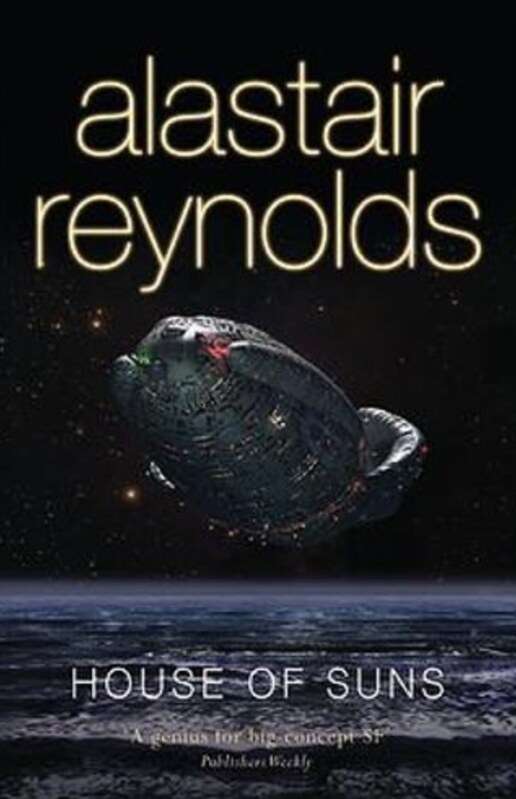
Screenshot 2023-04-25 at 13.34.39Alastair Reynolds: House of Suns Reynolds is in the top rank of SF writers working today, and here he is at the top of his game. The plot is as audacious as they get. Six million years before the main story opens, Abigail Gentian has herself cloned 1000 times, sending her clones out into the Galaxy as explorers. Six million years later, two of the shatterlings, Campion and Purslane, are late for one of the Gentian Line’s periodic reunions. And fortunately so, for they just miss the extirpation of most of their siblings. Someone, somewhere, wants the Gentians uprooted. But who? And why? Lashings of pure bravura sensawunda don’t get in the way of a gripping plot. One of his best.

Posted in Uncategorized | Comments Off on What I Read In April

What I Read In March

Screenshot 2023-04-01 at 11.43.36David Mitchell: The Bone Clocks The only other novel of Mitchell’s I’ve read is Cloud Atlas, and, like that, The Bone Clocks consists of six novellas loosely tied together, though in conventional sequence rather than nested like layers of an onion, as in Cloud Atlas. Without giving too much away, each novella eavesdrops on a decade in the life of Holly Sykes, a seemingly very ordinary English woman, from teenage runaway to dying septuagenarian, though only the first and last parts are from her point of view. The Bone Clocks is a portmanteau of everything – literary satire to contemporary reportage, near-future dystopia to out-and-out fantasy. It’s never less than ambitious – some might say indulgent – but it is held up from collapse by the sheer quality of writing. I can’t remember the last time I read a novel this satisfying since 2014. That was when I first read Erin Morgenstern’s The Night Circus: a very different book in many ways, but parallels The Bone Clocks in its evocation of how the fantastic may lurk even at the edges of everyday lives.

Screenshot 2023-04-01 at 11.46.38Gabriel Bergmoser: The Hunted There’s something about the harsh red centre of Australia that brings out the worst in people, worse even than Crocodile Dundee. So much is clear from this taut, exceptionally violent thriller about what happens when a young woman, caked in mud and blood, rocks up at a roadhouse in the middle of nowhere. Edge-of-your-seat stuff, this, but not for the squeamish.


Screenshot 2023-04-01 at 11.48.41Lewis Dartnell: Being Human A spirited canter through the ways our biology has inescapably affected world history in ways large and small. Learn how cognitive biases led to the disaster of the Charge of the Light Brigade and why we call chilis ‘peppers’; how inbreeding and genetic diseases led to war; how a mosquito was ultimately responsible the union of England and Scotland; and many more nuggets that’ll open your eyes and stretch your mind. DISCLAIMER: I was sent a pre-publication copy for endorsement.

Posted in Uncategorized | Leave a comment

What I Read In February

UntitledDale E. Greenwalt: Remnants of Ancient Life There is more to fossils than bones and stones. Very rarely. soft tissue is preserved too, and Dale Greenwalt reviews what we can and cannot know about ancient life from the occasional scrap of chitin, cellulose, protein or DNA that niggardly posterity chances to leave behind. DISCLAIMER: I read a proof copy sent to me by a publication for whom I am writing a longer review.


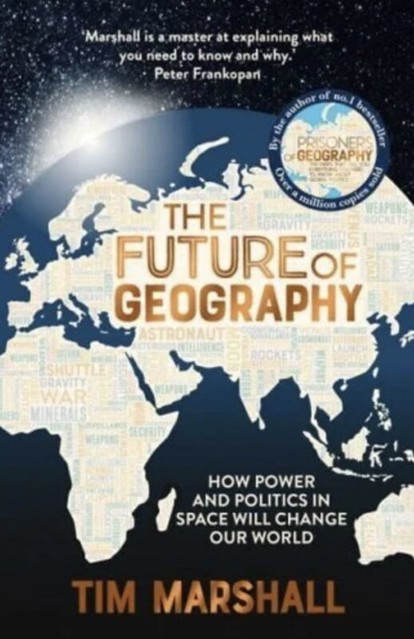
Screenshot 2023-02-13 at 05.56.02Tim Marshall: The Future of Geography The High Frontier is a lawless place. But as Tim Marshall explains in this very readable guide to the latest in space exploration, the absence of rules makes space a dangerous place — for everyone on Planet Earth. The space programs of all the major and minor players are set out, as are the various dangers as they scramble for territory above our heads. It then goes all fizzy and futuristic at the end, and inexplicably misses out the most likely habitat for humans in space – hollowed-out asteroids, planetary surfaces being too difficult and expensive. DISCLAIMER: I was sent an advance copy by the publisher.


Screenshot 2023-02-22 at 06.47.56Robin Dennell: From Arabia To The Pacific: How Our Species Colonised Asia Our species began as a hunter of open savannah in Africa. When it left Africa into Asia, it had to contend with environments as harsh and as different as arctic tundra and tropical rainforest – which it conquered as no other species has done, simultaneously driving all other hominids to extinction. In this engaging book, archaeologist Robin Dennell explains how and why our species became so uniquely invasive. It’s an academic text, but don’t let that put you off, as it’s never less than completely readable. It is, though, printed on that shiny paper academic publishers seem to love, you know, the grade that makes even slim volumes like this weigh a ton. DISCLAIMER: I was sent a copy by the author.


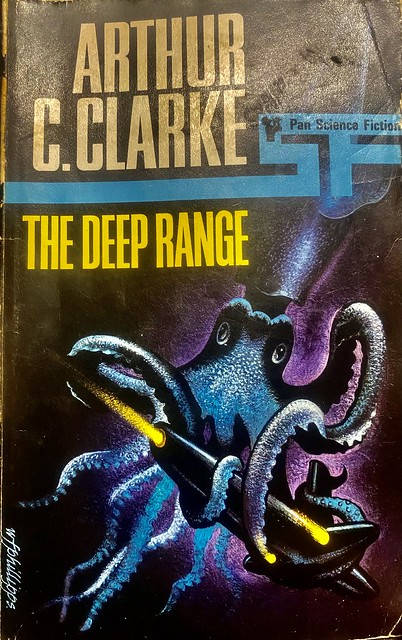
UntitledArthur C. Clarke: The Deep Range I seem to have lost my reading mojo, so, frustrated by a deeply cerebral novel I could barely start, let alone finish ( I might succeed one day) I turned to this good old-fashioned SF from the good old-fashioned Arthur C. Clarke, an undemanding adventure in which a washed-up astronaut conquers his fears of space by mastering the secrets of the deep. It was written in 1957, and it shows, but I’ll make no apology for having enjoyed every minute.

Posted in Uncategorized | Leave a comment

The Very Hungry Pupperino

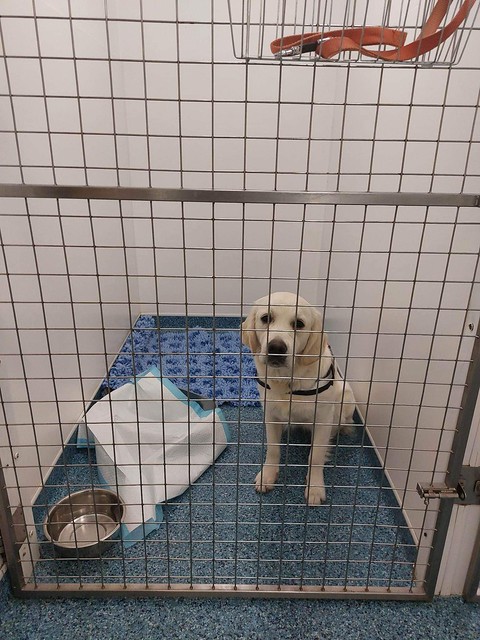
UntitledOn Monday, the Very Hungry Pupperino ate a sofa.

On Tuesday, the Very Hungry Pupperino ate a set of six mahogany dining chairs.

On Wednesday, the Very Hungry Pupperino ate a small semi-detached ex-Local-Authority house in Cromer, Norfolk.

On Thursday, the Very Hungry Pupperino ate the award-winning Georgian market town of Holt, Norfolk.

On Friday, the Very Hungry Pupperino ate 4,000 Holes in Blackburn, Lancashire.

On Saturday, the Very Hungry Pupperino ate the Chernobyl nuclear power station and acquired remarkable superpowers.

On Sunday, the Very Hungry Pupperino ate Vladimir Putin, and there was Much Rejoicing.

On Monday, the Very Hungry Pupperino visited the vet who made her sick it all up again. After that she felt much better.

(Picture by Denise Reynolds at Glaven Veterinary Practice, Holt. With apologies to Eric Carle’s The Very Hungry Caterpillar).

Posted in Apparitions, Blog Norfolk!, Silliness | Tagged | Leave a comment

What I Read In January

Screenshot 2022-12-31 at 15.28.51 Penelope Fitzgerald: The Bookshop It is 1959, and widowed Florence Green opens a bookshop in the sleepy Suffolk town of Hardborough. Discovering a strain of quiet obstinacy she doesn’t know she has, she ignores or attempts to sidestep the  polite yet determinedly ruthless opposition of a town with minefields of unwritten social rules and hierarchies that will not be gainsaid. I left this in a state of righteous indignation on Mrs Green’s part, for all that she appears to have brought much of her woes upon herself.


Screenshot 2023-01-07 at 17.19.31Neil Gaiman (ed). Unnatural Creatures Having run out of original Neil Gaiman books to read (though one or two might have escaped my notice) imagine my pleasure at running across this anthology of tales curated by the man himself. It’s hard to pick favourites from a diversity of authors that includes Anthony Boucher and Saki, Nalo Hopkinson and Gahan Wilson, but I feel bound to reserve that honour for Gaiman’s own story The Sunbird, which he says was inspired by E. Nesbit but written in the style of R. A. Lafferty. If the tales have anything in common it is that if the tales themselves do not always have the air of fairy-tale whimsy, it lurks not too far beneath. Delightful.


Screenshot 2023-01-14 at 20.30.41Peter Frankopan: The New Silk Roads It must be awfully frustrating, being a modern historian like Peter Frankopan. No sooner than you publish a revised version of your 2015 best-seller The Silk Roads, than the world changes again. For this snapshot of the world in 2019 seems already out of date. His analysis of geopolitics centres on the ‘spine’ of Eurasia (between the eastern Mediteranean and China) and contrasts the ‘Belt and Road’ initiatives of China with the chaos of the Trump administration. But that was then. Trump has now been replaced with Biden, and the world has been reshaped once more by COVID. The New Silk Roads reads like a three-year-old feature in The Economist. Nothing wrong with that, but I expected more from a book that promises a glimpse into the future to say more than it was unpredictable and volatile. Because I knew that already.


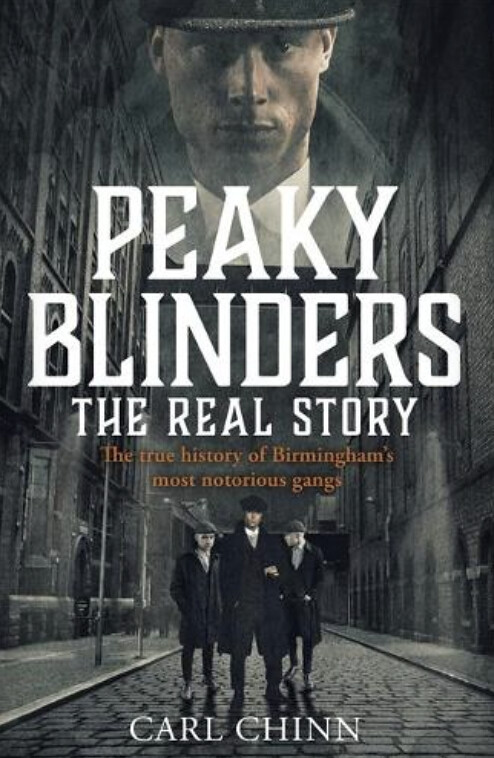
Screenshot 2023-01-21 at 12.51.35Carl Chinn: Peaky Blinders The Real Story You will  both probably be familiar with Peaky Blinders, a stylish and violent televisual emission dealing with the fictional Birmingham bookmaker and gangster Tommy Shelby and his family in the years after the First World War. Shelby leads a gang called the Peaky Blinders, called after their habit of seeing razors into the brims of their peaked caps for use as weapons. Social historian Carl Chinn, descendant of Brummie backstreet bookies himself, shows that almost everything in the TV series is a myth. The peaky blinders were assorted Birmingham toughs who terrorised the poorer districts of Brum in the 1890s (by 1918 they were all but extinct); nobody sewed razors into peaked caps; and the real story is one of social deprivation, squalor and general thuggery, told here as one long litany of barely digested gobbets of court reports from contemporary newspapers.


Screenshot 2023-01-28 at 16.13.19Gary Gibson: Stealing Light I was in the mood for a good old-fashioned space opera, and, having read everything that Iain M. Banks and Alastair Reynolds have had to offer, was casting around for something new but in that similar post-gothic vein. Glasgow-based Gary Gibson is a new author for me and on the strength of Stealing Light I’ll be in the market for more. The author has clearly thrown everything into the sensawunda electric kitchen sink — apocalyptic weapons, incomprehensibly ancient alien civilisations, amazing technology, a majestic plot, exotic sex, lashings of violence, and a feisty but flawed heroine who never gives up. Wonderful stuff. If you like that sort of thing. Which I do.

Posted in Science Fiction, Writing & Reading | Tagged , , , , , , , | Leave a comment

The Last Question

In his 1956 story The Last Question, Isaac Asimov has human beings ask computers of increasing power the Ultimate Question. You know, the one about Life, The Universe, and Everything. And the question goes something like this —

HOW CAN THE ENTROPY OF THE UNIVERSE BE MASSIVELY DECREASED?

In six scenes, in which humans evolve and their computers get more and more sophisticated, the answer always comes back something like this. No, not ’42’, but

INSUFFICIENT DATA FOR A MEANINGFUL ANSWER

Eventually, in the Universe’s dying gasp, the very last human asks the gigantic mega cosmic hyper computer this same question, and … but I’d be spoiling it.

Well, what with the current fuss and brouhaha over quasi-intelligent wordybot ChatGPT, I thought I’d try it out. This is what happened.

entropyScreenshot 2023-01-25 155806

… from which I learned that ChatGPT doesn’t quite have the succinct elegance of a professional SF writer.

It doesn’t have much of a sense of humour either. When I asked it

HOW MANY BEANS MAKE FIVE?

the answer came back

beanzScreenshot 2023-01-25 155919

Which suggests that the way to tell the difference between true intelligence and a simulacrum is to tell it a joke.

Posted in Science Fiction, Silliness | Tagged , , , | Leave a comment

It Has Not Escaped Our Notice

Screenshot 2023-01-04 at 10.25.57
This one contributed by my correspondent Professor Trellis of North Wales and received with thanks. Presumably the injunction does not apply to Residents.

Posted in Silliness | Tagged | Leave a comment