I am unlikely ever to be invited to be a guest on Desert Island Discs, the BBC’s long-running radiophonic emission, though I did take part in BBC Radio Norfolk’s version once. The pain of being overlooked, week after week, is lessened, as one can do much the same on social media: a facility denied the late Cabinet Minister Herbert Morrison, who kept a list of his favorite gramophone records in his pocketbook in case he was ever asked. (He wasn’t). Notwithstanding inasmuch as which I was tagged by a friend on Facebook (but only because I begged him) to list ten records that had shaped my character, such as it is, on ten consecutive days, and tag another friend to take up the baton. And so, here they are, collected all together, at once, simultaneously, and at the same time, although (as they say on all the best game shows), in no particular order.

Queen A Night At The Opera.
This is the album that contained ‘Bohemian Rhapsody’, of course. One of the very few 45s I ever bought, and I played it until it wore out. As Dr Johnson never said – when a man is tired of ‘Bohemian Rhapsody’, he is tired of life: for there is in ‘Bohemian Rhapsody’ all that life can afford.
I still remember when, as a schoolboy, I bought the album, in a record store in Sevenoaks, Kent. Thanks to Queen featuring a lot in ‘Good Omens’ on TV, it’s now on heavy rotation in the car. Nothing matches it for musicality, sheer ambition of orchestration, clever songwriting — and fun. When you are feeling low, just fling in a few more Galileos. darling, and get Scaramouche to do the fandango.
 Beethoven, Symphony No. 6, the ‘Pastoral’So it was that the Infant Gee was placed in a playpen within earshot (but out of reach) of the Gramophone, where a classical music disc had been placed, the idea being that music would soothe the Savage Beast. The Pastoral was a favourite. I don’t know the precise recording, though I suspect it wasn’t Happy Herbert and the Sunshine Band, as here. Even today, it’s one of my favourites. The thanksgiving theme that comes in after the storm sequence can still move me to tears. If I should die and have a postmortem, you shall find it inscribed on my soul.
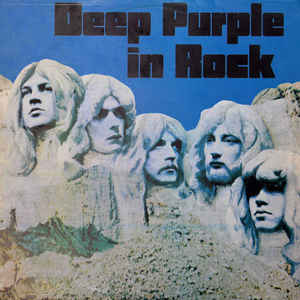
Deep Purple, Deep Purple in Rock‘Listen to this,’ said my pal Zak Chaudhury, placing the disc on the School Gramophone. It was 1976. We were 14. The explosive sound of ‘Speed King’ astonished my ears. I had heard nothing like it, the mixture of classical sensibility, supercharged blues, and hard rock ferocity. What I remember most is track 3, ‘Child In Time’ – an ethereal sound, drenched in reverb, of what I later learned was the Hammond organ of Deep Purple’s founding maestro, the late, great Jon Lord. That was Day Zero, Year Zero, of my love of all things Hammond — and the moment when I discovered the blues.Deep Purple In Rock came out in 1970. It was the group’s fourth album. Before that they had been a very 1960s pop group, more popular in the US than their native Britain, fronted by an old-style 1960s crooner. Their repertoire of pop cover versions sat uneasily with the moody stylings of guitarist Ritchie Blackmore and Lord’s classical ambitions. So after they staged Lord’s ‘Concerto for Group and Orchestra’ at the Albert Hall, Blackmore demanded and got his part of the bargain — a record of all-out hard rock. It was visionary, as hard rock had hardly been invented.And they had a new ingredient. Out went the crooning — and in came the screaming. Of a young man called Ian Gillan, who’d lately starred in the West End in the lead role in ‘Jesus Christ Superstar’. Deep Purple had found its voice, and for a while, could walk on water.
J. S. Bach, The Art of Fugue I was a graduate student in Cambridge in 1985, which happened to be the 300th birthday of J. S. Bach. I got rather caught up in the tercentenary celebrations. I went to Bach concerts, and read Douglas Hofstadter’s masterpiece of nerdery, Goedel Escher Bach, the Eternal Golden Braid. I went to organ concerts at the Royal Festival Hall, which had all the ambience of a bike shed. It was only much later when I happened to visit St Thomas’ Church in Leipzig, where Bach spent much of his career as choirmaster and composer-in-residence, and the organist struck up what sounded like a Bach chorale just as I walked in, that I could experience the full Majesty of Johann, the Mystery of Sebastian. For me the zenith and apotheosis of Bach was his final work, The Art of Fugue. This is a long and yet incomplete exposition of the height of counterpoint, of which Bach was the greatest exponent. Bach invented the rules of fugue — and broke all of them — to create a masterpiece. Austere and yet sportive, The Art of Fugue is, superficially, as undemanding as elevator muzak. But listen closely, and you get drawn into its web. Just when you think you’ve understood it at a deeper level, you find more depths to explore. The Art of Fugue is ‘pure’ music, not created for any particular instrument. I first heard it arranged for solo organ, in a record in my father’s collection, but as such it tends to blur into one long dirgy smurge. You really need to be able to follow each part individually. That’s why in later life I bought it arranged for a string quartet, as here, by the jewel-like Juillard. Were I on Desert Island Discs this would be the one disc I’d rescue, for The Art Of Fugue isn’t one piece of music — it’s a collection of all the music that ever was, is, or ever will be. 
The Limeliters, 14 14K FolksongsEveryone’s musical tastes are first shaped by their parents’ record collections. As well as the classics, my parents clearly had had a brush with the US folk revival of the early 1960s. There was a Pete Seeger ’45 in there, along with three albums by the Kingston Trio, and two from this group, the Limeliters: this one, 14 14K Folksongs, and the gospel-tinged Making a Joyful Noise. This disc has both sorts of music – Country and Western — from an age as yet uncorrupted by glam and rhinestones, when traditional American music still looked back to its pioneering days. It was this disc that gave me my first taste of how folk music could evoke America’s wide-open spaces. There’s blues in here (‘Betty and Dupree’, ‘Gambler’s Blues’) but also convict songs (‘No More Cane’); songs about building the railway (‘Drill Ye Tarriers Drill’); genuine old-fashioned westerns from the days when cowboys actually chased cows rather than shot one another (‘Whoopee-Ti-Yi-Yo’); the hardships of going west (‘Sweet Betsy from Pike’); and much, much more. I expect a lot of the atmosphere came from the lush reverb (oh, those old plate reverbs have a lot to answer for) but this is a record that resonates with me to the present day. 
AC/DC, Highway to Hell
I was introduced to the rough-hewn pleasures of AC/DC at school by my friend Nipper, a cheeky chappie who probably identified with Angus Young, AC/DC’s lead guitarist who inevitably appeared as a naughty schoolboy in shorts, cap and satchel. He did this well into his sixties, when the effect was more, well, Krankies than Kerrangg, but one can excuse it all because he was (and is) one of the finest rock guitarists who ever lived — and his band, one of the purest, clearest and most disciplined combos to tread the boards. And the finest record by AC/DC is this one, their sixth, and the final featuring, on lead vocals, the drunken swagger of Ronald ‘Bon’ Scott, who died not long afterwards from rock-star excess. But don’t be fooled by the blather and braggadocio — Highway to Hell is a perfect record. Every note is pin sharp. Producer Robert John ‘Mutt’ Lange took an already well-honed rock’n’roll band and pared it down to its minimalist essentials. The result is less a brawling sucker punch than a stiletto of catchy numbers (‘Touch Too Much’, ‘Shot Down In Flames’, ‘Girl’s Got Rhythm’, ‘If You Want Blood’, and of course the title track) that drills directly into your brain. I have so many rock albums, so why this one? Partly because, at the age of 19, I drove from leafy Sussex to see AC/DC headline at the Monsters of Rock festival at Castle Donington in 1981. Sharing my Mini Clubman on this epic trek were Nipper and our mutual friend Ratty. AC/DC (by then fronted by their new singer Brian Johnson, who grew up in Newcastle where he gargled gravel washed down with liquid helium) were magnificent. The band was to go on to even greater heights – the first album with Johnson, Back in Black, is a classic – but Highway to Hell is more accessible, less knowing, less monolithic, and dare I say, more loveable, the last time AC/DC really lived the Dennis-the-Menace personae of a gloriously mis-spent youth that we teenagers all longed (and feared) to emulate.
 Howard Shore, The Fellowship of the Ring, Original Motion Picture Soundtrack
I’d been captivated by the works of Tolkien as a child, but I’d put them aside in my late teens. The advent of Peter Jackson’s movie trilogy of The Lord Of The Rings in the early 2000s rekindled my interest, and fanned the flame into a firestorm. I read just about everything Tolkien had written on his fictional Middle-earth; I became a member of the Tolkien Society, editing its scholarly journal Mallorn for eight years; became the science correspondent for TheOneRing.net, and even wrote a book about Tolkien’s works. As everyone knows, the best bit about the movie trilogy is the score, written by Howard Shore. When the CD for the first film, The Fellowship of the Ring, came out, I played virtually nothing else for a year. Shore’s music, for me, became the very essence of Middle-earth, from the rustic playfulness of the hobbits to the chilling deeps of the dwarves (my favourite part of the soundtrack is ‘A Journey in the Dark’ when, at about 2’35” Gandalf lights up his wand to reveal the magnificent vastness of the Mines of Moria.) The key ingredient, to me, is the frequent addition of a choir which, especially in the lower registers, adds a chill that emphasizes the whole mythic mystery of the tree-tangled landscape. 
Michael Flanders & Donald Swann, At The Drop Of A HatFlanders and Swann was a musical comedy duo popular in the late 1950s. This record is a live performance recorded at the Fortune Theatre in London during their successful run in 1957. My mother, a student at the time, saw them, and this record is a souvenir, in my mother’s collection. It was part of the soundtrack of my childhood. Flanders and Swann, who described themselves as ‘a drawing-room farrago’, were probably the very last expression of highbrow Edwardian home entertainment. They are best remembered today for their songs about animals, especially ‘The Hippopotamus Song’ (‘Mud, mud, glorious mud’, and all that). They represent comedy in its pre-satiric innocence, when humor could be intellectual simply for the sake of it. Audiences of today would probably require footnotes:
1546 was a very bad year for the theatre. Gorboduc was doing very poor business at the Globe. Gammer Gurton was still giving everyone the Needle. … Shakespeare hadn’t hadn’t even started, of course. Beaumont had quarreled with Fletcher – joint tenants…’ (‘Greensleeves’)
Those too impatient or insufficiently educated would no doubt dismiss this as elitist. Some of it would probably be dismissed as sexist:
And the girl in my arms is Mabel Figworthy, and if she says “oooh reeely” once more, I shall break her neck’ (‘A Song For Our Time’)
… elitist and racist …
And to think, he used to be a regular anthropopha-guy (‘The Reluctant Cannibal’)
… sexist and racist …
Oh it’s hard to say “holimakitilukacheecheechee”,
But in Tonga that means “no”;
And if I ever had the money, ‘
Tis to Tonga I shall go;
For every lovely Tongan maiden there
Will gladly make a date;
For by the time she’s said “holimakitilukacheecheechee”
It is usually too late. (‘A Song For Our Time’)
… or elitist and sexist …
And he said, as he hasn’t to put out the cat, the wine, his cigar and the lamps,”Have some M’deira, M’dear” (‘M’deira, M’dear?’)
Back in those days, before offense and sexual intercourse had been invented, F&S were as charming and witty as could be, and probably more so than anything that has happened in the subsequent sixty years. Of course, the Offensariat will probably drone on about the ‘privilege’ of two privately educated white men, never mind that Flanders was in a wheelchair, having contracted polio, not that he ever drew attention to it — identity politics hadn’t been invented then, either. F&S did react, in later years, to the then modish stream of infantile profanity masquerading as intellectual sophistication:
Ma’s Out! Pa’s Out! Let’s talk Rude!
Pee Po Belly Bum Drawers!…
At Oxford and Cambridge, and Yale and all,
and at Berkeley, they really have a ball,
‘Cos the higher the brow, the harder they fall,
For Belly Belly Bum Bum Belly Belly Bum Bum Pee Po Belly Belly Bum Bum, Pee Po Belly Bum Drawers. (‘P** P* B**** B** D******’)
No prizes for guessing which tendency won out, and the world is far poorer for it, in my opinion. 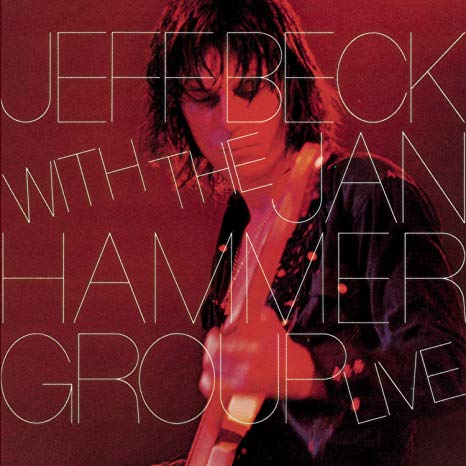
Jeff Beck, Jeff Beck with the Jan Hammer Group, LiveI can’t remember when I first heard this, or when, or who switched me on to this. I think it was at university, and it was a crummy copy of a copy on cassette. Much later Mr S. W. of Berkshire gave me the CD. I seem to have had a yen for guitarists who break the mould. First it was John McLoughlin and the Mahavishnu Orchestra. I since became keen on Scott Henderson. But most of all it was and still is Jeff Beck. Alone among rock guitarists he is still breaking new ground, squeezing sounds out of six strings that seem unimaginable. This album, recorded somewhere in the US in the mid-1970s, is a double whammy, as it is with one of my favourite keyboardists — Jan Hammer. Most people associate Hammer only with the theme to a televisual emission called Miami Vice: a mere bagatelle. For you will never hear a Moog synthesizer played with such flair, such fluidity and such style as under the dext’rous digits of Jan Hammer. Jon Lord of Deep Purple, long an admirer, said that Hammer ‘can make a synthesizer talk’. And with Beck, on this record, it’s very hard, and sometimes impossible, to tell where guitar stops and synthesizer begins. Believe me, I have tried. I confess to be rather fond of jazz-rock-funk fusion noodling, but there is noodling, and then there is noodling, and what stands out from this record is its infectious sense of fun. You can’t help get carried away with it. This record always leaves me with a smile. This is a live album I always come back to, and it always leaves me wanting more. If there was a concert in the past I’d like to have witnessed at first hand, this is the one. Rush, Moving Pictures
‘Little Red Corvette’. ‘No Particular Place To Go’. ‘She Loves My Automobile’. ‘Wish I Had A Grey Cortina’. ‘Crazy ‘Bout A Mercury’. ‘Fast Car’. ‘I’m In Love With My Car’. ‘Drive’ (by the Cars). The love affair between rock’n’roll and cars goes back to its earliest days. Just like rock’n’roll itself, cars represent youthful liberation and rebellion. A wag once noted that the history of popular music would have been very different had Bruce Springsteen never met a girl called Wendy nor learned to drive. But for me the ultimate rock’n’roll song about cars has to be ‘Red Barchetta’, the second track on Moving Pictures, the eighth album by Rush, the ever-quirky power trio — and, in my opinion, their best, and vindication of the adage that three blokes from Toronto can make a helluva racket. ‘Red Barchetta’ is more than about rebellion against one’s parents, or convention in general, or a metaphor for sex. It’s about rebellion itself. The song is set in a sci-fi dystopia about cars in a stifling future world in which cars had been banned ever since the ‘Motor Law’, in which a Sunday drive by a young man is a ‘weekly crime’ against the all-powerful state. The lyrics of the late Neil Peart, the virtuoso drummer for the band, often touched on science fiction and libertarian themes. They were also far more literate than one generally expects from rock music. Here’s the heady rush of speed — the sounds, the sights, even the smells, of driving as though your life depended on it:
Well-weathered leather, hot metal and oil,
The scented country air;
Sunlight on chrome, the blur of the landscape;
Every nerve aware.
All put together with the thrawn, sinewy and muscular music by bassist and singer Geddy Lee and guitarist Alex Lifeson, complete with an amazing variety of serpentine riffs and changes in time signature. It’s a whole album in one six-minute song. And that’s just one song out of seven, each one a feast.