Whilst most of the science blogosphere my science blogging colleagues were getting stuck in to Science Online London 2012, I was at the closing plenary of the 62nd meeting of the American Society of Human Genetics. If solo12 is the home of science online in London, ASHG2012 was an example of science online in action: the use of social media to share and discuss cutting-edge genetics research.
The ASHG 2012 app contains the conference program and schedule, together with abstracts of all posters and talks.
The conference app contains the schedule together with poster and presentation abstracts and space for taking notes. This was useful for planning and navigating a busy week. The Society twitter feed, @GeneticsSociety, kept attendees updated with program highlights and any changes, although it was not flawless and confused jetlagged geneticists further by tweeting to kick off the closing plenary in the wee small hours of the morning, in error.
Lesson: when scheduling tweets, use the twenty-four hour clock.
Mishaps aside, social media was a definite presence at this meeting, from the tweetup on the first night to the crowdsourced questions to the panel at the closing plenary. I hope that social medial continues to be integrated into future meetings, both at ASHG and beyond.
The numbers crept up over the course of the week
The ASHG meeting is vast. This 62nd meeting was bigger by a factor of fifteen than the largest meeting I had attended previously. Registrants topped out at nearly seven thousand, a small town’s worth of geneticists and several hundred companies represented. As is often then way with conferences the highlights for me were the people I met. The quality of the talks was high, and the organisation of the conference was slick. I attended a variety of sessions.
The Moscone Conference Centre catered to delegates’ every need. Wet mini umbrella bags appeared in the lobby as soon as it started to rain.
The data presented in the session on pharmacogenomics represented the first steps on the road towards personalised medicine. The session opened with a discuss of the topics of ancestry and genetic variation that I had discussed earlier in the meeting. Edward Ramos gave an overview, including a quotation found in a paper by him and his colleague Charles Rotimi, which forms a coherent answer to the debate that I took part in a few days before:
If we use genomic information correctly, we will simultaneously describe our similarities and differences without reaffirming old prejudices. More importantly, the careful unbiased study and interpretation of the human story coded in our DNA will enable us to appreciate the fact that individuals cannot be treated as a representative for all those who physically resemble them or who share some of their ancestry. The human genome is a mosaic of our experiences, past and present.
Yes, it is a Cell Colouring Book in the tradition of the anatomy colouring book aimed at medical students. With thanks to Cell Press for quality swag.
The session continued with a focus on clinical applications. Genetic mutations, often in drug-metabolising genes, can result in large variation in how patients react to a drug. A drug that is otherwise beneficial could cause severe side-effects, or even death, in patients carrying those mutations. Being able to identify the relevant variants means that dosage could be adjusted, or an alternative treatment found, for affected individuals. Examples were presented from a clinical trial where this principal was used to demonstrate that genotyping patients and giving tailored treatment advice reduced side effects in mutant individuals.
At ASHG2012’s closing plenary, attendees reflected on progress in human genetics research in recent years. Wordclouds of the abstracts presented at meetings past and present showed the subtle but meaningful shifts, for example from genome-wide association studies to whole genome sequencing. The meeting was summarised by a quotation that resonates with the research I have been doing as part of my PhD, and which implicitly describes the important challenges in human genetics research for for the coming years. As a statistical geneticist, I was reassured that I will be kept busy in the future. The meeting concluded:
Ability to identify variation is no longer the limiting step in our field.
As well as attending talks, visiting posters, and blogger star spotting, I attended the Trainee-Mentor luncheon. This informal lunch was described as a “wonderful opportunity for trainees…to meet and talk…with senior members of Society about career options, goals, and professional opportunities.” As I will describe, the group of trainees I sat with touched on career options and goals only briefly. Instead, over lunch we were exposed to the value of informal, interdisciplinary discussion, which it became apparent is important to the society member who hosted us.
Attendees were provided with a box lunch and the room was laid out as 23 tables, each hosted by a senior member of ASHG. I was fashionably slightly late for lunch, and by the time I arrived whilst there were plenty of roast beef sandwiches to be had, the tables hosted by academics who listed my area, statistical genetics among their interests were fully occupied. Deciding to take pot luck, I took a vacant seat at table 22, where the host was introducing herself. The Interest Areas associated with this table were “genetics and race; ancestry; social issues and policy”.
As I took my seat, Charmaine Royal, Associate Research Professor in the Institute for Genome Sciences & Policy and the Department of African and African American Studies at Duke University, was introducing herself. Her web pages gives a brief biography, a paragraph that does not do justice to the colourful story that was weaved for us. Describing her career to date, Dr Royal described the difficult decisions she had faced as well as the chance opportunities she had been offered. It was interesting, and useful for those of us at the beginning of our careers to hear how she had combined her training with her own values and interests in order to carve out her own path.
After both Dr. Royal and the trainees seated at the table had introduced themselves, the floor table was thrown open for questions. Luca Pagani, registered in a PhD program at the Division of Biological Anthropology, University of Cambridge UK opened the discussion by asking how he could usefully discuss the meaningful patters that he saw in the relationships between genetic markers and geographical or ancestral differences, when the concept of race was such a loaded one. This debate is at the core of Dr Royal’s work. At Duke, she teaches the course Race, Genomics and Society, so she was interested in what we had to say.
Genetic distances between Nilotic and Omotic Ethiopians (red star) and a set of worldwide populations (filled black circles). From Pagani et al. (2012)
The discussion was robustloud passionate and lively. Each of us brought both our professional training and ourselves to the table. As a statistical geneticist, I was concerned about noisy data and about artefacts that introduce signal where there might be none, and about what we can meaningfully take from the results that we find. The results of Luca’s work have received press attention, and he has won the C. W. Cotterman Award here at ASHG2012 for his research. Congratulations Luca!. However, he was grappling with how best to present his science, in particular to the undergraduate students whom he supervised. Other trainees had backgrounds in ranging from genetics to social sciences and law, and we all had our points of view on how to discuss the intersection of ancestry, race and genetics.
All too soon we noticed that the room was clearing. In the throes of debate we had lost track of the time. Our luncheon had to come to a close – some trainees had posters to present that afternoon. One trainee pointed out that whilst the discussion had been great, the aim of the luncheon was to obtain careers advice, and we would appreciate what wisdom Dr Royal could bestow.
As is often the way with careers advice, Dr Royal’s suggestions were general. She emphasised how useful it was, for your own career and for the scientific endeavour, to take thorough training in one area and apply it to another. In her case a research background in genetics came with her to other areas such as bioethics. Among the trainees, a law student agreed that her previous studies, a degree in genetics, revealed the value of having a scientific perspective on the legal issues at stake. I recognised this student’s description of lawyers and scientists speaking as if in different languages. This perspective mirrors my own, as I brought my background in biochemistry with me as I moved to statistical genetics. I see both the rewards and the challenges, particularly surrounding communication, when statisticians and biologists work together.
I for one found this luncheon to be an unexpected delight. By joining researchers from diverse backgrounds I saw first-hand how much we all learnt in a brief hour of lively discussion. I would like to express my thanks to Dr Royal for giving her time to support trainees, and my fellow students and postdocs for being generous in sharing their knowledge and experiences. I would also like to encourage other trainees to seize opportunities like this, and to nudge any mentors who may be reading to consider offering their time in sessions like this. I had the impression that Dr Royal enjoyed her time with us as much as we did.
I feel sorry for PhD students who prefer to work in silence. Most students (and postdocs) will be assigned a desk in a shared office. Lab-dwelling students cannot realistically expect a quiet working environment. Jenny describes the sounds of science:
Sounds in my lab right now: stir-bars tinkling, music playing, fume hood roaring, centrifuge just coming down from a fast spin
However, at your desk it is reasonable to expect to be able to concentrate amid the conversations, comings and goings that are inevitable even with the most considerate of colleagues. Fortunately (for me) I have always preferred working with background noise. I never mastered doing my homework in front of the television, but I did used to work with half an ear on the UK top 40 counting down as I finished my weekend assignments on a Sunday afternoon.
Sharing a busy office, it is easier to focus on my work without distractions by plugging myself into my headphones. After Sylvia tweeted her preferred music grant-writing album
Grant writin' music Springsteen Nebraska – what do you listen to when writing? #curious
I thought about my own listening and whether, too, prefer particular music for specific tasks. If I am working in the evening, I sometimes turn to classic FM to calm my mind and help me focus, but during the day I prefer the idiosyncrasies of Radio 4 to keep me entertained. Podcasts are useful too, I have followed Simon Mayo’s film review show for a number of years, and can be caught barely suppressing laughter if I am listening to the Friday Night Comedy Podcast. If I am feeling low, I have been known to seek comfort in the local radio station from my hometown. A number of science podcasts are available – see here for a somewhat outdated list, and here for a list with an emphasis on technology.
Do you prefer to work in silence (and if so, how do you deal with distractions)? If you do prefer to listen while you work, what do you choose to listen to?
I moved to London in 2005. After a few weeks living here I concluded that the two most useful things to give a new visitor to the capital would be an Oyster card and a London A to Z.
This is the hardback, but the paperback is lighter to carry for reading on the Tube.
I moved to London in 2005. I had visited before, of course. I grew up in a commuter town about half an hour away by train.
Something that confounded me about my trips to London as a teen was that I would ask my dad, say,
Dad, I need to meet some friends at Kings Cross.
And he would say, well, that’s easy, take the Bakerloo line northbound, change at Oxford Circus for the Victoria Line.
He could do this for every journey. I was astounded. Did he really have the entire of that tube map, mapped out in his mind?
I was similarly shocked when, after an afternoon shopping with a friend and her brother, a Londoner, in Covent Garden, my friend and I decided to catch the train home. The brother started walking, and within twenty minutes we had crossed the bridge and were at the station. All those years, I had been buying my travel card, taking the tube, dutifully changing at Picadilly, when I could have strolled there above ground in just as much time. Something you don’t learn about London, until you spend a lot of time there, is how close to each other many of the central sights really are.
So when I moved to London, I bought my Oyster card, and my A to Z, and little by little I learnt the city myself. My well-loved London street map is now, sadly, used less frequently – for that we can thank online maps rather than my subliminal assimilation of The Knowledge. Nonetheless, my copy remains a history of my time in London. Far from maintaining it in pristine condition, I annotated it, scrawling in the margins when I looked up an address I was going to visit.
Not everywhere I visited was as scholarly as this.
Over time, my map because a history of my time in the city. As I explored further, my annotations became helpful. They aided orienting myself in London’s sprawl – I could look up a new address and realise to my surprise that I had been somewhere a few streets away just a few months before.
I was reminded of my now outdated map by Craig Taylor describing his arrival in London from his native Canada. He moved to London in 2000, and was given a copy of the map by a friend who had left the city:
I soon learned that for many the A-Z is an article of faith…Printed in the Nineties, my A-Z showed the demolished South Eastern Gas Works where the Millennium Dome now stands. Most A-Zs are half dead, because documenting a city as alive as London will be an impossible task.
The introduction to Londoners is the only extended passage of this book written in Taylor’s voice. The rest is a collection of interviews with Londoners past and present: born-and-bred Londoners and immigrants, visitors and those departing, from students to pensioners and all in between. Taylor interjects occasionally but most of the voices are their own, discussing, rambling, complaining and reminiscing.
What surprised me most was the number of comments that I identified with. The anonymity the city affords, and the extent to which it shapes its transient population, and they, in turn, shape each other. In living here, I have transformed, from tourist to Londoner. When I first moved to London, I lived in university halls of residence, and my local supermarket was on Tottenham Court Road! Like on the Monopoly board, and everything!
TCR now forms part of my commute. I am somewhat less enchanted.
I have come to realise that my dad’s mental map of the tube network was not complete. It covered the most frequent routes out of Waterloo. These days, my knowledge rivals his – I can keep track of a game of Mornington Crescent as well as anybody.
Taylor’s Londoners: The Days and Nights of London Now, As Told by Those Who Love It, Hate It, Live It, Left It and Long for It might make a Londonophile* sentimental. In reading it, a stranger it will get a flavour of what it is to be a Londoner. The Olympics do get a mention in this book, but it is not an official London 2012 souvenir. However, I cannot think of a book that would make a better memento of the capital.
* You can find M@’s gushing praise for Londonershere.
Smashing up your equipment on stage (as done by Pete Townshend) is one way to make your performance memorable, but may not be recommended for academic presentations.
For many (most?) PhD students, there comes a time when they must present their work at a conference, meeting or workshop. The student may have already spoken about their work within their department, for example at a departmental seminar. I gave such a presentation as part of my MPhil-to-PhD-student status upgrade exam.
In April, my time came to give a talk outside of Imperial. The abstract I had submitted had been accepted at the 22nd Annual Workshop on Mathematical and Statistical Aspects of Molecular Biology (MASAMB 2012) in Berlin. In the pub with Stephen and Bob I disclosed how nervous I was. With their wealth of knowledge and experience on the subject of giving a talk, they were both reassuring. However I felt I needed some practical pointers on the presenting itself.
MASAMB 2012 Group Photo - where's Erika?
My brother, Ant Cule (Hi Ant!), has an MA in Theatre Directing from UEA, and now spends his time, among other things, doing stand-up comedy and directing undergraduates in award-winning productions. I figured he knew a thing or two about making a good impression in front of an audience. When I ran through my talk with Ant, his advice was so helpful, I wanted to share it here to aid other scientists preparing to present for the first time. If you also find Ant’s advice helpful, you can get in touch with him on Twitter – as well as helping me out, he has experience coaching presentation skills in a professional capacity.
Ant, you saw my talk, which was a typical scientific talk. It had an introduction, some methods, and then some results. Some of the most memorable scientific talks I have seen retained this structure but had the spirit of a performance about them. What tricks from theatre could someone presenting a factual talk use to make their talk more lively and hence memorable? (We’re not talking explosives or a costume-change here!)
It’s likely the most memorable scientific talks have had the ‘spirit of performance’ about them because they address the audience. This means making eye contact, asking questions, and giving the audience time to digest the information you’re giving them. I’ve found that performers, and particularly young students, try their best to forget the audience – to try and block out the fact that they’re on stage with everyone looking at them and listening to them.
Yes, this definitely sounds familiar!
Well, whilst this may seem a safe place to be, you must remember that an audience wants you to succeed. Why would they spend their money or time if they didn’t? So much of theatre seems to me to actively avoid acknowledging the existence of the people watching: etymologically, the word ‘audience’ has the same root as ‘audio’ – ‘audire’ meaning ‘to listen’, whereas ‘spectators’, for example at a sporting event, come from the Latin ‘spectare’ – to watch, same as ‘spectacles’. But, as far as I can see, there’s no getting away from the fact that a play is performed or a talk given in front of people, so why not acknowledge them?
That’s a good point – when preparing a talk I am so focused on how to best present my results that it is easy to forget the importance of the other participants at the presentation.
In terms of practical advice: if you have to have notes with you, make sure you don’t bury your head in them – look up and give your audience a smile. Move around, give them something to look at. You want them to engage with what you’re saying, so engage them. Generally an audience will want to work, to engage with you, but you can’t expect them to do all that work for themselves. You will be presenting material you’ve read, rehearsed and studied a trillion times, and in all likelihood it will have lost a lot of its sparkle for you. Remember, this is the first time your audience has heard or seen this particular material. Recall and reconnect with what it was that first drew you to the material. Find what it is that excites you about the material and share that with the audience. Connect with what you’re saying as you say it. As long as you’re interested you will be interesting (and this is an important distinction: be interested, but do not under any circumstances be interesting, it will invariably be tedious and painful). Let them take in every point: I know you will probably want to get it over and done with, but take your time. If you give off the impression you want to get it over and done with, you will give off the impression that what you’re saying isn’t worth taking in.
I think that most scientists will have seen their fair share of `tedious and painful’ talks, and you are right that one common feature of good talks is that the speaker is genuinely excited by their research.
Exactly! It is worth watching carefully what others do, and noting what works. You can feel when everyone in the room is hearing what is being said, and when everyone switches off.
Don’t fall into the trap of doing what’s safe. If everyone at the conference has started at the lectern, then start on the other side. Start in a chair. Start in the audience. Do whatever it takes to snap people out of ‘audience mode’ – sitting back in their chairs, tapping their feet, shuffling about. Audiences will only do this if you’re giving them what they’re used to. Cruel though it may seem, note when your peers bore you – look at what they’re doing, and don’t do it.
To conclude, remember there are people watching you, and they want you to succeed; stay interested in what you’re saying; take your time; watch others; and finally, don’t let them be an audience. Make them spectators.
I was very nervous about giving my first talk, as you saw when I ran through it. This had a big effect on my presenting style. What exercises can a nervous speaker use to prevent their anxieties from affecting the communication of their work?
When people are tense they usually hold their breath, and this impacts on the audience. Watch this example, from one of my favourite movies, Jurassic Park, and see how the actors’ breathing has an effect on your own. (I’m told this is a family friendly blog – but this is still a tense scene!)
You can see how the manipulation of the actors’ breath heightens the tension. At around the 23 second mark we get our first encounter with the humans, and note how as the camera pans to them they’re speaking in whispers, holding their breath and their shoulders are up. If you pause on 29 seconds, you can see this especially in the young boy. At around 50 seconds the girl sees the velociraptors which is followed by a sharp intake of breath, which she doesn’t release. Subconsciously audiences will tend to hold their breath with the girl, which heightens that indefinable sense of tension. As the scene goes on you can notice the actors only breathing being extremely shallow, particularly in close ups. Your breathing will probably follow suit. Note also, how the breath is released along with some of the tension at the 1:25 mark, when the raptor sweeps a load of cook-wear onto the kids. Then the tension is ramped back up with the holding of breath, until it’s all released in the breathless climax of that scene – which is delivered through a series of screams, which are exhalations, and thus releasing the tension.
You are right – it’s very difficult to watch this scene without being caught up in it yourself. But, how can a speaker use this to their advantage?
Just having an awareness of how you’re holding your shoulders on stage can have a profound effect. For a useful exercise, try this:
Take a deep breath, feel the tension in the upper body and head. Then, let the breath out through your mouth, and feel that release and relaxation. Keeping your shoulders down and relaxed and throat and head nice and relaxed, breathe in again – you should feel the breath arrives somewhere deeper, somewhere near your stomach (you may find you resist this; just relax your stomach muscles and let it all hang out – it’s just your diaphragm squishing stuff down). The breath sits very comfortably down there. Practise getting your breath down there and keeping it there. I say ‘keeping it’ rather than ‘holding it’, because holding it has all those associations we want to get away from. ‘Holding your breath’ implies tension and struggle. ‘Keeping your breath’ implies control on your part, and comfort. To keep your breath in your stomach, relax your shoulders and stand up tall. Your throat will probably constrict because it’s used to this, but be aware of this, and relax your throat. It’s a feeling that’s hard to describe when you can keep your breath in your stomach. Imagine your stomach is a balloon, and you don’t have to do a lot to inflate it. Once you’ve found you can keep your breath in this ‘balloon’, you’ll notice your shoulders, throat and jaw are relaxed. This is perfect; you’re able to breathe comfortably whilst staying relaxed. You will instantly look at home in front of an audience.
Tension will also manifest itself in speed. This links to my earlier point about giving the audience time to take in what you’re saying. A simple way to help yourself if you find yourself talking too quickly is to, after every sentence, stop and take a reasonably big breath in and out. When you rehearse, it’s worth doing for the whole talk, because it will get you to relax regularly throughout, and will encourage you to think about what you’ve just said and what you’re going to say. Remember, if you seem to be rushing, it will be assumed what you’re saying isn’t worth paying attention to.
Does impostor syndrome occur among actors? (If so, in that case do you call it impostor impostor syndrome?) Because acting involves “being other people”, are there techniques from acting that impostor syndrome sufferers can use to inhabit the successful persona they far from feel?
Oh yes, of course it occurs with actors. When you’re on stage there’s always a voice in your head saying ‘You don’t know your next line, by the way…’. The same in stand up: ‘They won’t laugh at this, by the way…’. The main thing, really, is knowing that you do belong there, and you deserve to be there. You know, really, how hard you’ve worked to be in that position.
Truth be told, there’s no quick-fix for stage fright or imposter syndrome. Having said that, if you have an awareness of yourself on stage and can connect with your audience, then you will perform better and the audience will listen to you, and you can sense when that’s happening. This will in turn give you more confidence to talk to your audience, which will give them more confidence in you, which will give you more confidence, and so on…
Thanks Ant! It sounds like thinking about your audience at both the writing and the presenting stages of a talk could yield improvements in both your confidence and the clarity of your presentation.
Is there anything else you would like to add?
I hope these have answered the questions, and please do get in touch with me to clarify stuff if it doesn’t make sense. I hope that my input is useful to you, and your fellow PhD students, and I look forward to seeing your next talk!
Over lunch my colleagues and I were chatting about our supervisors and their different approaches. One idea that came up was the extent to which we, as students and postdocs, had inherited some characteristics and habits from our supervisors. This has become apparent, for us, in the small things – approaches to meetings, or email etiquette – but after our discussion I started to think about the extent to which this might be true of more fundamental aspects of our science.
The working relationship between a student and a supervisor is unusual (and not always easy). It is different from that between a boss and an employee or a teacher and a student. The time working together normally spans several years, and can be intense, so it is not surprising if both parties pick up habits from the other. But is it possible, or even probable, that more broad questions of scientific approach, such as whether to take a risky or more conservative approach to projects, whether to try new things or to perfect existing techniques, are also handed down supervisor-to-supervisee. What implications does this have for students in their future careers?
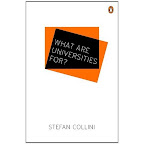
Collini has been interviewed a number of times surrounding the publication of his book, both on the radio and in print. In common with other polemicists, he sounds more moderate in person than in writing, where the `sneering tone‘ that Alice is critical of can be detected.
Collini’s book has been reviewed elsewhere, and not always favourably – this review in the Observer is particularly damming. The book is in two parts. In Part One, the scene is set. Collini offers a synopsis of the history of universities in Britain, and discusses what the purpose of the university was when the idea was conceived and how this has changed to the present day. Part Two is a collection of previously published (or broadcast) essays, each addressing a different aspect of higher education policy over the years, from the introduction of the Research Assessment Exercise in the late 80s to the above-mentioned commentary on the Browne Review.
Two aspects of this book were of particular interest to me, and I suspect that they were perhaps not the points that Collini imagined would be the salient ones for his readers. The (necessarily) brief history of universities in Britain was informative. For example, I knew that there had been an expansion in the numbers of students entering higher education in the UK in recent decades, but I had not appreciated just how dramatically numbers increased – from something over one hundred thousand undergraduates in the early sixties to two and a half million today. Even since the mid-nineties, numbers have increased three-fold. It is not a surprise to me that those who have witnessed these changes are remarking on them.
The other chapter that I found interesting was the chapter about the humanities. There are no full-time undergraduates studying for degrees in the Humanities at Imperial College, although our Department of Humanities offers courses in languages and humanities that students and staff can take for credit or interest. Scientific researchers do not seem to get as defensive as Collini becomes in this chapter, where he describes the study of the humanities and its value. I was surprised to read that
the combined budgets of the seven research councils in the UK amount to some £3 billion, but only around 3% of this goes to the Arts and Humanities Research Council
and wondered briefly how the country might be different if these figures were reversed, and the lions share of the research budget spent on Humanities, and a fraction on Science, instead. I suppose I was not aware that the Humanities felt they needed defending in the way set out in this chapter, but having read it, I have a clearer picture of what motivates their study.
The chapter comprising the essay that was published to coincide with the introduction of the RAE made me wonder how funding was distributed in the pre-RAE days. The RAE has been around as long as Higher Education has been on my radar – at the time I was applying for undergraduate study, departments boasted of their RAE scores and I understood that this entity was one component of league table rankings, although at the time I had little idea what it meant. I can imagine how the introduction of such bibliometrics would have incensed academics, but is the perception of such measures different among those whose careers have developed with these exercises ever-present?
Collini’s book is readable and lively, with touches of humour. I imagine that many of Collini’s readers will be “the converted” to whom he is preaching, and I would be surprised if his book has much effect on policy – Willetts, for one, seems unconvinced. However, What Are Universities For? filled in some gaps in my knowledge and gave me greater insight into the challenges current and future academics are likely to face.
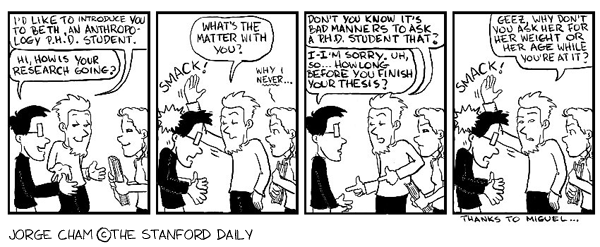
is a question I get asked (what feels like) often. Normally, it is a follow-up to
What year are you in [of your PhD]?
(Third.)
Inwardly, my response is not dissimilar to that of Mike in this PhD comic:
On the advice of several people, including one from this parish, at around the two-year mark I put together the outline of my thesis in LaTeX. Once you take into account the title page and space for each of the tables of contents, figures and tables, and a list of appendices, you already have at least half-a-dozen pages. Then at least one page marking the place for each of the chapters, a list of acronyms, a bibliography, and appendices takes your page count to twenty or more before you have done any writing proper. I was congratulated:
Wow, Erika, you have started writing your thesis!
But to say I have a way to go is an understatement.
To put meat on these bare thesis-bones, I have the material from my upgrade report that will give me the basis of my introductory and background chapters. My first paper will form the first research chapter, and the remaining chapters will comprise my subsequent work. With this material in hand, I am not putting pen to completely blank paper. Nonetheless there are numerous gaps to be filled in what I have already written. Results that did not make it into published work will have a place in the thesis, and some additional experiments will link the chapters together.
I devoured was inspired by Cath’saccount of how she wrote her thesis from scratch in a mere three months (hats off to Cath!). Richard took a similar approach. I digested Athene’spost on the topic from the point of view of someone who has both written (one) and read (several) theses. Advice on thesis-writing can be found on the websites of universities, other organisations, and individuals. The Thesis Whisperer has some helpful tips, and some inspiring posts.
I was glad I had taken Sylvia’s advice when my supervisor requested I bring an outline of my thesis in bullet point form to our next meeting. I was able to return to my skeleton thesis and start adding headings and subheadings to each chapter, with notes where the figures and tables will go. The table of contents now forms a bullet-point outline. This has the effect of breaking the writing task down into sections and sub-sections. I can see where what I have written already is going to fit in, and which gaps I still need to fill.
Now (or soon) is the time to start filling in those gaps. A fellow PhD student and I have discussed the idea of having a `writing day’, devoting one day a week soley to making progress on the thesis. I like the idea of a writing partner, as described in the first vignette on this page. I have seen others using the #shutupandwrite hashtag (HT the aforementioned Thesis Whisperer) or the Pomodoro technique to keep on-task. As you can see, I have a collection of useful tips already in mind. Do you have any more to add?
One year since the launch of Occam’s Typewriter, one year since my MPhil to PhD upgrade exam, and one year (more or less) to go until the end of the PhD. This seems a suitable place for stocktaking.
This year’s blogging has brought unexpected rewards, from finding out more about PhD practises globally, to leading a workshop for new PhD student bloggers. I have now had the privilege of meeting all the OT bloggers except Steve – but I cannot say I have co-authored a paper with him either.
In common with Cath, Stephen, Richard, Athene, and everybody else, here’s to a great second year at OT.
When I was revising for my undergraduate exams, I was exasperated by the sheer volume of stuff I needed to know. I was intimidated by the number of facts I would need to have to hand when I wrote my papers.
One supportive friend suggested that instead of stressing cramming I relax a little and try to be a bit more creative. At the time, I exploded with rage at their insensitivity scoffed at the suggestion, as if creativity had any part to play in my attempt to memorise the contents of Stryer.
I was reminded of this exchange when I was alerted to three new publications (“Good Practise Guides”) that have been produced by Imperial College‘s Graduate School. These documents are the result of a project funded by Vitae. The three publications (one for PhD students, one for postdocs and one aimed at supervisors and PIs) discuss what creativity means in the context of research and how to find the balance of creativity within the necessary structure of a research environment. The guides discuss how the opportunities for creativity within postgraduate research can seem at first to be limited, as the work is often repetitive and must be meticulous. If a supervisor has clear ideas about the way the research should be conducted, the student might feel restricted and that his or her autonomy is limited (at the same time as being grateful for the clear direction).
Within my postgraduate work I am fortunate to be given a fair amount of scope to be creative. Whilst I have clear direction on what is to be done, I am given the freedom to experiment with different approaches and ideas. Most of my work is computer-based and I find coding to be something of a creative process, although it is important not to get too carried away.
A PhD student can find other outlets for their creativity, too. Blogging (or getting involved in other science communication projects) is one obvious example. I found running the Science Blogging Workshop here at Imperial gave me the chance to think about teaching (itself a creative process and something many postgraduates do).
The conclusions of the Grad School’s leaflets (maintain good communications with your supervisor, and seek out opportunities for creativity that fit in with your research work) may seem self-evident. However, for a scientist in the midst of the nitty-gritty of experimental work and data analysis, these opportunities can be difficult to see and it is refreshing to be reminded of their existence.