Latest posts

Recording an Audiobook

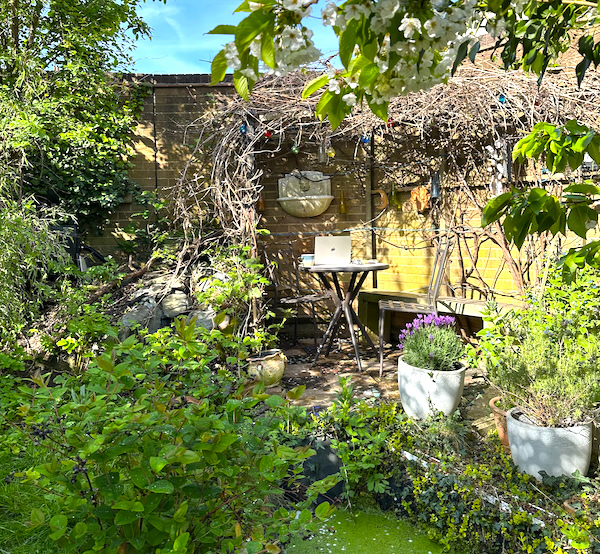
IMG_8687Here I am in my home studio, Flabbey Road, which serves double triple multiple duty as office, library of SF, repository of ancient and medieval literature, reptile room, and man cave, just about to record the audio version of my next book Demure Mindfulness the Taylor Swift Way The Decline and Fall of the Human Empire. Amazingly, you can already order it, so I’d better get on with it. Last time I recorded an audiobook (A (Very) Short History of Life on Earth), listeners complained that I read too slowly, but mostly that I had had too much fun adding sound effects. This time the publisher wanted me to record with a producer listening in, but after a gentle reminder that I’d be frequently distracted by men women and dogs, and that they’d allowed me to do it unsupervised last time, they backed off, with the advice only that I spoke a bit faster. They didn’t say anything about sound effects (I shan’t add any. Well, maybe one or two). The studio has also improved since last time, when I recorded audio directly into  my trusty but very ancient iMac (OSX Lion was all it could manage, poor thing); a trusty but equally ancient version of GarageBand; and a trusty but very ancient no-name dynamic microphone I’d used for backing vocals in any number of beat combos from the year dot. Today I am using a trusty Untitledbut somewhat newer iMac (OSX Sequoia, noch); a newer version of Garageband; and a Focusrite Scarlett 2i2 audio interface. You might both remember that I resisted upgrading for some while, but now I have everything set up, the sound quality seems a lot better. This is no doubt due to the interface; and the greater processing power of the newer computer. The coup-de-grace, though, was that my ancient and trusty dynamic microphone was rendered useless as a consequence of having been peed on by one of our three cats (I think it was Elvis, but he’s saying nothing), so I now have not one but two yes two count ’em two microphones, a Samson Q9U and a Shure SM57, which also make the sound better. The former I bought some time ago as it can feed either USB or audio and is great for podcasts. The latter I bought to trigger the vocoder application in my Korg Nautilus synth, but I am pressing it into service here. I balance the microphones in my trusty Behringer Xenyx 802 mixer, which feeds into the Focusrite and thence into the computer. Using two mics at once, simultaneously and both together  gives a nice, warm, intimate sound. And I DO like the sound of my own voice. So now I’m all set. Are you sitting comfortably? Then I’ll begin…


Comments Off on Recording an Audiobook

2024 Top Ten

And here we go again! 2024 saw me lean in to concert photography in a bigger way than in any previous year (I think), including my second visit to the Norfolk County Fairgrounds Festival, and some more lurking around clubs in Toronto and places nearby. I also continued my long-standing relationship with the Canadian Musicians Co-op, the Toronto IndyCar race weekend, and the Norfolk County and Royal Agricultural Winter Fairs. Bits and pieces of most of these find their way into this year’s list.

So, in the customary “no particular order”, here are 2024’s top ten. All of these are found on Flickr, along with many others from the year past.

May: The Lemon Pistols, Horseshoe Tavern, Toronto
Sometimes, it’s the bass player that give you the most fun image. This band, a raucous mix of ska, punk, and general tomfoolery, headlined an entertaining evening along with three other bands. More here.
The Lemon Pistols, Horseshoe Tavern, Toronto

November: Aerialist, Royal Agricultural Winter Fair
The opening night, in a box with friends from Raynham Stables. Even so, there were opportunities to make some photos, including shooting down on a pair of aerialists dangling precariously from the rafters of the Coca-Cola Coliseum. More here.
Royal Agricultural Winter Fair 2024

March: My Own Money and fan, See-Scape, Toronto
An enjoyable evening at a venue that bills itself as “Toronto’s original Sci-Fi/Cyber Punk Themed Bar and Cafe”. There is a nice little live music stage upstairs, ideally suited to this high-energy, electro-pop band and a couple of other acts that were playing. More here.
My Own Money, See-Scape, Toronto

July: Bif Naked at Big Shiny Saturday, Toronto
An unexpected opportunity to photograph this legend of Canadian pop-punk in the inaugural season of The Bowl at Sobey’s Stadium in Toronto. More of Bif and band here. I also photographed this band in 2023, and would do again, anywhere, anytime.
Bif Naked, Big Shiny Saturday Toronto 2024

July: Team Penske at work, Ontario Honda Dealers Indy Toronto
I do enjoy photographing pit stops. This one was a challenge, given the notoriously claustrophobic pit lane on the Streets of Toronto. Here, Will Power’s crew makes short work of getting him in and out, with new tires and lots of fuel. More here.
Ontario Honda Dealers Indy Toronto 2024

November: Riders, Royal Agricultural Winter Fair
I like this study of intense concentration as competitors watch show jumping at the Royal Horse Show.
Royal Agricultural Winter Fair 2024

July: Your winner, Ontario Honda Dealers Indy Toronto
Andretti Global driver Colton Herta picked up his eighth career IndyCar win in Toronto, and once again I had the chance to dive into the media scrum on pit lane as he hopped out of his winning car. He would go on to also win the season finale in Nashville, en route to second place in the championship.

It’s always a bit of a crap shoot as to where to stand during these photo-frenzies, but I needed to show the crowd in the grandstand behind him. Overall, I’m pretty happy with this result, and a few others from the same moment.
Ontario Honda Dealers Indy Toronto 2024

October: James Barker Band, Norfolk County Fair
My concert photography friends know that I love a behind-the-soundboard photo. This is the best I managed this year. Canadian country musicians The James Barker Band, headlining Friday night’s “party on the track” at the Norfolk County Fair in Simcoe, Ontario, Canada. More here.
James Barker Band, NCF 2024

November: Show jumping, Royal Horse Show
Sean Jobin rides Coquelicot VH Heuvelland Z at the International Jumper Speed Challenge. It had been quite a while since I’d photographed any show jumping. I wish I’d done more.
Royal Agricultural Winter Fair 2024

November: Saddle bronc riding, Royal Rodeo
Another exciting opportunity – this time, my first experience shooting rodeo from down in the corrals, on the final day of the Royal Agricultural Winter Fair. A little hair-raising, but very fun, up close with a wide-angle lens. I’d definitely do this again!
Royal Rodeo, RAWF 2024

So, there you go. If you’d like to see everything from the previous year, by all means start at the top of my Flickr page and work backwards.

Happy 2025, everyone.

Posted in acrobat, autosport, car racing, concert photography, country and western, equestrian, fair, fall fair, festival, Hobbies, horse show, motorsport, Music, music festival, musicians, Photography, pop, pop-punk, racing, rock, rock and roll, rodeo, show jumping, sports photography, Western, winter fair | Comments Off on 2024 Top Ten

A Long December

Last winter seemed to go on for ages. At least, way back at the end of January I remember desperately longing for summer.

And then I was made redundant, which hadn’t been on my bingo card for 2024.

Some good did come of that. I left a rather toxic environment, got a new MacBook (yay!), did some writing, worked on some infrastructure in the woods, and found a job that landed me back with some clients I knew from a previous life, working in my favourite therapy area again. The only downside, really (apart from the initial shock to the system and the stress of interviewing) was the eye-watering tax hit arising from the redundancy package. Oh well.

Summer did make an appearance, of a sorts, but it was wet, wet, wet.

It was the wettest year since records began, in fact (the records in question beginning in April 2017, when I got my weather station).

But we did have two weeks in Italy, and a weekend away in Devon (where I shot my first roe buck), and towards the end of the year even managed to see Crowded House in concert.

Which was a first for me, and finally helped me to answer that most awkward (for me) of all questions—”What’s your favourite band?”

I even managed to keep—for half the year, at least—a resolution to write a blog post ‘every couple of weeks or so’. Just don’t look too closely at the calendar.

Joshua passed his Eleven Plus (‘The Kent Test’ as they call it here).

And then the days disappeared and I was in Berlin again and then I came back and put the Christmas tree up, fighting off the fludemic as I did so, and it was dark too early but the lights brought joy to our end of the street. And we managed to fit in a quick weekend in Paris with bonus Eiffel Tower-climbing.

Christmas came, and is just ending for another season, and soon we’ll notice the days lengthening again and maybe, just maybe, I’ll stay employed but also manage to finish my novel.

Stranger things have happened.

Happy New Year, y’all.

Posted in Christmas, Crowded House, Don't try this at home, employment, Happy New Year, Me, novel, rain | Comments Off on A Long December

We Haven’t Had Enough of Experts

When I talk to student groups, as I still do quite often, I talk as much as what else one can do with a science/Physics degree beyond the obvious, as about the research I used to do (quite a long time ago now). I like to encourage them to think about careers beyond the academic lab and roles for which their science education will provide an excellent base. Obviously, teaching is one where the need for more graduates entering the profession is crucial, particularly in Physics where the shortfall is massive: in 2023 only 17% of the target for trainee teachers in the subject was achieved, ‘up’ (if one can call it that) from 16% the year before. But I also like to highlight the policy arena, both politics itself and the civil service.

Angela McLean, as GCSA,  has stressed the desirability of having more scientists in the civil service, with a specific science and engineering fast stream, which is steadily growing. There were 113 participants in this scheme in 2023, compared with 18 in 2015. The more generalist fast stream entry now has a (Cabinet Office) target of 50% of their new entrants being scientists, a figure that was achieved, and even exceeded, in 2023. However, having achieved that, it is important that their scientific expertise, their numeracy and analytical thinking skills, are put to good use. Reading an account of how the Civil Service is deployed in Ian Dunt’s 2023 book (How Westminster Works….and Why it Doesn’t), may make one question whether that is, in practice, the case.

Dunt discusses the history of the civil service from its reform in the 1850’s, following the Northcote-Trevelyan Report. At that time, civil servants were expected to be generalists, coming typically from Oxbridge with an arts degree, but expected to be able to tackle anything. My grandfather – who read Classics in Cambridge before the first world war – would occasionally talk about the Indian Civil Service exams he sat after his degree. My memory is imperfect of the things he said to me during my teenage years, but these exams involved something like fourteen separate papers covering different topics over three days. I assume the questions were similar to those old types of name the principal rivers in Mesopotamia or list the kings of England in the thirteenth century, but I never pressed him on that. Not necessarily, however, knowledge particularly useful even to an Edwardian civil service – or India come to that. I don’t know if he ever intended to go to India (I often think of the questions I wish I’d asked him, but wasn’t interested in at the time, plus I had zero appreciation of the consequences of colonialism back then), but he ended up as a clerk in the House of Commons instead, where he formed a dim view of both Lloyd George and Winston Churchill. The war put an end to that position, as he headed off to France.

But enough of the personal detour, although recalling his account of the exams he sat may have mislead me about the more modern civil service. Dunt points out that many people over the last 50+ years have raged against the lack of specialist knowledge the civil service system utlises (and it is the structure he is railing against, not the individuals serving). He quotes an essay from 1959 by Thomas Balogh entitled The Apotheosis of a Dilettante and the 1968 inquiry led by Lord Fulton, who highlighted the issues around generalism and churn. Then, as now, people get moved on as the obvious way to gain promotion, so that knowledge gained in one sphere becomes irrelevant a couple of years (or less) later. For, according to Fulton, scientists and engineers – and yes, even in 1968 there were such people employed –

‘get neither the full responsibilities and corresponding authority, nor the opportunities they ought to have.’

I suspect Dunt doesn’t believe much has changed since then, and he rails against the widespread use of consultants instead of constructively using what experts they do have. He states:

‘On a very basic level, government departments have no idea what skills, knowledge or experience their staff have, because no one bothered to track it. Many departments do not collect basic workforce data…’

There are government departments where science sits squarely and centrally in its policy-making and their teams include many scientists. But, as I discovered some years back when I became chair of the Science Advisory Council for the Department of Culture Media and Sports in 2015, that particular department had precious few scientists on its staff, about one as I recall. (It didn’t even at that point have a CSA, only a deputy who was an economist.) That position changed subsequently when it assumed responsibility for digital, between 2017 and 2023 until DSIT took on that responsibility.

Talking of DSIT reminds me of a visit I made to its predecessor, BEIS, soon after the creation of UKRI. The primary focus of that visit was to stress the importance of UKRI making progress on interdisciplinary funding, for instance through the newly announced Strategic Priorities Fund, and I was talking to some of the staff assigned to UKRI from BEIS as it got going. I may have thought I was going to talk to those who knew what was going on, but ended up realising I was instead giving some new and junior staff a tutorial about how grant-funding committees worked. I was disappointed that the direction of knowledge transfer was from me to them, not vice versa, but I hope they found it useful. What I do recall was the insertion of various Latin epigrams into the conversation by one of the civil servants, and I left feeling that he, like my grandfather, had a Classics degree from Oxbridge, but that it didn’t mean he had a good grasp of how UKRI could or should operate. I had to hope I had inspired him to do more homework.

Now I work with another Department (the Department for Education) as chair of their newly formed Science Advisory Council. They have now, and for the first time I believe, a CSA (Russell Viner, a paediatrician) and a small science team, actually populated by scientists, one which probably could usefully be larger. I am excited to be working with them, and excited by the signs of genuine cross-departmental working under the new government’s missions. I am also encouraged by the willingness of those in Whitehall and elsewhere to talk to me about their work and potentially mine. I hope Dunt is wrong in his pessimistic analysis of the way Westminster works, or doesn’t; and that the vital place of STEM within Whitehall is fully recognized in our increasingly technologically-led society. We live in a world in which innovation and growth are crucially important for our economy and consequent societal wellbeing but which can only be delivered with a well-functioning education and skills system. All of which requires an appropriate spread of scientists and engineers across government departments.


Posted in careers, Civil Service, Government Departments, Ian Dunt | Comments Off on We Haven’t Had Enough of Experts

Christianity unwrapped: notes from the second year

  1. Surprising conversations with the Vicar Part IV:

    1 The Lord said to me again, ‘Go, love a woman who has a lover and is an adulteress, just as the Lord loves the people of Israel, though they turn to other gods and love raisin cakes.’

    Erika: What does God have against Garibaldi?

  2. The week after Holy Week, and about a month into my new parish administrator job. The rest of the staff team are on holiday. I am holding the fort alone. First I fall out with the printer, then I break the shredder, and by the end of the week I have entered into a state of impaired communion with the door entry phone. Through tears of frustration and with cyan ink everywhere I discern that, whatever the future holds, I am not called to a glorious career in church administration.
  3. Theology and technology become a running theme: I am not alone with the printer thing. Clergy empathise. It is well know, they inform me, that printers are cursed by witches before dispatch. James adds that if Jesus was to return and cast out demons, he would not cast them into swine but into printers. Another clergy friend suggested that the rapture has happened and we’ve all been left behind, with the printers. I consider writing it all up: Is heaven paperless? Clergy theories and printers.
  4. James forwards me the link to the diocesan vocations day. I guess it’s time.
  5. I am asked

    How was the vocations day?

    I reply

    Magical 💕

  6. Resurrection and Tacos: Easter Lunch for the St Mary’s 20s and 30s crowd.
    Resurrection and tacos

    Resurrection and tacos: Easter lunch in the crypt

  7. The readings for the fifth Sunday after Easter are thrown at me with minutes to go until the service starts. I run around the church trying to find someone to teach me how to pronounce “eunuch”.
  8. Struggling with the Easter Bunny Bench Press Max Out, an in-house bench press event at the gym which takes place on Easter Saturday. My coach says I seem irritable. The incongruity bothers me. Jesus is harrowing hell, and I am maxing out my bench press.
  9. Landing a regular gig leading morning prayer.
  10. Landing a second parish administrator job. I was not prepared for the extent to which I would fall in love with the parish.
  11. Developing core skills for church life: how to print an A4 document as a double-sided A5 booklet.
  12. Developing core skills for church life: how to tell generous parishioners that we as a church cannot use their donations of, variously, broken cookware, opened food packets, old clothing. I master the church worker’s refrain: it’s a church, not a bin.
  13. Developing core skills for church life: how to create a poster for a Bible study day, in moments, in Canva.
  14. People asking me within weeks of meeting me, whether I had considered ordination. This is getting real.
  15. Theology, technology and miscommunication. I again consider writing up my experiences. Is email fundamentally incompatible with grace? Case examples and theological reflection.
  16. Theology, technology and miscommunication. I wonder if I could put together a special issue. Can we recreate the early church in WhatsApp groups? Social connection among recently converted Christians.
  17. Theology, technology and miscommunication. I wonder what it would take to implement a “pray and send” button as a plugin to Outlook. I wonder why this has not been done before.
  18. Theology, technology and miscommunication: collected papers. What counts as unacceptable before God? The occult, and being in charge of who is permitted to hire the church hall.
  19. Coming to terms with the reality that parish administrator and some kind of ministry are two different callings. I want to be giving the people communion, and all I have to give them are badly formatted hymn sheets. It is time to move on.
  20. Only at Imperial: At the start of a Carols by Candlelight service, the building is in darkness. Each of the hundreds of congregation members holds an unlit candle. The priest lights a candle and uses this to light the candles of two members of the congregation. They in turn light the candles of a couple of people around them. A wave of light gathers pace as it sweeps the church. The student sat next to me leans in and observes:

    exponential growth

  21. Someone asks me if I know Rosemary Lain-Priestley.

    Yes

    I say.

    She would remember me. We had the same hairdresser for a while back there.

  22. Being asked whether I want to train as communion assistant, administering the chalice.

    It’s alright if you cry, right? If your tears get in the cup they get sanctified? Right?

  23. My first and likely last contemporary Christian worship band concert, For King + Country perform their Christmas album at indigo at the O2. Milling around the Millennium Dome trying to find the queue for the gig, I spot a couple wearing matching sweatshirts. Their outfits declare

    Jesus: He’s the reason for the season.

    I’ve found my people, I think. Then I pause: These are my people?

  24. Past lives haunt this new one. Monthly I attend a bellringing practice that takes place moments from the new GSK headquarters in the centre of town. In early months of the year I must pass the branding hoardings; by the end of the year I am walking past the newly opened building. I glance at the security passes of the employees finishing their working day and commuting. I am searching in vain for my old self.
  25. Lives in lanyards.

    Lives in lanyards.

  26. Bellringing milestones: ringing my first quarter peal, and my second, and my third.
  27. Third quarter peal

    The band for my third quarter peal. Read about it on Bellboard.

  28. Finishing reading the Bible in a year.
  29. Ringing in the New Year. The past two years have been extraordinary. I pray, and I keep walking.

    Happy New Year.

Posted in discernment, Faith, Life, powerlifting | Comments Off on Christianity unwrapped: notes from the second year

Books of 2024 – a disappointing year

With a handful of notable exceptions, my book reading in the past year has not been an altogether happy experience.

Montage of posts on Twitter, each a micro review of one book.

Micro reviews on Twitter – click for a larger image on Flickr

I worked my way through 18 titles in all, work being the operative verb in many cases. That low tally is about average for me, a cyclically unimpressive feat. My excuses are two-fold this year. First, the increasing fragmentation of my time because of changed circumstances; although I am semi-retired I’m finding it harder to carve out hours of quality time. Second, I have joined a rather nerdy science-policy book club, which means getting through tomes that are more academic and often therefore less readable.

While I very much liked Dan Davies’ exposé if the ills of modern organisations in The Unaccountability Machine, I was less enamoured of The Ordinal Society and The Eye of the Master, which explore different aspects of control and digitisation within our economies. My fellow book-clubbers enjoyed these latter two but I found they wandered too often into abstraction. I wanted something more concrete to get hold of. Runciman’s The Handover and Frezzoz’s More and More and More offered richer rewards for the effort of reading, but neither really set my mind buzzing with new insights.

I had a better time with Torsten Bell’s Great Britain and Sam Freedman’s Failed State, which I read not long after the change in government over the summer. Neither is exactly uplifting but their dissections of the UK’s economic and political problems were as sharp as I have come across. Grimly, it is difficult as yet to see how the Starmer administration will be able to make substantial headway towards the much needed solutions.

By far the best non-fiction title I read this year was How Life Works by the perennially productive and polymathic Philip Ball. This one did set my mind buzzing. Ball has picked his way though the baffling complexity of molecular biology – a world in which I immersed myself professionally for several decades – and come up with a daring synthesis that offers nothing less than a new way of seeing how an blundering mess of molecules can sustain the miracle that is organismal life. It is spectacularly good.

Unusually for me, nearly half the books I read this year were fiction. It’s a trend I hope to continue although here again I had a few misfires. I could not finish John Boyne’s The Heart’s Invisible Furies and struggled all the way through both The Good Soldier and Flowers for Algernon. These titles have delighted other readers but they left me coldly alienated.

I had more fun with spooks and detectives in the first of Mick Herron’s Slow Horses series and my old friend Raymond Chandler’s The High Window.

My two favourite novels of the year were Norman Maclean’s A River Runs Through It, which I discovered via a wonderful New Yorker article by Kathryn Schulz, and Samantha Harvey’s Orbit. They are very different books but in both cases the quality of the writing and the acuity of the authors’ perceptions combined to deliver wholly original and heart-breaking views of the world.

Montage of posts on Twitter, each a micro review of one book.

Micro reviews on Twitter & BlueSky – click for a larger image on Flickr

For round-ups of books read in previous years, please follow this link.

Posted in book review | Comments Off on Books of 2024 – a disappointing year

Photos of 2024

Window into a bright yellow art shop framed by the tan walls of the building

Barcelona is color

As is my habit my favourite photographs from the year just past can now be found on an album on Flickr.

There are sixty-three in all, selected from a total of about 1800 which is quite a drop from my usual tally of around 2500. The dip in activity reflects my changed circumstances. Though I am now semi-retired, a release you might suppose to give me more time for photography, my caring responsibilities have restricted my opportunities. I am also travelling less, so a greater proportion of my shots are taken closer to home.

The selection is biased away from family life. My wife and children appear in only one or two of the photographs that I have picked out and even then only in silhouette. Those moments are not for public view.

Instead I have opted to share some of the ways I see and enjoy the world around me – the shapes and the colours in some of the more abstract compositions, and the moments and (imagined) stories snatched on the street. So the selection is still a personal one, though I’m not altogether sure what it says about me.

In any case, I hope you might enjoy.

Collections from previous years are available for 2019, 2020, 2021, 2022, and 2023.

A pedestrian walks to the left towards a sign directing pedestrians to the right. Behind her is a poster of an enlarged pair of eyes from an oil painting.

Go your own way

Black and white photograph of a man, hands in pockets, walking on a wooden boardwalk on a beach. A sign behind him reads 'Joie de Vivre'

Joie de vivre

A group of figures silhouetted by the setting sun stands on a beach at the water's edge. On either side are parasols.

Family on holiday – Albania

View from within the Washington metro of the escalators leading to the street. Red and green lights are reflected in the floor.

The shape of an exit

A pair of glasses cast a shadow onto the weave of a sofa cushion - black and white.

Light and vision

A red flash of the leaves of a Japanese maple appear above a builders hoarding with a dense array of scaffolding behind.

The blaze of Autumn

A silver colander full of red strawberries casts a strong shadow onto a yellow tabletop

Summer fruit

Nighttime photo of London's Oxford Street. A bus approaches the camera; a taxi turns to the left, both surrounds by shoppers and bright Christmas lights

City of blinding lights

Posted in Photography | Comments Off on Photos of 2024

My Top Reads Of 2024

This year I read 64 books, the first time since records began (2014) that the number has exceeded my age in years (I am 62). The total might be inflated, though, as some of the books have been duologues or trilogies and I’m never quite sure what to do with these. In addition, I use the term ‘read’ advisedly, as thirty of these were audiobooks. The rest were dead-tree versions — none was an e-book. So here, in no particular order, are my ten best reads of the year, with the overall winner at the end.

UntitledCixin Liu: The Three-Body Problem This (with its sequelae The Dark Forest and Death’s End) evokes nostalgia for SF stories of an earlier age, from authors such as Arthur C. Clarke. It starts in 1967 when a young girl, Ye Wiejie, witnesses her father, a physics professor, beaten to death by high-school students during the Cultural Revolution. This traumatic event shades her future, and — eventually — that of humankind. We see her brutal exile to a remote logging camp; her involvement as a technician in a secret radio-astronomy program of initially unknown purpose; her political rehabilitation, and, finally, retirement as a physics professor at Tsinghua University, where her father had once taught. But there is another strand to this — or, rather, several, as the story is somewhat nonlinear. In the present day, Wang Miao, a materials researcher working on a super-strong nanofilament, is coopted by a bluff, hard-drinking, hard-smoking cop Shi Qiang to investigate the mysterious deaths of several scientists. This leads us, through various diversions, to a secret scientific society charting the very limits of science; eco-terrorism; an eerily realistic computer game set on a planet orbiting chaotically in a triple-star system (hence the title); and the search for extraterrestrial intelligence. The scope is vast, and some of the set-pieces are truly staggering. Witness, for example, an analog computer consisting of thirty million soldiers arrayed on a vast plain using black and white signal flags as ones and zeroes. And the efforts of alien scientists to create sentience by etching microcircuits inside protons. It shouldn’t really work, but it does. This is a work of SFnal genius in anyone’s cosmos.

UntitledAmor Towles: A Gentleman In Moscow Count Alexander Ilyich Rostov, late of ‘Idle Hour’, an estate near Nizhny Novgorod, returns to Russia from Paris after the Revolution to set his grandmother’s affairs in order. He is rounded up by the Bolsheviks, who, rather than shoot him for being a  ‘social parasite’, have what seems to be a worse fate in store. He is made a ‘former person’ and confined for life to the luxurious Hotel Metropol, just opposite the Bolshoi Ballet and within sight of the Kremlin, there to live at the state’s expense, in a tiny attic room, as he is forced to watch the collapse of his privileged world. But the Bolsheviks hadn’t reckoned on the resourcefulness of their prisoner. Rostov adapts to his new life and finds in it contentment as he encounters poets, actors, waifs, strays, journalists, diplomats, party apparatchiks, petty bureaucrats, movers and shakers among the hotel’s guests. His old-world decorum finds him taking a job as Head Waiter at the hotel’s prestigious Boyarski restaurant, as well as advising the New Russians on how best to conduct themselves in foreign company. This perfectly constructed novel is every bit as elegant and well-comported as its protagonist, with wry, funny asides and delicate prose lightly concealing the ups, downs — and horrors — of the Soviet Union from its birth until the early 1950s. A sign of a good book is if you miss it once you’ve finished, and I found myself missing the company of Count Rostov, known to his friends as Sacha, a man with a steely resolve buried beneath his well-groomed exterior.

UntitledAdrian Tchaikovsky: Children of Time (with its sequelae Children of Ruin and Children of Memory) Generation starship Gilgamesh is the last hope of humanity to flee a dying Earth in search of a new home. Eventually the crew discovers a gorgeous green planet that had been terraformed by an outpost of the long-gone human empire, watched over by a half-mad quasi-human guardian determined not to let any human land there and spoil her experiment in generating new sentient life. The life that arises, however, is not quite what the guardian — and the desperate crew of the Gilgamesh — had expected. Who will win the ultimate battle? Terrific, thrilling, madly inventive hard SF adventure.

UntitledLavie Tidhar: Maror People of a certain age will remember James Michener, who wrote vast blockbusters in which historical panoramas were seen through the eyes of a multi-generational cast of characters. One such was The Source (1965), telling of the Holy Land from pre-Biblical times to foundation of Israel. Maror, by Lavie Tidhar, can be seen as its antithesis. Yes, it’s a vast epic about Israel, but it is relentlessly anti-heroic. It stems from the idea that any fully rounded nation must have more than just politicians, heroes, generals, visionaries and pioneers. It must have whores, pimps, gamblers, gangsters, crooks and villains, too, and the boundaries between good and evil are not always clear. It starts with Avi Sagi, a cop so hard-boiled that he makes Dirty Harry look freshly laundered. Avi’s story, in the early 2000s, turns out to be just the first in a series of vignettes set in Israel (or among Israelis abroad) from just after the 1973 Yom Kippur war, through the Lebanon campaigns of the 1980s, up to 2008. The stories illustrate the history of Israel but through the eyes of cops so bent they could be drawn as pretzels; drug lords who are also devoted family men; soldiers, who, once out of the army, find jobs as ‘security consultants’ (please don’t call them ‘mercenaries’) to foreign terrorist organisations; professional drug couriers; politicians and generals who are also serial rapists and embezzlers, and who take advantage of the chaos of the Middle East to indulge in what are euphemistically called ‘import-export’ businesses. At the heart of it all is the mysterious, Bible-quoting Cohen, a policeman who is also a gangster, who plays both sides because, he says, if crime can’t be stopped, it has to be ‘managed’, and this means bending the rules. It turns out that Cohen was born on the day Israel achieved independence, and he can be seen as a kind of genius loci for Israel: sleeves-rolled-up, practical, cunning, doing everything to ensure Israel’s survival by any means necessary. The book is not without hope, though, even if cruelly dashed. In the mid-1990s, the young and idealistic Avi, trying to put a life of petty crime behind him, and fuelled, like all his generation, by the hope of the nascent Oslo peace accords and a peace treaty with Jordan, goes to a rock festival in Arad, in the Negev desert, and makes out with a girl. It all looks lovely… until disaster strikes. This is a portrait of a real event. The collapse of security barriers led to serious injury and death for young festival-goers. And on 4 November 1995, Yitzhak Rabin, an architect of peace, was assassinated by a Jewish ultra-nationalist hothead. Avi turns back to crime and after that the course of the book is relentlessly downhill. The story ends, as it began, with Avi, and from the foregoing you’ll not be surprised to learn that it’s not a happy conclusion. To anyone like me who admires Israel, even if they don’t always love it, this novel is deeply unsettling. But I am consoled that there is a message here, too, for progressives, who rightly deplore the fact that women and minorities have to work twice as hard to achieve as much as their white, male colleagues, but, in their hypocrisy (born of deep-seated antisemitism) question the very existence of Israel, because Israelis don’t live up to ethical standards they would not match themselves, or expect in anyone else.

UntitledW. G. Sebald: The Rings of Saturn  Sebald was an expatriate German academic who taught at the University of East Anglia in Norwich. The Rings of Saturn is ostensibly a travel journal, made on a walking holiday along the Suffolk coast southwards from Lowestoft, via Dunwich and Southwold. In reality it is a long series of digressions connected together in an almost stream-of-consciousness way, giving it the flavour of that peculiar state of thought one experiences while just on the edge of sleep. There you are, reading (to take one example among many) about a man who spends most of his life making a scale model of the lost Temple in Jerusalem, but before you know it you’re deep into a history of the cultivation of silk moths, with no recollection of how you got from one to the other. There are more literary allusions here than you can shake a stick at, and certainly more than I grasped. The debt to Borges is obvious and acknowledged. There is also a flavour of Joyce, though one should beware (as Borges himself would have warned) of trying to spot influences. In the end, comparisons fade. This book is sui generis: melancholic, marvellous, morose, magnificent.

Screenshot 2024-11-03 at 12.20.41Robert Harris: The Cicero Trilogy (Imperium/ Lustrum/ Dictator) The Imperium trilogy is a fictionalised biography of the lawyer, orator, statesman and philosopher Marcus Tullius Cicero (106-43 BCE) during one of the most exciting periods of Roman history, when the old Republic gave way to the Empire. That we know Cicero existed is attested by a wealth of material. Perhaps less well-known is that much of it was recorded by his slave and personal secretary, Tiro, who devised a shorthand method of recording speech verbatim. It is also known from other sources that Tiro, who long outlived his master, wrote a biography of Cicero, though the biography itself is now lost. It is this that Harris recreates, with his usual attention to detail, sensitive characterisation and matchless readability. Imperium records Cicero’s early life and training, rising through the political ranks from the relatively junior quaestor, through aedile, praetor and finally consul, during which Cicero made his name by the high-profile prosecution of Gaius Verres, a corrupt governor of Sicily. Lustrum covers Cicero’s tumultuous year as consul and the years immediately following, in which he helped foil a conspiracy to destabilise the Republic, during which he condemned several men to death without trial, a circumstance that was to dog him ever afterwards. Dictator charts the rise and fall of Julius Caesar, the various civil wars, and Cicero’s eventual downfall. Characters from ancient history shine out as real people. Not just Cicero, who is supremely clever, cunning and cultured — as well as crotchety, driven and vain — but the majestic if rather dopey Pompey; the fanatically stoic Cato; the vulpine Julius Caesar; Cicero’s ferocious and clever wife Terentia, and, in Dictator, the precocious Octavianus, who becomes the Emperor Augustus. It might not sound like it, but it’s a nail-biting thrill-ride as Cicero navigates the treacherous shoals and sometimes lethal hazards of Roman political life — especially as you just know it’ll all come to a sticky end. The dramatisation of Julius Caesar’s assassination is brilliant because, even though you know what’s about to happen, it’s so shocking.

UntitledJasper Fforde: The Eyre Affair This knockabout whimsy is set in England in an alternate 1985, in which literary investigator Thursday Next has a lot on her plate. A veteran of the ongoing Crimean War, she has to work out who really wrote Shakespeare’s plays; find some way to make it up with her equally-war-scarred Crimean veteran boyfriend; and venture into the closed communist republic of Wales to  track down arch-villain Acheron Hades, who has stolen the original manuscript of Jane Eyre.  Hades has also stolen a device powered by bookworms that will allow him to get inside the novel and kidnap the heroine, altering the novel beyond repair. That he has already abducted a minor character in Martin Chuzzlewit shows that he means business. It is gloriously silly, and there are episodes that are pure Python (sensu Monty). Fans of Terry Pratchett, Robert Rankin, Spike Milligan and Tom Holt will love it. And so will everyone else.

UntitledIsabella Tree: Wilding Despite her name, Tree is not a tree-hugging eco-warrior. She was forced to rewild when increasing debt forced her and her farmer husband Charlie Burrell into a corner. The Burrell family had been farming several thousand acres on the River Adur in West Sussex for generations. Before that, the area had been a hunting forest, back to the time of King John. By the end of the twentieth century, the thick, clayey soil was exhausted, and no amount of fertilisers, weedkillers and machinery was going to produce the yield of cereals required to meet their growing debts. The Burrells were up against it. Letting the farm go wild was their only option. What was so amazing was the disbelief and occasional hostility of their farming neighbours, who thought that allowing farmland go back to nature was, somehow, against nature. People — and not just the public, but conservationists — think that the countryside they grew up in has always been like that, and therefore should be preserved in that state, as if in aspic. In reality, the environment has always been changing. What conservationists think of as the natural habitat of endangered Species X is, more than likely, a degraded remnant that’s far from that species’ preferred surroundings. Tree tells the story of how the land occupied by the farm was (and is) gradually returning to its natural state. Doing this isn’t cheap, and requires funding from various bodies who, initially (and puzzlingly) were, if not as aghast as the Burrell’s neighbours, and still required a lot of convincing. But slowly, slowly, the Burrells are winning. Tree also dispels some modern myths. One is that Europe was once covered in dense, primeval forest, when the habitat was more likely to have been a mixture of woods and open country, what she calls ‘pasture’, an environment kept ever changing by the activities of animals within it, such as wild boar, deer, beaver and bison. Second is the seeming need of all farmers to make every square inch of the land productive, irrespective of  its suitability. She traces this attitude back to the Second World War, when Britain, importing most of its food and completely isolated, had to become largely self sufficient. The ‘Dig for Victory’ attitude has persisted, even though the world now produces more than enough food, and farmers are (or have been until recently) subsidised by the EU’s Common Agricultural Policy, which at one point swallowed more than half the entire EU budget, such that farmers were paid to grow as many crops as possible, with all that implies for use of pesticides and herbicides — when a lot of the food simply went to waste. Rewilding your land still seems to many like a romantic dream. But discussions around land use are needed more than ever to inject a dose of reality into the minds of farmers, conservationists, politicians and the public.

UntitledDaniel Finkelstein: Hitler, Stalin, Mum and Dad I am sure you both know that Daniel Finkelstein is a journalist and Conservative peer, and you probably are also aware that he is, like me, a Red-Sea Pedestrian, whose world view is inevitably coloured by the Holocaust and its consequences.  His perhaps more than most, as the families of both his parents were all but wiped out, one by Hitler, the other by Stalin. His mother’s journey began in Berlin and came to Hendon via Amsterdam and Belsen (her family knew Anne Frank’s family well). His father’s started in Lwów, Poland (now Lviv, Ukraine) and progressed via the steppes of Kazakhstan, though his grandfather was transported to the Arctic Gulag. I should say that the little humour this book contains is dark, and very far from books with similar titles such as, oh, I don’t know, Adolf Hitler: My Part In His Downfall by Spike Milligan. It is, though, calm and measured, and the author has trenchant things to say concerning the contemporary airbrushing out of Stalin’s crimes compared with those of Hitler, which tends to allow the modern Far Left an easier time of it than it deserves. That the book is a rip-roaring read, despite its complexities, is a product of the author’s own skill, though I note that the acknowledgements include thanks to Robert Harris, who as you know is one of my favourite novelists, and crafts thrillers from well-researched events, whether in Ancient Rome, Nazi Germany or Stalin’s Russia.

… and the overall winner is…

UntitledPhilip Ball: How Life Works This magisterial account of the workings of genes, cells and bodies is, first of all, an antidote to the gene-centric view of evolution, in which genes are ‘libraries’ or ‘blueprints’ or ‘programs’ for creating a body out of nothing, and all else is commentary. It turns out that genes are rather less, or more, or. well, something or other, it’s actually really hard to explain, and that’s because it’s almost impossible to describe what goes on at the scale of atoms and molecules without recourse to metaphor. It’s often been a cause of some wonder to me how molecules in cells can do what they do when they are packed in so tightly, and all surrounded by water that cannot possibly behave as a bulk fluid. How can molecules meet and interact in the way they seem to do in all those neat diagrams seen in textbooks when the viscosity regime must be rather like treacle? Such misgivings have similarly long preoccupied Ball, who is trained in physics and chemistry rather than biology, and can appreciate problems that biologists might miss. He  puts it very well when he says that the insides of cells are less like factory floors than dance floors, crowded with excited dancers packed in together and jiggling about and unable to communicate with one another because of all the noise. In such conditions, how can JAK kinase possibly get to JIL kinase across such a crowded room, in order to — well, let’s just think of something, oh, I don’t know, Release Calcium from Intracellular Stores? The intracellular environment is noisy, and very far from favouring the kind of neat networks and diagrams in which abbreviations cleanly interact with other abbreviations. Rather, says Ball, cells make a virtue of the noise and disorder. Molecular interactions are much less precise, much more fleeting, than one might imagine, and tolerate a degree of slop that no engineer would possibly countenance. Because of that disorder, the interactions between the various levels in the rough hierarchy of scales from genes to proteins to cells to tissues to organs to organisms are not always clear. But order emerges from the melee, nonetheless. If that’s all there was to How Life Works, it would be a good book. What makes it a great book is that Ball unflinchingly tackles the really big questions — what is the nature of life? What makes a living thing alive? What is the nature of that vis essentialis,  pneuma, je ne sais quoi? It’s here that Ball gets into challenging and exciting territory. Ball suggests that organisms are living because they make active choices. A dead one cannot. At the most basic level, a cell membrane can admit the passage of some ions, but not others, even against a concentration gradient — Maxwell’s Demon, made (in some sense) real. In the deepest philosophical sense, life is that which gives an assembly of atoms meaning. Given the difficulties of describing the biochemical and cellular processes of life without recourse to metaphor, some will find this hard to take. There is also the issue (which Ball deftly navigates) in which biologists are afraid to use terms such as ‘agency’ and ‘purpose’ for fear of invoking teleological or panglossian explanations, or, worse, welcoming a role for divine intervention. No such things are necessary — yet living things are definitely alive, and conventional prescriptions for the properties of life that we are taught in school (that it reproduces, grows, excretes, blah blah blah) fail to satisfy, and, being that this is biology, are plagued with viruses exceptions. As I was reading How Life Works, I was reminded of Erwin Schrödinger’s 1944 book What Is Life? subtitled The Physical Aspect of the Living Cell, in which the famous physicist attempted to tackle the essential problem of biology. What Is Life? was part of a movement in which physicists became enamoured of biology and, having done so, boosted it into the molecular age (Francis Crick was one such). Ball obligingly discusses What Is Life?, its deficiencies, successes and influence. How Life Works is What Is Life? for the 21st century, and, because we know so much more than people did in Schrödinger’s time, is more successful  How Life Works is a milestone in its field and should be required reading for anyone seeking to take an undergraduate degree in biology.

Posted in Science Is Vital, Science-fiction, Silliness, Writing & Reading | Comments Off on My Top Reads Of 2024

What I Read In December

UntitledDaniel Finkelstein: Hitler, Stalin, Mum and Dad I am sure you both know that Daniel Finkelstein is a journalist and Conservative peer, and you probably are also aware that he is, like me, a Red-Sea Pedestrian, whose world view is inevitably coloured by the Holocaust and its consequences.  His perhaps more than most, as the families of both his parents were all but wiped out, one by Hitler, the other by Stalin. His mother’s journey began in Berlin and came to Hendon via Amsterdam and Belsen (her family knew Anne Frank’s family well). His father’s started in Lwów, Poland (now Lviv, Ukraine) and progressed via the steppes of Kazakhstan, though his grandfather was transported to the Arctic Gulag. I should say that the little humour this book contains is dark, and very far from books with similar titles such as, oh, I don’t know, Adolf Hitler: My Part In His Downfall by Spike Milligan. It is, though, calm and measured, and the author has trenchant things to say concerning the contemporary airbrushing out of Stalin’s crimes compared with those of Hitler, which tends to allow the modern Far Left an easier time of it than it deserves. That the book is a rip-roaring read, despite its complexities, is a product of the author’s own skill, though I note that the acknowledgements include thanks to Robert Harris, who as you know is one of my favourite novelists, and crafts thrillers from well-researched events, whether in Ancient Rome, Nazi Germany or Stalin’s Russia.

UntitledBernhard Schlink: The Reader (translated from the original German by Carol Brown Janeway) offers another picture of the war and its consequences though from a very different angle. The protagonist is an intelligent young man growing up in West Germany in the late 1950s and early 1960s. His teenage sexual awakening comes through the chance meeting of a woman more than twice his age and less than half his intellectual accomplishments. It turns out that the woman has a very grim past. At the risk of spoilers, the book is a sensitive examination of the conscience of a country trying to come to terms with its collective guilt, which, while fresh in the memories of some, many others would rather forget. I came across this book in a pop-up book exchange on the route of one of my regular dog walks. I was intrigued as the cover gave very little indication of its contents and so, intrigued, I dived in.

Screenshot 2024-12-08 at 07.06.56The Magnus Archives  You’ll be aware that many of the books I read these days are audiobooks, so I don’t read, so much as am read to. This year I have also begun to listen to podcasts, and my tastes gravitate towards horror (I especially enjoyed The Lovecraft Investigations). I don’t include podcasts in my list of books, because they aren’t, though I felt I should add a note to explain why my recent listings of books have been less full of late, for I am currently consumed obsessed with The Magnus Archives. The schtick is this: The Magnus Institute, centuries old, is dedicated to the recording of paranormal incidents. One of the tasks of head archivist Jonathan Sims is to read the statements made by members of the public onto cassette tape – for some reason, paranormality corrupts digital attempts to capture such testimony. Each episode corresponds to one testament. At first, the stories seem unconnected but as the series progresses, certain themes emerge, and in the climax of series one some of them squish wetly up from the basement. Series One comprises forty episodes – each one is twenty minutes long or so. There are five series. At the time of writing I have reached the end of series four (some 160 episodes in). And then it turns into The Magnus Protocols. I may be some time.

UntitledSimon Toyne: Sanctus Action-packed thrillers with touches of religion, conspiracy theories and secret codes have long stuffed the shelves of departure-lounge bookstores. I picked this one up from the same pop-up book exchange that produced The Reader (above). If you have an aversion to the genre, you should stop reading this now, for if you thought it wasn’t possible to get any worse than The Da Vinci Code — it is. The setting is Ruin,  a fictional city in south-eastern Turkey, dominated by a mountain-sized  monolith in which lives an ancient order of monks devoted to guarding the Sacrament, an object whose nature they have closely guarded since before the dawn of history. But matters get decidedly wobbly when Kathryn (an American investigative journalist) and Liv (a charity worker) get ensnared in the secretive sect’s malign machinations. The action sequences are fine, but come at the expense of characterisation, so much so that I found it so hard to tell the difference between  the two main protagonists (Kathryn and Liv) that I often had to backtrack to discover who was who. Second, the fantasy elements (for there are some) are extremely ill-thought-out. Third, the implausible name of the city should have been a clue to the apparent lack of any kind of research into the setting. Ruin might plausibly be the name of an abandoned gold-mining town in Nevada, but not a city in Turkey. The residents of Ruin are strangely colourless. They talk in Americanisms (which is odd, as the author is English); and live in a town that might as well be Akron, Ohio. I understand that orientalism is a dirty word nowadays, but a town in Turkey should feel — well — Turkish. There is no sense of the heat, the smells, the sounds or even the contemporary politics of a city in the Middle East (and one that’s fairly close to the Syrian border, noch). There are no mosques, no muezzins, no clash of tradition with modern western culture. The police detectives have names straight out of central casting (Arkadian, Suleiman) and behave just like American cops, working in an American law enforcement system. This is a great shame as the concept is a gift for laying on some gothic sensory overload — mad monks in the mysterious East prepared to go to any lengths to protect the occult nature of ancient artefacts — what’s not to like? But it is an opportunity not only missed, but completely abandoned. In his rather good and surprisingly sane essay Supernatural Horror in Literature, H. P. Lovecraft writes that the one thing a weird or gothic tale can’t do without is atmosphere. Sanctus has all the atmosphere of the Moon.

Screenshot 2024-12-27 at 09.04.04Peter F Hamilton: Exodus: The Archimedes Engine Another day, another vast epic space opera from Peter F. Hamilton. When the Earth receives a signal from aliens known only as the Elohim of plentiful terraformed worlds to inhabit in the Centauri Cluster, millions of people set forth in giant ark ships. By the time the first ark ships get there, the Elohim are no more, but the planets’ bounty allows the humans to settle. 40,000 years later, the ark ship Diligent finds that the earliest humans to get there have evolved and stratified into a rigidly controlled society dominated by the post-human Imperial Celestials. Finn, a scion of a grand family of post-humans created by the Celestials as planetary administrators, yearns for freedom and, by fair means or foul, seeks to acquire the Diligent and fit it out as a starship. At the same time, an orphan gas giant planet is approaching the Centauri Cluster from deep space. Rich in iron, its presence is likely to destabilise the entire economy. To foil this, various parties seek to subvert the Archimedes Engines (relics of Elohim technology), the only devices capable of steering a planet. Add the usual Hamiltonian mix of detective stories, political intrigue, spectacular action sequences and imaginative locales, and the sesquipedalian author is at the peak of his game. I listened to it on audible — I believe the dead tree version is some 900 pages long, and this is the first of a two-novel sequence.  Books like this pose a problem. Consuming them all at once is rather like being forced to eat an entire selection box of rich chocolates. But taking it in easy stages runs the risk of losing the threads of the labyrinthine plot.

Screenshot 2024-12-27 at 09.27.19Mark Dunn: Ella Minnow Pea Back in the day, I believe trainee typists were often assigned the task of typing the pangram the quick brown fox jumps over the lazy dog. Hence this charming novella, set on the fictional island nation of Nollop, just off the coast of the Carolinas, named after one Nevin Nollop, founder of the nation and supposed creator of the one-sentence tale about the swift vulpine’s leap across the body of the indolent pooch. The residents of Nollop love language and are keen letter writers (the entire novel is epistolary). Nollop’s statue has pride of place in the town square, along with the pangram, each letter of which is inscribed on a single tile. When the tiles begin to fall off, the island’s council forbids the use of the fallen tile in any speech, correspondence or reading matter. At first, the losses of Z, Q and J hardly signify, but the situation becomes dire and the increasingly inarticulate Nollopians are forced to bear ever more authoritarian rule, while being less and less able to express their dismay. Ella Minnow Pea is transparently an allegory about authoritarianism, very much in the style of Animal Farm. I am glad it was short, for the effect was tragic and somewhat agonising to listen to. I listened to it as an audiobook, with each letter-writer voiced by a different actor. It was great, but I expect that the paper version would be even more affecting.

Comments Off on What I Read In December

In which I languish in limbo

You could write an entire PhD thesis about how difficult it is for academics to relax on holiday.

Close-up of a Christmas tree

Presiding over festive cheer…and apathy

(And whoever’s writing it would be lying on the sofa by the Christmas tree right now, fretting about how they really ought to be working on that dissertation instead of reading a novel– the first novel they’ve managed to pick up in months. Instead, they remain where they are, gripped by negative feelings, vacillating in that state between work mode and not work mode. Failing utterly, in short, to manage either.)

Yeah, that’s me. Three days into my holiday, and the internal battle is raging on like a land war in Asia. It’s not just academic tasks that taunt me, but the personal projects I’ve been saving up for this break. Making cookies. Planting spring bulbs. Potting up propagated seedlings. Tidying the study. Putting up a few new articles on LabLit.com. Studying for my Foundation license for amateur radio. Wrapping presents. Practicing for my driving test. Making the Christmas wreathes.

And of course, blogging.

Can it really be an entire season since I last wrote here? Sadly, I find this to be true – but it’s not at all surprising. This was the year that I’m thinking of as my academic ‘tipping point’. I’ve been inundated with invitations for keynote lectures, plenary talks and seminars, which collectively have sent me to three continents – a blur of trains, planes and hotels. I’ve written about a dozen grants, a surprising chunk of which have been successful. A sizeable number of people have asked me to collaborate on their projects. I’m in the middle of two hires, and have a whopping twelve manuscripts in various stages of the production line. Meanwhile, I’m contractually obliged to discharge three days a week of full-time teaching, which I still enjoy, but which is relentless, nudging me in the ribs whenever the other stuff starts to pile up. Meanwhile, the commute continues to take its physical toll, exacerbating my chronic metatarsalgia, while the heaviness of my shoulder bag has inflicted a deep ache in my left shoulder and neck region that is starting to feel worryingly permanent. Some days I am so busy that I only manage one or two meals, most of which are not particularly wholesome.

Given all this, you would think I would embrace my 2.5 weeks off with the fervour of a shipwrecked soul washing up onto the beach of a fertile island. Anyone else would be sticking out her arm and demanding a cocktail with an umbrella in it. But sadly, that’s not happening yet. I’m still sleep-deprived, but too guilty to nap. The FOMO is entirely internal: an audience of one. I feel like grabbing a stick and writing HELP ME in massive letters on the sand.

I know, from long experience, that things will settle down. Work emails will trickle down to nothingness as the 25th approaches. I will eventually get enough sleep. I will start ticking things off my list. It will probably help immensely to work on the two manuscripts I urgently need to edit, because that will send the academic guilt scuttling to the far corner of the room, at least for a while, and probably free up space for more fun stuff to flourish. And the party we are throwing tonight will force me into the kitchen to do some baking.

So, yeah. I’m getting off this sofa on the count of three.

One…two…

Posted in academia, Domestic bliss, The profession of science, work-life balance | Comments Off on In which I languish in limbo