Open tabs

Welcome, briefly captive audience before the next click that takes you far, far away to a server in Bangalore or Vladivostok.

I am going to do a tab-and-link dump here (a.k.a. structured procrastination). What I think is important enough to be reading right now, so that I keep a dozen or so tabs open for these papers. In addition, there were, until just now when I started cleaning up, tabs devoted to one blog post I hadn’t felt like I had finished reading or thinking about, an order of a new dishwasher, and directions to the venue at which I was going to be part of a wind ensemble concert Friday night, though it was cancelled in extremis yesterday. And numerous temporary tabs that get opened and closed – ever take a look at your history (Ctrl-Alt-H in Firefox)? Sobering. 248 clicks to different links yesterday morning, 176 in a similar time frame today.*

Without further ado:

News of the WeekScience 28 January 2011: Vol. 331 no. 6016 pp. 382-383 DOI: 10.1126/science.331.6016.382-a – what interested me here, was the announcement that Roche made, that a pharmacological inhibitor, RG7204 by the biotech company Plexxikon, extends life of patients with aggressive melanoma. Presumably only the ones with activating mutations in BRAF, which is an intracellular signaling effector in a number of growth factor pathways. I study among other things, the large congenital melanocytic nevus, a precursor condition in some cases to pediatric melanoma, which can be nasty stuff indeed and doesn’t respond well to current chemotherapies. If certain cases can rapidly be diagnosed as having constitutively active BRAF then they would also be good candidates for responding to this drug. I don’t know if this phase III trial includes children, but I highly doubt it.

In the closely watched phase III trial, patients with the B-RAF mutation who received the drug lived significantly longer and their tumors grew more slowly compared with patients who received a standard chemotherapy drug, Roche officials announced in a press release. But the company did not disclose how much longer patients lived on average. Full results will be reported later this year at a meeting. Patients receiving the standard drug will now be offered the option of switching to RG7204.

Cardiac neural crest orchestrates remodeling and functional maturation of mouse semilunar valves by Rajan Jain, Kurt A. Engleka, Stacey L. Rentschler, Lauren J. Manderfield, Li Li, Lijun Yuan, Jonathan A. Epstein.  J Clin Invest. 2011;121(1):422–430 doi:10.1172/JCI44244 (Open Access, yay!)

The FGF-BMP Signaling Axis Regulates Outflow Tract Valve Primordium Formation by Promoting Cushion Neural Crest Cell Differentiation by Jue Zhang, Julia Y.F. Chang, Yanqing Huang, Xiang Lin, Yongde Luo, Robert J. Schwartz, James F. Martin, Fen Wang. Circ Res. 2010;107(10):1209-19.

FGF10 controls the patterning of the tracheal cartilage rings via Shh by Frédéric G. Sala, Pierre-Marie Del Moral, Caterina Tiozzo, Denise Al Alam, David Warburton, Tracy Grikscheit, Jacqueline M. Veltmaat and Saverio Bellusci. Development (2010) 138, 273-282. doi: 10.1242/dev.05168.

The care and maintenance of your adviser by Hugh Kearns & Maria Gardiner Nature 2011; 469 (570) doi:10.1038/nj7331-570a (Open Access, yay again!)

The Wnt/beta-catenin pathway regulates cardiac valve formation by Hurlstone AF, Haramis AP, Wienholds E, Begthel H, Korving J, Van Eeden F, Cuppen E, Zivkovic D, Plasterk RH, Clevers H. Nature. 2003;425 (633-7).

Biallelic somatic and germline mutations in cerebral cavernous malformations (CCMs): evidence for a two-hit mechanism of CCM pathogenesis by Akers AL, Johnson E, Steinberg GK, Zabramski JM, Marchuk DA. Hum Mol Genet. 2009 Mar 1;18(5):919-30. PMID: 19088123 (Open Access, yay again!)

A two-hit mechanism causes cerebral cavernous malformations: complete inactivation of CCM1, CCM2 or CCM3 in affected endothelial cells by Pagenstecher A, Stahl S, Sure U, and Felbor U. Hum Mol Genet. 2009 Mar 1;18(5):911-8. PMID: 19088124 (Open Access, same issue)

Massive Genomic Rearrangement Acquired in a Single Catastrophic Event during Cancer Development by Stephens PJ, Greenman CD, Fu B, Yang F, Bignell GR, Mudie LJ, Pleasance ED, Lau KW, Beare D, Stebbings LA, McLaren S, Lin ML, McBride DJ, Varela I, Nik-Zainal S, Leroy C, Jia M, Menzies A, Butler AP, Teague JW, Quail MA, Burton J, Swerdlow H, Carter NP, Morsberger LA, Iacobuzio-Donahue C, Follows GA, Green AR, Flanagan AM, Stratton MR, Futreal PA, Campbell PJ. Cell. 2011;144(1):27-40. PMID: 21215367.

Stringent requirement of a proper level of canonical WNT signalling activity for head formation in mouse embryo by Nicolas Fossat, Vanessa Jones, Poh-Lynn Khoo, Debora Bogani, Andrea Hardy, Kirsten Steiner, Mahua Mukhopadhyay, Heiner Westphal, Patrick M. Nolan, Ruth Arkell and Patrick P. L. Tam. Development (2011) 138, 667-676 doi:10.1242/dev.052803.

Ripply3, a Tbx1 repressor, is required for development of the pharyngeal apparatus and its derivatives in mice by Tadashi Okubo, Akinori Kawamura, Jun Takahashi, Hisato Yagi, Masae Morishima, Rumiko Matsuoka and Shinji Takada. Development (2011) 138, 339-348. doi: 10.1242/dev.054056.

Vax2 regulates retinoic acid distribution and cone opsin expression in the vertebrate eye by Giovanna Alfano, Ivan Conte, Tiziana Caramico, Raffaella Avellino, Benedetta Arnò, Maria Teresa Pizzo, Naoyuki Tanimoto, Susanne C. Beck, Gesine Huber, Pascal Dollé, Mathias W. Seeliger and Sandro Banfi.  Development 138, 261-271. doi: 10.1242/dev.051037.

Dishevelled-associated activator of morphogenesis 1 (Daam1) is required for heart morphogenesis by Deqiang Li, Mark A. Hallett, Wuqiang Zhu, Michael Rubart, Ying Liu, Zhenyun Yang, Hanying Chen, Laura S. Haneline, Rebecca J. Chan, Robert J. Schwartz, Loren J. Field, Simon J. Atkinson and Weinian Shou. Development (2011) 138, 303-315. doi: 10.1242/dev.055566.

An Atlas of Combinatorial Transcriptional Regulation in Mouse and Man by Timothy Ravasi, Harukazu Suzuki, Carlo Vittorio Cannistraci, Shintaro Katayama, Vladimir B. Bajic, Kai Tan, Altuna Akalin, Sebastian Schmeier, Mutsumi Kanamori-Katayama, Nicolas Bertin, Piero Carninci, Carsten O. Daub, Alistair R.R. Forrest, Julian Gough, Sean Grimmond, Jung-Hoon Han, Takehiro Hashimoto, Winston Hide, Oliver Hofmann, Atanas Kamburov, et al. Cell 2010, Volume 141(2)369. (Link is to the Resource – the atlas itself.)

…We have screened for physical interactions among the majority of human and mouse DNA-binding transcription factors (TFs). The complete networks contain 762 human and 877 mouse interactions. Analysis of the networks reveals that highly connected TFs are broadly expressed across tissues, and that roughly half of the measured interactions are conserved between mouse and human. The data highlight the importance of TF combinations for determining cell fate…

And because if there aren’t any photos, it didn’t happen, here is the obligatory furry-animal shot to sweeten the medicine. There was a deputy mayor of Bayonne (France, not New Jersey) on my right, and Pascal Ondarts on my left, a famous retired rugbyman, who baptized the tiger in my arms “Junot” at the behest of the circus Amar. They sponsor a patient group that itself supports my research in part. There have been other militant patient groups who have funded my work in the past and present, and I am grateful to all of them, and try to give them cause to be grateful to me in return.

Author and celebrity not a patch on a cute furry animal

Junot, the tiger cub, shows some alternate pigmentation for Naevus 2000 France-Europe

* And yet I am not supposed to, nor do I, spend all day on the computer. I am no longer even a blogger. I am back to being a developmental biologist and an amateur musician and a few other roles, and that is starting to feel good and natural again, even though I get twinges when I see the fuss around science blogging conferences. If only we could live many lives in parallel. It’s all I can do to keep a couple going.


Posted in Guest posts | 23 Comments

Peer-review – I am beatin’ that horse until it dies!

I just published another post on peer review in response to Cameron Neylon’s post about peer-review here . Specifically I didn’t like his example in the post as I don’t think its a good allegory for peer-review.

But to spare Occam’s Typewriter from my Irregulars beating of that dead horse, I have published it on my blog – Girl, Interruptin’ here in full.

Also apologies to Cameron for referring to him as Neylon (as I actually know him it seems a bit rude) throughout – I just didn’t want to cause confusion with our good prime minister….

Posted in Guest posts | Tagged | 1 Comment

Peer-review here we go again …

Once again the peer-review vs. science online debate appears!

In an article by Peer review: Trial by Twitter – Apoorva Mandavilli talks about a lot of things but it mentions that science is getting ‘torn apart’ in the online media… which is ‘scary’ @rpg7twit (aka. Richard P Grant) has a nice response to this in the F1000 online magazine Naturally Selected from The Scientist…

OK maybe it is ‘scary’ but, sorry this, as a scientist is part of your damn job, presenting your work. It isn’t always pleasant going through peer-review, but it is a part of the process of presenting your science. And if your science makes it into a spot in one of the ‘big’ journals – like Nature well you want people to read it, or you wouldn’t have put it there in the first place. And like movie stars, you can’t have the fame without the Paparrazzi – that is you can’t only have praise with no critique, sorry life doesn’t work that way. Science is about, for better or worse, proving your hypothesis, it has to stand up to the test of time. It occurs to me perhaps the ‘test of time’ is just accelerated by the social media/internet process. This is a GOOD thing – maybe not for the scientist who got something wrong, but wake up – scientists get things wrong.

And it seems to me, as has been said, all this ‘taking apart of papers online’ just shows the public what scientists actually do – they take apart – or agree with – other’s work and this leads them to retest or look for new phenomena – that is a part of what we are supposed to be doing as scientists.

A few years ago in a field related to my own – somebody published a finding which said that liquid water (as opposed to being a tetrahedral network as most people have measured that it is) was not tetrahedral but actually linear. This, most people in the field thought, was crap. But instead of them all just sitting around and saying online it was crap – which they did – they also went back and re-measured and retested old data on liquid water. And as a much respected colleague of mine said at the time – this probably wasn’t such a bad thing for our field it shook it up and got people really explaining in better detail than before WHY the data showed what it WAS.

tetrahedral ice
Tetrahedral water network in ice

But this isn’t actually why I am writing this blog post.

One thing that seems to come up in this debate often is something that is advocated by Cameron Neylon quite strongly which is:

‘it makes much more sense to publish everything and filter after the fact’

And this is where I’d like to archly raise an eyebrow myself.

I really cannot see, nor have I heard a very good argument as to why this makes more sense?

Its hard enough trying to filter through all of the work IN peer review journals if people just publish everything, imagine the volume. And imagine the volume of crap – as I pointed out in a blog post about a year ago – the internet now, and just the newspapers in the past already sometimes serve this function – look at the cold fusion story – where the science never even made it to peer review.

Also what if a ton of people think its crap but it really isn’t crap – which would be sort of opposite of the recent arsenic story.

This sort of implies and it has been implied that peer-review as it stands now is a bad thing
Why do so many people think everything is wrong with peer review? Perhaps it is these articles we see on Twitter – the ones where we see where the peer review process has missed something, but there are far more stories about where this doesn’t happen, I would suspect, you just never hear about them.

Does peer review go wrong? Yes
Do we hear about where peer review failed in the news? Yes – think of the recent example of arsenic.

Are there problems with the peer-review process? Of course.. look at Jan-Hendrick Shoon and recently Amil Potti

Do most peer-reviews articles NEVER make it to the news? Yes

But will publish first filter later make this better? I really doubt it.

Peer review is a team of people who are ‘experts’ in your field who look at your work and assess it – why is this altogether a bad thing?

In fact it can be, and largely is, a good thing. I have written papers – especially my first papers as corresponding author, where I was so focused on the forest I didn’t just miss the trees I actually, unknowingly, cut down the trees. After these manuscripts were peer reviewed – it was clear to me, from the reviewer’s comments – that they had no idea what I was talking about. Why? Because I wasn’t at all clear – so I had to fix it and as a result had a better paper. I have also had reviewers suggest work to me by other that I wasn’t aware of, often in agreement of what I was saying. That not only strengthened what I was saying in a particular paper but also my research in general.

If everything was published first – would be people take the time to even look at my piece of research to tear it apart? I am not an FRS or a Nobel prize winner, nor am I likely to be, but when I submit my paper to a suitable journal I have the same equality as anyone else in getting it read (this isn’t true for all journals, but specialists journals, certainly) – and I want it to be ‘torn apart’ to see if my science withstands the test because THIS is the point, whether it scares me or not.

Posted in Guest posts | Tagged | 23 Comments

Informed consent?

The term “informed consent” implies that patients need to be aware of any possible benefits, risks and complications before agreeing to commence with a treatment. Most patients don’t have a medical or scientific background, so it is not practical for them to be fully informed of every aspect of the treatment; however, with respect to preventative treatments, it is important that patients are aware of just how likely they are to benefit.

Preventative medication is available for a wide range of conditions, most notably cardiovascular diseases, which may be prevented with beta-blockers, statins, aspirin, ACE inhibitors, diuretics and so on.

Let’s take statins – or ‘HMG CoA reductase inhibitors’ – which lower blood cholesterol levels by inhibiting cholesterol production in the liver and increasing the liver’s ability to remove cholesterol from the blood:

Statins are widely prescribed*1. Presently, NICE advises statins be prescribed for patients either with pre-existing cardiovascular disease (CVD), or with a >20% estimated 10 year risk of developing CVD [3]. Their guidelines also state that:

“The decision whether to initiate statin therapy should be made after an informed discussion between the responsible clinician and the individual about the risks and benefits of statin treatment, and taking into account additional factors such as comorbidities and life expectancy.”

This is where I get uneasy. Yes, statins have been show to be beneficial using a number of different measures, but how the extent of their benefit is presented to the patient (if at all) is what concerns me.

To keep things simple, I’m going to use the statistics presented in the NICE guidelines in the document entitled “Statins for the prevention of cardiovascular events”. (They rather conveniently conducted a meta-analysis of all studies which had data in a “usable form”.) [3] The data shows that there is a significant reduction in deaths from cardiovascular disease in patients taking statins. The relative risk given was 0.79, meaning that the death rate from cardiovascular disease is 21% lower in the statin-treated groups than the control groups.*2

Let’s say then, that a patient presents to a physician with an estimated 20% risk of having a cardiovascular-related death in the next 10 years, and that physician believes it is in the best interests of the patient to prescribe statins. Those statins will reduce the risk of cardiovascular death by 21% (the relative risk reduction), to 15.8%.

This means that there is only a 4.2% chance that the patient will benefit from the drug if he takes it for 10 years (the absolute risk reduction) – 80% of the time he wouldn’t have died of cardiovascular disease anyway, and 15.8% of the time, he will die of cardiovascular disease regardless. That means he will take 3,650 tablets, with almost a 96% chance they will have no effect.

For many patients, the side effects and inconvenience associated with taking a regular medication may not outweigh the 4.2% chance that they will benefit – statins are not free of adverse effects and can be expensive. Yet many patients (and indeed doctors) may not be aware of just how small the chance of benefit is: perhaps if they did know, they’d be less likely to adhere to their medication (if they agreed to commence treatment at all).

Consider each of the following three statements:

●      “This drug will reduce your risk of a heart attack by 21%.”
●      “There is a 96% chance you will not benefit from taking this drug.”
●      If 24 people take this drug, only one will benefit from the treatment

All paint very different pictures, but it is of great importance that all of these (and arguably others) be presented to the patient if they are to make a fully informed decision on a particular treatment. The third statement is based on the Number Needed to Treat, the inverse of absolute risk reduction. It is a figure which describes the number of patients who need to be treated to prevent one additional bad outcome, in this case a cardiovascular death. This is a particularly useful measure when discussing risks with patients, since it does not require an understanding of percentages to effectively convey its meaning.

However, while patients have a right to be fully aware about the possible benefits of any treatment they are on, we cannot ignore the economic argument – while a particular preventative treatment may only have a very small chance of benefiting the individual taking it, on a population-wide scale where large numbers of people are prescribed the drug, this may lead to a significant reduction in morbidity and mortality. In terms of life-years and the cost required to save them, preventative treatments are much more cost effective than so-called “rescue treatments” such as surgery or dialysis. This fact is of particular importance in healthcare systems with finite resources such as the NHS.

For medicine as a whole, it makes sense for people to take long-term preventive medicines that have benefit based in evidence. The overall reduction in mortality is cost effective for healthcare systems, much more so than waiting until a patient needs more expensive interventions such as surgery. However, at all times, doctors must respect the autonomy of a patient and should present the more realistic absolute risk reductions or numbers needed to treat when informing the patient about the efficacy of any treatments, even if this means fewer patients agreeing to take such medications.

~*~

References:

[1] http://www.nice.org.uk/media/207/AA/ImplUptakeReportStatins.pdf

[2] http://www.nao.org.uk/idoc.ashx?docId=ED722C6D-06DB-4AD0-958B-5987AF031175&version=-1

[3] http://www.nice.org.uk/nicemedia/live/11564/33151/33151.pdf

[4] http://www.annals.org/content/153/5/307.abstract

[5] Tony Hope, Medical Ethics: A Very Short Introduction, OUP, 2004

~*~

*1 In the 12 months to March 2007, 41.03 million statin items were prescribed and dispensed in the UK at a cost of £550 million [1], about 0.7% of the NHS’s total budget for the same year.[2] NICE estimates the number of patients taking statins regularly to be around 4.2 million (12 months to March 2007). Another report found 13% of those over the age of 30 had received at least one prescription of statins in the 12 months leading up to October 2006.

*2 I ought to point out here that all-cause death rates are also of crucial importance, since they take into account any side effects of the drug which may also increase mortality – there’s no point having a drug which reduces fatal MIs if it going to increase deaths from other causes. Statins have been shown to reduce the risk of disease from any cause by 17%.

Posted in Guest posts | Tagged , , , , , | 12 Comments

Criminal leadership: a bad situation for citizens and scientists

Happy New Year to everyone. And while many countries celebrated the coming year, not in every country is the New Year based on the Gregorian Calendar. And not in every country was the New Year’s break a happy time.

The example that I would like to bring forth is that of the State of Israel, a country that I adopted many eons ago, and unfortunately with which I have become somewhat disenchanted.

There are many wonderful people in Israel, in particular my own scientific mentors and teachers. In fact, Israel has a very strong scientific tradition, and it’s easy to appreciate this from the Nobel prize winners for figuring out the ubiquitin proteasome pathway (Ciechanover and Hershko, 2004) and the ribosomal structure (Yonath 2009) in recent years.

Although it’s now very difficult to find paper journals to flip through (with the exception of Cromercrox’s weekly starting with the letter N and a few others), virtually flipping through tables of contents of any journal dredges up a host of Israeli authors. Perhaps non-Israelis may not easily pick out the Israeli names. And indeed many names, such as my own, do not have an “Israeli ring” to them. But amazingly, there will often be an entire list of 6-7 Israeli-named authors, including the senior author, with the correspondence address listed as “Harvard” or “UCLA” or some other university in the US (or elsewhere in the world). Not necessarily in Israel. In fact, statistics show that there are actually more Israeli scientists who are employed in Academia (not postdocs—that’s obvious—but actual lab heads) in US universities than in all the universities in Israel.

By now, some of you may be wondering where this commentary is headed, so its time to move on to the point. So while the world was celebrating New Year’s, in Israel, where the New Year is celebrated according to the Hebrew lunar calendar, the wheels of justice churned forward. And those wheels of justice convicted Israel’s former President (a ceremonial figure, as opposed to the Prime Minister), Moshe Katzav, of two counts of rape and another for sexual assault.

While this is a victory for the Israeli judicial system (and for the victims and their families), proving that no one is above the law, it is a sad day for a country whose first president was Chaim Weizmann, a chemist who is considered to be one of the developers of industrial fermentation, and who helped create the Hebrew University in Jerusalem as well as found the Weizmann Institute in Rehovoth. The second presidency was offered, after Weizmann’s death, to Albert Einstein, who turned down the opportunity. And yet, the 8th president, Katzav, has sunk the country to a new low.

It is clear that the opportunities for Israeli scientists outside Israel are a major factor in the so-called “brain-drain”. However, it is also clear that a pervasive atmosphere where a rapist can climb up to the esteemed position of President reflects a much deeper problem, and that the “brain-drain” is the outcome of more than just an imbalance in opportunities for scientists.

Here’s to a better 2011.

Posted in Guest posts | Tagged , , , , , , | 7 Comments

Genome Assembly – a primer for the Shakespeare fan

Once more unto the breach, dear friends, once more;
The Life of King Henry the Fifth, Act III, Scene 1

When last we met, I tried to use Shakespeare’s Romeo and Juliet to help explain genome sequencing. In particular, we looked at how to find differences by comparing the genomes of individual people, either to each other or to a “gold standard” reference. It might be worth giving that article a read, if you haven’t already. It’s full of useful information, like why reading a human genome is like diving into the most boring 46-volume, 857,000-page epic you can imagine.

Although I didn’t use the term there, the process of finding a short DNA sequence in that magnum opus is usually referred to as “mapping”. If you find out where it came from, you’ve “mapped” it to its proper genomic location. By analogy, we can take an isolated phrase (like the famous “Romeo, Romeo, wherefore are thou…” speech) and locate it by comparing with the whole text of the play. Doing this, we’d find it near the beginning of Act II, Scene 2.

That works well for organisms that have had their genomes sequenced, like humans, mice, cattle, or bacteria – hundreds of species. There’s a nice, although I think incomplete, list at the GNN – Quick Guide to Sequenced Genomes. But what about the millions of species with no available genome sequence?

Imagine, if you will, that you are a researcher who has just discovered a brand-new species of beetle (there are lots of species of beetles, so this is actually pretty likely). You might want to see what’s in its DNA that makes it different from other beetles, or find some genetic evidence to help work out how it’s related to other species.

Green Stink Bug nymph
This isn’t an unknown species of beetle. In fact, it’s not a beetle at all.

Most DNA sequencing specialists would take the approach of extracting the poor beetle’s DNA, fragmenting it up into manageable pieces, and sequencing these small fragments en masse. There are a number of good technologies for doing this, and they all give you the same result: millions and millions of short “words”, made up of the letters A, C, G and T, the four chemical bases that make up DNA. These words are randomly derived from all over the hapless insect’s genome. Putting them together to make the beetle version of that 857,000-page book (beetle genomes are generally a bit smaller – so maybe 43,000 pages) is like doing a huge jigsaw puzzle. One with really tiny pieces, all of more or less the same colour – and without the picture on the box lid to help you.

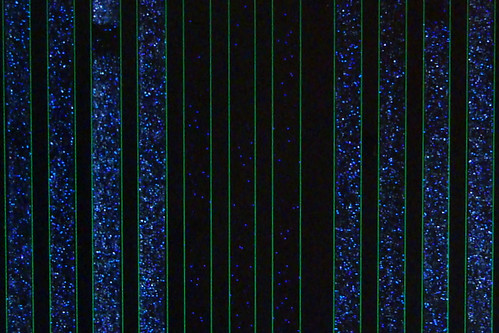
Roche/454 sequence
Some high-throughput sequencing reactions. Each dot is one, growing up out of the screen toward you.

This process, called “assembly”, relies on finding overlaps between sequences. Remember, these are all random fragments, starting and ending at different places, so if we have enough DNA (and thus enough copies of the genome) to begin with, by chance some of these fragments will have recognizable places where they overlap. And this is where Julius Caesar comes in.

Hadrian's Wall, 1998
A Roman wall that has nothing to do with Julius Caesar.

Imagine, if you will, that you’ve never read the play (I had to in high school, and have seen it performed once; your experience may differ). Think of this set of text fragments as being like a handful of short DNA sequences:

ds, Romans, count
ns, countrymen, le
Friends, Rom
end me your ears;
trymen, lend me

If you didn’t know the play, you might have trouble making sense of this – until you realize that some of them overlap. When you shuffle them around and line them up, you get something like this:


Friends, Rom
     ds, Romans, count
             ns, countrymen, le
                     trymen, lend me
                              end me your ears;

Which gives you the consensus:

Friends, Romans, countrymen, lend me your ears;

If you’ve read the play, you know this as the beginning of Antony’s famous speech from Act III, Scene 2. If not, you might still recognize it as “real” English – it has syntax and meaning. And this is just how genome assembly works. Sophisticated computer programs use pattern recognition to look for overlaps, and assemble clusters of sequences, commonly referred to as “contigs” (for “contiguous assemblies”, I suppose). Smaller contigs are joined together to make larger ones, usually using other information about how they might fit together. These are are generally referred to as “scaffolds”. Ultimately, all of these are put together into the whole genome sequence.

However, it’s not necessarily quite that simple. All but the simplest genomes (viruses and bacteria, for example) are riddled with pieces of DNA sequence that all look like each other, the dreaded “repetitive elements”. In our play analogy, you can think of them as common words that appear multiple times. These can play havoc with the assembly process. Consider this, one of my favourite passages of Shakespearean dialogue, from Act IV, Scene 2:

CASSIUS: Stand, ho!
BRUTUS: Stand, ho! Speak the word along.
First Soldier: Stand!
Second Soldier: Stand!
Third Soldier: Stand!

Imagine you were trying to re-assemble the play’s script from many tiny pieces, and you came across a fragment, “Stand,”. Where does it go? Did Cassius speak it, or does it belong to Brutus?

Even worse, what if there was an ambiguity in the last character? Perhaps it was blurred due to water damage, so that you only knew it was “Stand”, followed by something. Is that something a comma, an exclamation mark (both of which would fit in the passage above), or something else (a letter “s”, for example)? This kind of ambiguous character happens all the time in DNA sequencing, and the result in our example above is that now our piece of text could go in one of five places, spoken by no fewer than five different characters.

We can fix this, at least some of the time, by asking for longer pieces of sequence (or, getting back to the jigsaw analogy, bigger pieces). If we have a longer text fragment like “Stand, ho! Speak the”, then we know exactly where it’s supposed to go, even though each of the four words individually occurs more than once in the play, and even if there are a few ambiguities in it. This is how we get around really short repeats in DNA sequence – by using sequence reads long enough to either encompass them entirely, or to make a unique sequence. But for long words or phrases that appear more than once, sometimes we just can’t find the right location, no matter what we do.

Except – there is one more commonly used trick, called “paired-end”, or “mate pair” sequencing (these are slightly different things, but for our purpose it doesn’t really matter). This takes advantage of deriving DNA sequences from both ends of a much larger fragment, and using the location information from one to help position the other. Here’s how it works.

The phrase “Caesar’s house” is spoken twice, once by a servant in Act III, Scene 2, and again by Antony in Act IV, Scene 1. Now, imagine we have a fragment of the play of, say, half a page or so in length, and we’ve found “Caesar’s house” at one end of it. If we look at the other end, we might find the rather unusual phrase, “slanderous loads”. The only place this occurs is in Act IV, almost exactly half a page away from one of the instances of “Caesar’s house”. Now, we can be reasonably certain that we’ve properly “mapped” the first phrase onto the play, and that it’s the one Antony speaks. The key here is that we don’t need to know all the text in between – in other words, we don’t need the whole half-page of text to help in mapping the ambiguous end. We just need to know that the two ends are about a half a page apart. This method of using paired sequences from the ends of large DNA fragments to map non-unique sequences is very useful in assembling unknown genomes.

Vercovicium
This wasn’t Caesar’s house. He’d already been dead for a while when it was built.

Genome assembly, of course, is much more complex and fraught with problems than I’ve led you to believe, but that’s the basic idea. At the end of the article are a few more frightening technical references, if you’d like to dig deeper. In the meantime, I can’t find a suitable quotation to finish off with, so I’ll just leave you with Octavius’ closing words:

So call the field to rest; and let’s away,
To part the glories of this happy day.


Further Reading

I have relied on MIT’s excellent archive of the complete works of William Shakespeare for the quotations here and in the previous post.

If you’re really interested in beetle genomes, the description of the Red Flour Beetle one is a good place to start. Of course, if you are really interested in beetle genomes, you’ve probably read it already. You’ll need a subscription to the journal, though.

  • Tribolium Genome Sequencing Consortium, et al. The genome of the model beetle and pest Tribolium castaneum. Nature, April 2008, vol. 452 issue 7190, pp. 949-55.

Alignment is a technical and tricky process, but is somewhat de-mystified in some excellent reviews. I recommend the following:

  • Flicek P, Birney E. Sense from sequence reads: methods for alignment and assembly. Nature Methods, November 2009, vol. 6 issue 11 supplement, pp. S6-S12. Somewhat technical, but a nice introduction from two experts from the European Bioinformatics Institute. You will, unfortunately, need a subscription to access it.
  • Pop M, Salzberg SL. Bioinformatics challenges of new sequencing technology. Trends in Genetics, March 2008, vol. 24 issue 3, pp. 142-149. A technical, but accessible review of the assembly problem and other challenges of high throughput genome sequencing. Freely accessible online.
  • The NCBI Handbook (Editors: Jo McEntyre and Jim Ostell; National Center for Biotechnology Information, Bethesda, MD, USA: 2002-present) has some good information on genome assembly, but is very technical indeed. Start with Chapter 14, available online here.

Finally, if you’re in a silly mood, you could try these articles, which have nothing at all to do with sequence assembly.

  • Hook EB. Shakespeare, genetics, malformations, and the Wars of the Roses: hereditary themes in Henry VI and Richard III. Teratology, Feb. 1987, vol. 35 issue 1, 147-55. I believe this one is freely available online here.
  • Berg JM. Shakespeare as a geneticist. Clinical Genetics, March 2001, vol. 59 issue 3, pp. 165-70. Unfortunately, you’ll need a subscription for this one too.

Last but not least – if you’re really interested in stretching the Shakespeare-medical science connection, try this blog post of mine, discussing a very interesting paper about anal fistula and All’s Well That Ends Well. You just can’t make this stuff up.

Posted in Education, Guest posts | Tagged , , , , | 25 Comments

Informal Science

While I feel compelled to address various “weighty” issues in science, after a long year (well really, they’re all the same except for leap-years, but it feels like it)—I think I will opt for the lighter side at this time.

I’ve been in this “business” now since 1989, when I began working as an undergraduate in a biochemistry lab, and I’m proud to say that my attire has changed very little since then. True, I no longer come to work wearing shorts (except occasionally on a weekend), but trading shorts for jeans was not a big sacrifice—especially in the era of chilly air-conditioning. I have also traded my Israeli sandals in for supportive training shoes, mainly because standing for extended periods of time leaves me with mighty sore feet. But overall, remarkably little has changed in my attire (please IGNORE size changes!).

Now, while I don’t have statistics to assemble, this does not seem to be a trend. I noticed a mild change in moving from informal Israel to the NIH in Bethesda, Maryland. Being wary of falling into the trap of separating cause and effect (as I highlighted earlier in “Early exposure to skeptical thinking”), I must fairly note that the decreased formal attire could be attributed to either moving from a Ph.D. lab to a postdoctoral lab—or to a more formal culture at NIH or in the US in general.

Nonetheless, the NIH was still fertile ground for an informal person such as myself—as there were no students and most labs were staffed primarily by postdocs, it was perfectly natural for everyone to be on a comfortable first name basis. After all, it would seem silly for everyone to be walking around calling each other “Doctor This” and “Doctor That”. You aren’t going to make an impression on anyone when 95% of the people there are all “doctors”…

The more dramatic increase in formality occurred in accepting my current position at a US medical school. Jeans and running shoes are the exception rather than the rule, and ties are frequently worn by males in the upper echelon. However, my current colleagues did put their faith in me despite ‘under-dressing’ for my original interviews (hopefully I’ve not disappointed them).

Emphasizing my embarrassment with formality and titles is the following anecdote shortly after my arrival in Nebraska 7 years ago. It must have been the first or second day in my new lab, when I was busy unpacking boxes and wondering whether I’m really in the right job. One of the administrators down the hall called out “Dr. Caplan”. I was extremely puzzled, and looked behind me trying to figure out what on earth my pediatrician father from Canada could be doing here in my new lab in Nebraska. Yes, it probably took me a good half-minute to realize what was going on…

On the serious side—and I pose this to all my fellow scientists—is there a case for more formal attire in the lab? Should principal investigators dress more formally than their students and postdocs—does this promote professionalism?

I will argue that true leadership cannot be imposed artificially. Soldiers will follow an officer whose abilities are respected, not because they are forced to call him “sir”. A scientist’s leadership derives from work ethics, an unbiased quest for the truth and impartial skepticism as scientists, knowledge, the ability to deal with crises and to mentor students, postdocs and fellow colleagues, the ability to motivate and stimulate intellectually (and many other factors)—and not by whether he/she is called “Dr.”, or by what he/she wears.

My kids could not resist poking fun by having me "caricatured" with a tie (poor likeness, by the way...)

Posted in Uncategorized | 17 Comments

The Age of Reason

Inevitably, it happens to us all. Some of us succumb quietly, with crow’s feet pulling on the corners of their eyes and ‘love handles’ attaching to our midsections. Others put up a valiant battle, sweating in the gym and avoiding the typical ‘western diet’. But in the end, with New Year’s around the bend, we are all a year older—and wiser?

For scientists, and especially biologists, this should not be a cause for melancholy—after all, such is the cycle of life. But I think there is indeed ample cause for reflecting on the ‘aging scientist’.

The first reason is that scientists are finding themselves at increasingly advanced ages as they take steps towards their first independent positions. I myself accepted a tenure track position at the ripe old age of 38.

After 3 years of military service, I did an undergraduate degree in 3 years, a research-based Master’s degree (another 2 years), a Ph.D. in 5 years and 4.5 years as a postdoctoral fellow. True, I took a year off somewhere in between to travel and see the world. But aside from the mandatory military service and the year off, I didn’t ‘dawdle’ too long on the track. And yet—as many postdocs joke these days, if I had done second and third postdoc stints, I could have probably retired without ever having had to obtain a permanent position.

I don’t want to rehash the issues that Jenny so aptly described regarding age-bias (official and ‘veiled’) in her recent blog “In which I question my own sell-by date”—I too have suffered from some of this bias and think it is outrageous. Instead, I would rather focus on what happens to established scientists as they get older—and what options there are for dignified aging as a scientist.

Over the past 20 years, I have observed a lot of scientists reaching their sixties, seventies and eighties. Each and every one seems to have handled his/her own situation in an entirely different fashion.

I have seen some who have managed to maintain highly successful laboratories and continue to be active in science, writing grants, papers, and mentoring students. The cycle, they say, keeps them feeling young. I don’t disagree. But for each of these scientists, there are another ten whose situation radically differs.

Many scientists reach an age where they can no longer keep up—scientifically, with the new techniques and findings, with the technology, and with the grant funding. Some try hanging on for dear life, with a few dollars here and a few morsels there, anything to keep going. In many cases, laboratory space is a limiting issue, rationed out to researchers according to their level of funding. Once this has dried up, aging researchers may sometimes find themselves without laboratory space, relegated to an office and involved exclusively in teaching. Some thrive, enjoy the teaching and remain positive and active. Others become disenchanted, melancholic and disengage.

Some researchers prepare for these stages in a very calculated manner; they plan ahead to that very last grant and retire as champions, who have never suffered defeat or gone unsuccessful. Other researchers drift or push their way into administrative positions, and are no longer required to run a lab and obtain funding to cover part (or all) of their salaries.

So, you might ask—what is the purpose of this commentary? I do not have an answer on the best track to take—and I welcome comments from scientists of all ages—I can barely envision my next grant submission. However, as time flows on, we would best be prepared to think ahead about our own careers and how we might like to envision our own progression along the career path in years from now. In doing so, we might also discover some empathy and compassion for those scientists who were busy at the bench long before us.

Paper mache sculpture by Dr. Naava Naslavsky, cell biologist and artist extraordinaire

Posted in Uncategorized | 9 Comments

Early exposure to skeptical thinking: navigating the chicken and egg syndrome

I live in the midwest area of the United States, where sidewalks in neighborhoods are a luxury, and you are a “nobody” if you don’t own a car. Or two. And a pickup truck—the bigger the better. Cars and driving are a necessity—drive-thru banks, curbside pickup of takeaway food—all part in parcel. In fact, every now and then I point at one of those long vehicles used to transport large numbers of people—yes, that’s it—a bus—and ask my children if they know what that is. They do, because there are school buses. Just no mass transit.

In any event, needless to say, I spend a lot of time in the car. I don’t mind, because our library system has a superb collection of “books on CD”, and I go through an “extra “ book a week, in addition to the one or two that I actually read. But when I’m driving with my kids, we like to talk about current events and science and math. Occasionally I am too tired to do this and drive, so I’ll turn on the radio. And in doing so, the other day a phenomenal “teachable moment” presented itself.

The radio announcer described how evidence demonstrated that sports teams (basketball, I believe) who supported each other emotionally during games by ‘high-fiving”, backslapping and friendly contact were more successful and won more games. I immediately asked my children (aged 8 and 12) whether they thought this was a valid conclusion. Proudly, for they have practically grown up in laboratories and are well accustomed to skeptical thinking, both rapidly came to the conclusion that the supportive physical contact might come as a result of the team scoring more points and winning more games—as opposed to the other way around.

Sadly, though, the same question put to various graduate students did not meet with the same skepticism. Several of the students, guessing that I had found fault with the interpretation of the radio announcer, were quick to conclude “that more controls were needed”. What “controls” was another story. But only a few were able to discern the inherent logical flaw in this thinking.

Now while every parent loves to brag about his/hew own children’s abilities, the issue here is that scientific training—true skeptical thinking—is something that needs to be developed at an early age. Sure, the knowledge of science is important, but this can be attained at any time—more or less. However, it seems to me that logical/skeptical thinking—necessary for the advancement of science—is most easily obtained at an early developmental stage and should be emphasized accordingly.

Posted in Uncategorized | 12 Comments

PubMed – again (a.k.a. “lazy cross-posting”)

While I continue to tee up my next Magnus Opus, this time about Shakespeare and genome assembly, I’ll indulge in a little lazy blogging cross-posting and point you to another of my haunts, the Life Science Tools of the Trade blog. Actually, “haunt” is a good term, because if you nose around enough over there you may well trip over the ghost of a certain Occam’s Typewriter personality, still wafting about in the wings.

I am whingeing again about NCBI’s venerable PubMed literature search engine, and how maybe, just maybe, Google Scholar is a better bet.

The post is here: PubMedically failing.

Teaser – contains an article you can’t find in PubMed, but ought to be able to, and another that is there but which PubMed does an effective job of hiding. Go have a look.

Posted in Guest posts, Uncategorized | Tagged , , , , , , | 4 Comments