
Lovely massive tree. But what about that small boy in the corner?

Lovely massive tree. But what about that small boy in the corner?
When you have vulnerable people being harassed, what can you do? And I mean you. I have written a lot recently on my blog about the importance of bystanders. To learn more, I attended a recent training session regarding Bystander Interventions run under the auspices of the University of Cambridge’s Breaking the Silence Campaign. The University launched this in 2017. Amongst other things it allows Continue reading
Before pre-election purdah set in, two interesting reports got published, one with more fanfare than the other. The one with more publicity attached was the long-awaited report (Changes and Choices) on options for future international funding by Adrian Smith and Graeme Reid. It is of course impossible currently to predict anything regarding our future relationship with Europe. If and when Brexit h Continue reading
Yesterday I had the privilege of participating in the 14th Berlin Debate on Science and Science Policy, which is hosted by the Robert Bosch Foundation. This year the invited participants discussed “Who owns science? Reshaping the Scientific Value Chain in the 21st Century“. There was a lot to unpack in that topic but for my formal contribution as chair of DORA (a six-minute opening statement), I t Continue reading
You’ll have heard the story about women whingeing about how their proudly-submitted papers got rejected by a premier journal without being sent out to referees. Or that the comments they received from referees were unduly harsh, but a male colleague’s paper got through on the nod without multiple resubmissions Just a bunch of females having a moan wasn’t it because they can’t hack it? Well, no. Tu Continue reading
It’s been almost two years since I introduced you to our Alumni Sounding Board, who have been helping us to keep in mind the industry perspective since the very beginning of our curriculum revision. Now that we are deep in the trenches developing the detailed project-based learning activities, we decided it was time to once again call on their expertise, in particular regarding how to priori Continue reading
My feet have hardly touched the ground since I got back from the DORA-HHMI meeting on “Driving Institutional Change for Research Assessment Reform” in Washington DC last week, but I wanted to log a few first impressions. I can’t hope to do it justice but please be reassured that the videos of the plenary session will soon be available, and there will no doubt soon be wiser and more considered rumi Continue reading
I was interested to read an article (not such a recent article in fact, but I’ve only just come across it via Twitter links) describing the misogynistic name-calling of senior women in Canadian universities. Headlined ‘The “crazy/bitch” narrative about senior academic women’, the author Jennifer Berdahl, a professor of leadership studies at the University of British Columbia, specialis Continue reading
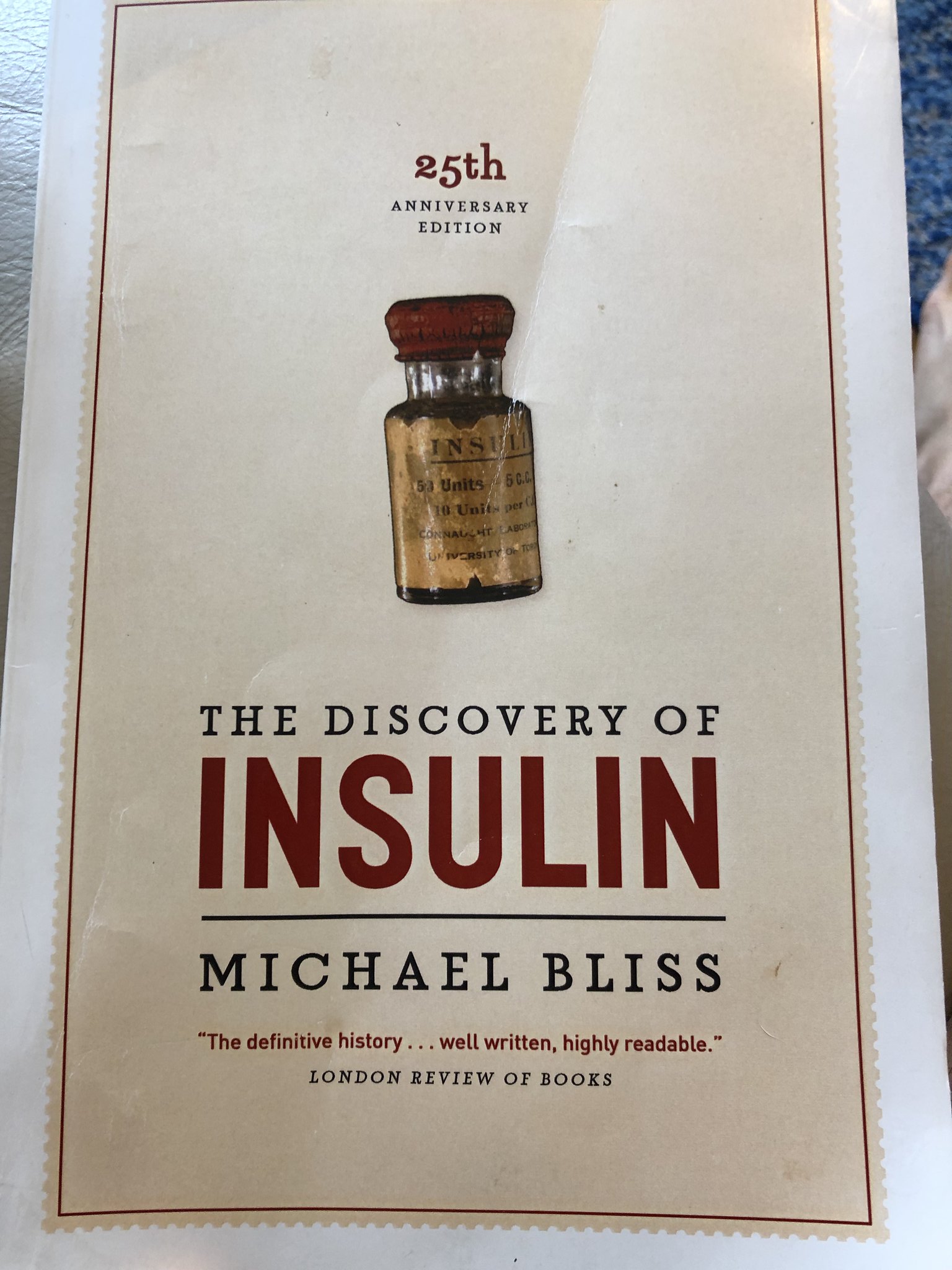
Back in 2013 I visited the University of Toronto for a seminar and was given a very special gift by my gracious hosts: a copy of “The Discovery of Insulin” by Michael Bliss, which tells the fascinating story of the people and research that led to the finding that pancreatic extracts contain biologically active material that reduces blood sugar levels, and paved the way for the identification of i Continue reading
Is anger a good spur to getting on and getting by? The recommendation to use it as a positive force came from three eminent colleagues this past week. I had the enormous pleasure of facilitating (I think that’s the right word) a conversation with a trio of presidents of professional bodies who Katie Perry, Director of the Daphne Jackson Trust, had succeeded in lining up: Julia Goodfellow, Presiden Continue reading

