On inevitability

While cooking dinner, I was pondering a twitter conversation, and some news reports that had been referenced. With my vast expanse of science journalism (hah) on the one hand, and personal insight into major newsworthy events on the other, I realized there was a universal law waiting to be articulated.

Here, then, is Grant’s First Law of Journalism:

All news articles contain at best one error, and probably more than one untruth.

If this is true, then whenever you read, hear or watch a news report, you must know that it is somehow fundamentally flawed if not not outright wrong. And if you can’t find anything obviously wrong, you’re not looking hard enough.

Discuss.

Posted in Literature | 12 Comments

On the lunatics, and the asylum

We’re doomed, aren’t we?

Herbal remedies are to be held to the same standards as other medicine.

Naturally, the loonies are up in arms about this, possibly because paying for testing will eat into their profits. Their comments are at the same time very funny (especially when people with a synapse to call their own take them to task) and depressing.

Have a look, and if you can bear to, have a giggle too.

Posted in The stupid, it burns | 20 Comments

Open letter to Simon Hughes, MP

Cross-posted from the BioLOG.

Dear Simon

Thank you for signing Early Day Motion 767. This implies you support continued (if not increased) public funding of scientific research, along with many of your colleagues in the Coalition. Today we learned that your science funding has been ring-fenced for the next four years. While I am happy that science funding has not borne the brunt of the CSR’s bad news, it is disappointing that your administration has not seen fit to invest in an area proven to deliver economic growth.

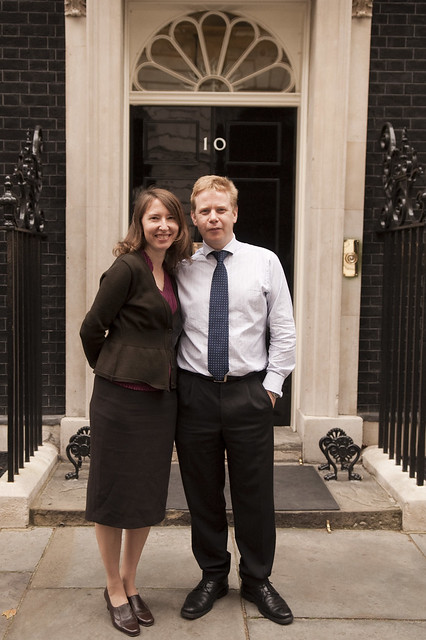
But that is not why I am writing today. I helped organize the Science is Vital campaign, which saw over two thousand scientists and their supporters demonstrating outside the Treasury on Saturday 9 October. We arranged a lobby of Parliament and filled Committee Room 10 with over 100 constituents and some two dozen MPs. More MPs sent representatives. We delivered a petition of nearly 34,000 signatures to 10 Downing Street two days later. I wrote to you asking if you would care to meet me at the lobby–as did at least one other member of your constituency. We filed a green card to let you know we were there. You did not turn up, nor even have the grace to send a message.

Now, I know that Vince Cable was speaking to the House at that time. We waited until questions had finished, waited until the chamber had emptied. You, I am told by somebody who saw you, met with other members of your party in the committee room next door–yet you did not attempt to meet me.

I also wrote to you last May, about libel reform. You didn’t respond to that letter either. But you did send me a Christmas card. I’m not quite sure what to make of that.

Do your other constituents wait in vain for a response from you on matters important to them? Do they, like me, make the effort to come to Parliament to talk to you (taking time away from their own work or family or leisure), only to be ignored, without being offered even the most basic courtesy? A message that you were unavoidably detained would at least have signalled you were aware of my existence.

There is no room for complacency in democracy. If the people of a constituency feel that their MP no longer represents them, they will replace that MP with somebody else. This is not merely their right, but their duty. And the lesson I have learned from the Science is Vital campaign is that in a democracy, determined groups of quite unlikely citizens have extraordinary power.

Yours sincerely

Richard P. Grant

Posted in Nonsense, Politics | Comments Off on Open letter to Simon Hughes, MP

Just you wait

DSC_3952

(Comments are open at http://rg-d.com/BioLOG/2010/10/16/just-you-wait/)

Posted in Politics | 16 Comments

Lost at Sea

If I might be permitted an observation, there is something wrong when, in a forum expressly for the purpose of bug reports and feedback, a user’s perfectly valid comments are dismissed out of hand.

It’s bad enough when an unaffiliated Nature staffer who does not have an active blog on Nature Network (and yet maintains a presence on the private forum) weighs in and completely misses the point. It is far worse when one of the admins says something patently untrue–and then implies that the user shouldn’t be so silly as to ask for pretty basic features.

First, WordPress comes with an ‘Admin login’ straight out of the box. Second, I have used a Moveable Type install where the login link was in plain sight–and connected to an entire University’s user database. They managed to solve the ‘logging in across different sites’ problem that seems to be beyond Nature Publishing Group’s ken. Third, bookmarks are not necessarily “always in a fixed location on the screen” as anybody with more than one bookmark will be able to verify for themselves.

See how I manage to log in

And let’s get to the nitty gritty here. It’s one line of code we’re arguing about.

The comment made on 27 September was, actually, pretty good and said all that needed to be said for the time being (I suspect that was Lou). There was an apology, an understanding of the issue, and what looked like positive moves in the direction of working things out together with us, the users. Compare and contrast with what followed.

But apart from Lou, Nature Network isn’t that good at communicating with its users. Take this new Microsoft group blog for example: I know that a few people have been thinking “Pepsi“–but all we have heard from the Network is that “there’s no commercial connection here”. What does that mean? Does that mean Microsoft aren’t paying NPG for the privilege–and if not, why not?. Will Microsoft products or Microsoft-funded research never be mentioned in “The Fourth Paradigm”? At this stage, you know as much as I do, which is a truly woeful position to be in (and I should know).

Has Nature Network lost its way? Who is steering the ship? And is anybody left rowing?

Continue reading

Posted in Rants | 7 Comments

On running scared

(Crosspost from All your basepair are belong to us).

A question for the god-like entities inhabiting NPG: following yesterday’s speech by Vince Cable, was there a spike in traffic to naturejobs.com?

Posted in Uncategorized | 5 Comments

On the winds of change

In case you don’t read Jenny’s blog (you should) please head over to Facebook and join the revolution to ensure we maintain a decent amount of science funding in the UK.

Thanks.

Posted in Funding | Comments Off on On the winds of change

On Web 2.0

As promised yesterday, I’m going to write down my notes from Saturday’s final panel session of Science Online London 2010. But first, I want to say a couple of things about the Research Information Network report that Rob Procter discussed, If you build it, will they come? How researchers perceive and use web 2.0. (These concerns were raised in the twitter feed at the time, but for reasons I won’t bore you with, we didn’t have time to discuss them at the meeting itself.)

In the last half of 2008 I consulted for the Science Advisory Board (SAB) on a study looking at How Online Media Affects Traditional Publishing Methods. This study was, like the RIN one, a survey of scientists and their use of social media, or ‘Web 2.0’ (by the way, there was a tweet on the #solo10 hashtag mentioning the Britishness of saying “two point nought” rather than “web two point oh”. Was that really me?). This was an international study, rather than the British-centric RIN one, and surveyed 1500 scientists (vs 1300 in the RIN one).

What perturbed me on reading the RIN report was that the SAB study found that it was the younger and more junior scientists who were making more use of Web 2, whereas the RIN report seemed to imply that it was being driven by older scientists. In fact, one of my conclusions was that as the older guys died off we’d see more uptake. (Both studies bemoaned the low overall uptake of Web 2 tools, although the SAB was more upbeat in its assessment).

But as I sat on the Tube on the way home last night, I realized there were a couple of major flaws with the RIN study. The RIN sent its survey to 12,000 scientists in the UK, and got a 10% response rate. That’s a pretty lousy statistic. Here, we’ve selected for people who have both the time and inclination to respond to a random survey. Most of the SAB respondents were selected from the SAB’s membership (currently nearly 50,000) to receive the questionnaire, and were rewarded for their participation (the SAB operates a points system: if you respond to questionnaires and whatnot you can accumulate points which can be exchanged for physical goodies). The response rate was a lot higher (I don’t have the exact numbers to hand) and we might assume that the quality of response was correspondingly higher, too.

A more worrying question, however, is how were those 12,000 people (who received the RIN survey) selected in the first place? Turns out that these are ‘scraped’ email addresses, which makes me think there was already some bias towards older, more well-established scientists in the first place. Young researchers not only have had less time for their contact details to be established on an institutional website (and indeed, pre-tenure, have probably moved around a lot, relatively speaking. Google me, for example; the second hit is me but the email address in it was defunct five years ago) but are possibly also more security conscious and less willing to have their email address available for scraping.

I think those two concerns might well go some way to explaining the ‘surprising’ results from the RIN study.

So, what did I say at SOLo 10, after all that? Here’s my notes (like Ed Yong, I have to refer to my Moleskine notebook. No copy & paste here, and it’s not a transcript!):

< fx: English accent, ginger hair>

This is a room full of very special people <fx: laughter>. If we didn’t believe in online technology, the value of it and the coolness of it, we wouldn’t be here today.

And over the last couple of days we have seen some very neat stuff. This morning, Aleks talked about the Growing Knowledge project; Peter Murray-Rust showed us a really cool experiment this morning, and we’ve had a whole heap of open- and linked- data stuff–semantic web, if you like. Real nerdgasm stuff.

But, we have to remember, we are special. We are the early adopters, if you like. To borrow a phrase from technology business development, we haven’t yet crossed the chasm to mainstream adoption of these cool toys, as Rob has just pointed out.

The vast majority of jobbing scientists simply haven’t signed up yet, perhaps for the reasons Rob listed. We, here in this room, are a load of technology evangelists, there are a few companies here who share that vision and who have demonstrated some of their toys, but people as a whole?

No.

Of course, they’re into Web 1–email and websites and whatnot, but Web 2, Web 3? Not so much.

We’ve given reasons over the last two days why people should adopt these technologies, but there’s been a lot of stick, and not enough carrot, I feel. What should we do? Encourage–or bully–people into using this stuff, just because it’s there, just because it’s cool?

I don’t think so.

I think, rather, that it comes down to two things, and my thesis is very simple. People, as a whole, will only adopt these new technologies for one of two reasons.

First, these new tools allow you to do something necessary, something you have to do anyway, something that exists outwith cyberspace but that you have to do, but that is made so much easier, so much more efficient with internet tools that people will WANT to do it.

Obvious examples are PubMed–anybody remember Silver Platter?–and online journals themselves. When did you last use a photocopier to copy a journal article?

Say what you like about PDFs, didn’t life get a lot lot easier in the late ’90s and early 2000s?

The second thing that works is something that adds value, and that value can include ‘fun’, but a value that just can’t be gained from anywhere else. A compelling value. For example, Facebook and Twitter are great Web 2 tools that allow people to communicate in new and exciting ways.

It’s slightly less Web 2, Web 1.5 perhaps, but Faculty of 1000 I think is such a tool. We’re addressing the filtering, the information overload problem, adding value to the published research. We don’t care, actually, whether it’s Open Access or where it’s coming from: we’re just providing editorial, if you like, content on top of the literature. And you can’t do that, effectively, without cyberspace. It won’t work.

The challenge, really, is not to have a smart idea. There must be oh, how many people are here? 120 bright ideas in this room alone. But you have to figure out where that value is, that compelling calue that will make the vast majority of scientists want to use this stuff we’ve been talking about.

This includes things like blogging networks, like data visualization, like linked datasets.


and then we were out of time. There was some ad-libbing in there, but that’s the gist. Oh, and I had no slides.

(If you would like to comment without signing your soul away to Nature, this post is mirrored at the BioLOG).

Posted in Internet | 21 Comments

On the easy questions

I’ve just got back from a tiring but awesome couple of days at the Science Online London conference (which–conflict of interest declaration–I helped organize). I’ll be writing up my speaker notes for the final panel tomorrow, I hope, but in the meantime I’ve just been challenged by Ruth Seeley on twitter to explain the scientific method:

I’d LOVE it if ONE scientist would take on the challenge of CLEARLY explaining the scientific method. Wikipedia sure doesn’t.

Martin Robbins took up the challenge straight away, but in the interests of clarity (and non-jargon) I’d like to see suggestions that might replace the Wikipedia entry. As far as I’m concerned, these explanations should be lay-readable; understandable to a high school student, say.

Please feel free to have a go, and then, seeing as the Wikipedia article is the first Google hit for ‘scientific method’, let’s edit the bloody thing to something more like. And I know commenting here puts some people off, so feel free to comment at the BioLOG, where you don’t have to sign up for an account…

Posted in Science | 8 Comments

On Hawking

Bought Eureka. Came with free copy of The Times, which I threw away.

earlier today on Twitter

So Stephen Hawking has discovered Occam’s Razor.

William of Ockham (can I call him ‘Bill’?) is the monk and philosopher to whom is attributed the aphorism entia non sunt multiplicanda praeter necessitatem. Put another way, “if you can explain something one way, there’s no need to invent complications.” Or, if you like, “the explanation of natural phenomena should not invoke supernatural causes.”

Let’s invoke Isaac Newton:

We are to admit no more causes of natural things than such as are both true and sufficient to explain their appearances. Therefore, to the same natural effects we must, so far as possible, assign the same causes.

The natural world can be explained in natural terms. This is a 700 year old principle. To claim that a Supreme Being is necessary to explain the fact of our existence is not simply damnably poor science, it’s shockingly bad theology, too.

It has ever been thus.

Posted in Nonsense | 8 Comments