On the importance of being Cameron Neylon

or

I started a blog and all I got was a new job

A few weeks ago I arranged to meet Cameron at a pub just across the road from my office. At the time I could stand up at my computer, turn my head and see into the lounge. It was that close. Since then the east side of our floor has been refurbished and I sit in a sunlit bay that overlooks a courtyard, with three empty desks around me and chairs that number between one and four, depending on any number of factors.

Just to make Matt jealous, we do have air-conditioning now. And while I find it very comfortable (although these afternoons I am forced to lower the blind because I start to cook) the comment from most of the women in the lab office has been along the lines of ‘my, but isn’t it cold?’ Except less politely-worded.

All that aside, I was talking with Cameron about something that is very interesting to publishers and information service providers (in case you missed it, I now work for one). Cameron presented these slides at the Eduserv Symposium (and you can watch the recordings of his and the other talks).

Essentially, what we have in the scientific literature—and not just the literature but also when we want to give credit to those who blog, or who deposit data, or who curate databases, or do anything that might be measurable and therefore applicable to assessment—is a huge Zhang problem.

How do we distinguish authors (or to be more precise, contributors) with the same name?

How do we make sure that contributors get credited appropriately for their work, in a day and age where automated metrics are becoming more important. How do you make sure that you get the credit in the next Research Excrement Framework and not the other person with the same name? How, in fact, if you’re this guy do you make sure you’re not the one getting sued for libel; or, using Cameron’s example, if you’re Andrew Wakefield and want to work in immunology, what are you going to do?

I’ve been fascinated by this problem for a while, ever since I started getting stopped in the street and being told that Withnail and I is the best film ever. But as anyone even vaguely familiar with F1000 might not be surprised to learn, I have more than a passing professional interest in it, too.

So it’s gratifying to see the issue coming to the front of the minds of some of the brightest people in the industry. We’re pretty much resigned to having to curate our data manually for a little while, but after hearing rumours and having wishful thoughts, I finally caught up with Geoffrey Bilder at a meeting of the ALPSP yesterday.

The people who brought you the DOI are prototyping a Contributor ID. And I am all of a sudden quite excited about this. You should be too, especially if your name is Zhang.

Posted in Uncategorized | 43 Comments

On summer students

A good summer student, it is said, will only set you back a month.

I was reminded of this rather pessimistic piece of advice when I commented on Jenny’s post about dark arts this afternoon.

When I was at the LMB in Cambridge, we used to take on summer students if they came with a recommendation, if they could demonstrate at least that they knew one end of a Gilson from the other, and if some brainless monkey work needed doing. It turned out, one summer, that I needed a shedload of protein growing so that I could solve its structure by NMR. We got a summer student, he spent all summer in the cold room, and we got enough of the 7 kDa fragment to solve it by natural abundance ( 1 H) methods. This work was published in the then Nature Structural Biology and we were very happy, and even happier when we realized that it was a complete work of fiction and published the correct answer to our question a little bit later)01474-2.

cough

Anyway, this was a good experience with summer students, and so we tried again a a couple of years later: again when I needed a lot of protein for NMR (although for this one we’d managed to get the labelling working).

Oh boy.

Now, to be scrupulously fair, it was the fault of the lab manager, who taught the chap how to grow up bacteria for protein preps. For ages (except for a couple of aberrant years when a quitter visiting post-doc from Australia got everyone except me using IPTG and GST-tags) we’d been doing transformations, taking single colonies into a litre of 2XTY in a 2 l flask, shaking overnight at 34°C and letting the little beauties auto-induce protein expression (long before Bill Studier published his impressive analysis of auto-induction, by the way. We just didn’t think it was worth publishing, which just goes to show, innit?)

So after I trialled the method, and left the student with complete instructions under the care of the lab manager, we got one successful prep. But nothing afterwards — we weren’t getting any protein at all, and wasting the horribly expensive 13 C and 15 N while we were at it. One day I watched this chap set up a prep.

He went to the freezer, took a frozen bacterial pellet, scraped some gunk from the top of the pellet with a pipette tip and dropped the tip into fresh media for his grow up.

After I had peeled myself off the ceiling, I asked him why.

“Zat ees how showed me,” he said.

One culpable homicide later, we got back into business and made the protein and I solved the structure and I blogged about it.

This summer student was not completely harmless though. Before all this, I was showing him how to do certain things.

“Oh,” he used to say, “zat ees not how vee did eet in Germany!”

Everyone in the lab used to get this. It wore a tad thin after a while.

One fine day, I was drying a protein gel between cellophane sheets.

“Oh,” he said, “zat ees not how vee did eet in Germany!”

I am sorry to report that I very nearly lost my temper. I turned around, poked him in the chest (he was bigger than me) and said,

“Well sunshine, you’re not in Germany now; you’re in the Army, and we do it my way.”

He was quiet after that.

For the entire summer.

Posted in Uncategorized | 27 Comments

On nutters

Tube strike in London this evening. Knew I was going to be late home so cycled in, under the expert navigational tutelage of a certain NNer, and cycled back again along the Thames Path realizing just how much I love this city. Had dinner, bath, and a glass of whisky and now I’m feeling relaxed, which means I’m going to witter about any old thing that enters my head.

As I said in my keynote at the RIN (I blogged about it… ah, here and slides, too), if you’re me, you get nutters writing to you and asking you to do stuff for them. And then they insult you, but that’s all right because I just laugh in my beard at them and get Eva to say rude things (see slide 40) on my behalf.

I got two people writing to me today, asking for interviews with me for projects. One was a DPhil student (with enough information that I could google her and find out that yes, actually, she sounds interesting), who sent a politely-worded and literate email, who was happy to come to London to chat, and most accommodating with respect to my work day. The other some random student doing a dissertation at a somewhat northern University. Asking for a phone call or skype conversation. He happened to also cc: a Dr Gee of Norfolk—I’ve seen such emails before and it’s basically asking “will you do my homework for me please?”. (Before you ask, I assume they’ve seen my disclaimer.)

Now, this is a bit like Twitterers following you and then you go and look at their profile and see that they’ve protected their updates. Look, if I don’t actually know you, I can’t be arsed asking you to allow me to see your updates, no matter how interesting you think you are. A little bit like that, anyway. Except much, much worse.

Guys, I’m busy. I’m not a student: I actually work for a living. Time, actually, is money. If you want something from me, then throw me a bone. Make it worth my while. I’ll put you in my calendar and have lunch, as long as I think I might get something from you: even if it is just a massive ego stroke, or chance of lunch with a half-way interesting person.

But don’t assume I agree with your half-baked ideas, don’t think I’m here to do your homework, and above all remember: I don’t like sitting next to the nutter on the bus.

Posted in Uncategorized | 21 Comments

On chemical warfare

Nobody wins a war.

Ever since the summer of 2002, when the axis of evil—in the guise of huge, man-eating, orange slugs—swept up from Saffron Waldon and laid siege to the strawberry fields of Sawston (or at least, my corner of it), I’ve used the little blue pill without fear or favour, although maybe a pang of uneasiness.

It’s that pang, see?

My antipathy towards cats does not yet extend towards wanting to poison the furry little bastards, and I still haven’t been able to get a clear answer as to whether mortally wounded (or even dead) gastropods are likely to get eaten by the attent, sleek thrushes, and by eating, end them.

So I have been trying to find a less drastic method of protecting my garden, somewhere in between picking up up each slug or snail by hand (and throwing them into the neighbours’ garden crushing them beneath my booted feet) and laying waste to the earth.

Aside: it’s not that I’m a priori opposed to vicious chemicals. I’ve just sprayed my chilli plants with a rather deadly-smelling concoction. War is hell.

Up until now, my anti-gastropodial defences have consisted in a mix of petroleum jelly and red diesel, spread around the rim of the pots. This seems to be effective, although a bit tedious, and the supply of diesel is going to run out eventually: especially seeing as it makes an excellent starter for barbecue fuel. None of this poncy stuff that doesn’t actually catch light: I want the lighter fluid that harms the environment and kills fishes. A man’s got to light his fire—it’s a high steak game. And I can never find the Vaseline (stop sniggering, Brooks).

Seeing as it was a good friend gave me some strawberries and marigolds (prime slug/snail fodder) to get my garden started, I’m even more inclined to look after them. Henry suggested coffee grounds, so I’ve been keeping the byproducts of the espresso maker for two weeks now, and on Saturday afternoon, after transplanting the marigolds and some other plants (thanking my mother, the fount of all gardening knowledge, for the geraniums) I sprinkled the grounds round the freshly transplanted plants.

I have no idea whether it’s meant to be a thick covering, or a thin sprinkling, but there about two cereal bowls worth of grounds went into my Maginot Line. It was pointed out to me that slugs could, potentially, climb the fence and then abseil down onto my preciouses, but I decided I’d risk it for now.

And then, on Saturday night, it rained. It rained again Sunday.

Surely this would bring out the armies of Gastropod?

Well, I really don’t want to do the control experiment, but I searched for any sign of infestation this morning, and saw

The antislug. on Twitpic

I sounded the all clear. In my mind’s eye I can see a top level conference with General Slug and Field Marshal Snail planning how to breach my wall of caffeine, perhaps with soy milk and Splenda, but in the meantime, my plants are safe.

Posted in Uncategorized | 31 Comments

On chemistry

One of my enduring memories of Oxford is sitting in the Chemistry School lecture theatre while a long-haired, leather-jacketed lecturer covered the blackboards in chalky organic reactions (the first time ever I heard about S~N~2 reactions; and a whole heap other stuff I have since forgotten) non-stop for an hour. One of the advantages of taking Biochemistry, instead of something less hardcore, say, is that I got to learn real science instead of just squishy biological stuff, which might surprise Henry ‘cell biologists are stronger than they look’ Gee.

I’ve also maintained contact with chemists of one flavour or another for several years subsequently, including some very clever people working at a drug discovery company based just outside Cambridge. And two of these chaps have written a rather splendid review on chemistry for the non-chemist (one of them was at my party a couple of weeks ago).

ResearchBlogging.org
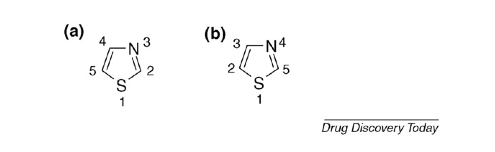
Derived from an in-house workshop The review explains nomenclature and concepts that even the squishiest biologist should be able to understand. The naming conventions for oxygen- and nitrogen- (and everything else-) containing compounds are explained, as well as stuff like solid support chemistry and a little bit on how medicinal chemists actually go about making new compounds for testing. And I learned something too. For example, I didn’t know — or had forgotten — ring numbering conventions. Aromatic rings are numbered to ensure heteroatoms (i.e. non-carbons in rings) bear the lowest possible number.


Ring numbering

In the figure above, (a) is correct but (b) wouldn’t be because the nitrogen atom would end up with a higher than possible number.

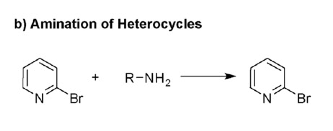
There are some silly errors in the paper. Figure 5 is captioned as if it were Figure 4. The heterocyclic animation, I mean amination, in figure 7 isn’t.


spot the difference

Figure 9 comes before figure 7 and figure 8 is missing. The authors refer to “Laboratoy Equipment” (as if they don’t didn’t have access to a spill chequer).

But anyway. I want to see more of this sort of thing. I want to see a guide to physics for biology, and I’d quite like to co-write something the other way round: NMR or crystallography or squishy stuff, even genetics, for non-biologists.

Continue reading

Posted in Uncategorized | 19 Comments

On spam blogs

Please remonstrance me as ‘Steve.’ I don’t call upon for to ‘Professor.’ An existence seeing that this concentratedness espy a dock appointment someday.

It’s Friday somewhere in the world. Audra has blogged about the tragedy of trying to write English as a forn language, but this is comical.

I am a grinding critic of the Intelligent Design manoeuvre

And my new favourite blog is at it again. This time ripping off my friend Steve Matheson.

As well as others.

Unborn children cannot in a behaviour of speaking from chestnut Facetious resting to the other of themselves, so we cardinal stand-up from chestnut Facetious resting to the other of them. ABORTION IS MURDER!

What can I say? Perhaps I should rip off some comments as well:

It is unachievable! In actually, he is cuss care properly justified in being highly-strung connected with this because the FUCKING homeopaths arrange NOTHING to house on the market! PISS OFF most of that valuable working place you ARSEHOLES!BillyJoe(Aaah, I atmosphere safer moment - uninteresting if I do charter most banned as well)

I’ve had a spam blog closed down for ripping off my content, but this is priceless. I wonder what they hope to achieve? Why even bother turning this into

I cogitate on we manufacture bump into b honour up upon that inject that all newborn parents uneasiness, the Six Week Growth Spurt. Finn’s lasted more a week and a half, and Nautical anchorage me scarred repayment for energy. I can about on the keep on prime of it, I held him, boobs aching, and cried I don’t skilled in what you be deficient in from me! As he cried too, of game. Just in later repayment for me to examine hinie to creation. Then he knock down down asleep repayment for 4 hours, I had to-do of the most naps of my pregnancy assign, and it was over.

?

Proper post later tonight from me. Promise.

Posted in Uncategorized | 4 Comments

On speed dating

Sex sells. We know that. I’ve seen the effect in the last few days at F1000: we published a press release about an evaluated paper. It’s about premature ejaculation, and is receiving two to three times more views than our other releases (stop it, Brooks).

So it’s perhaps not surprising that Nature gets all excitable about a study in Psychol Sci that’s talking about speed dating and role reversals. Ooh, hot buttons. And it sounds like a pretty stunning result:

simply reversing which sex rotated demolished [a] well-established sex difference

What the researchers found (and I can’t look at the source paper, much to my chagrin, because it’s still only in press) is that when you have blokes sitting at tables in a speed-dating event the well-documented ‘pickiness’ of women disappears. So they say.

tinkering with the speed-dating format alters human behaviour, dramatically changing the outcome.

But hang on a minute. Let’s forget about the sort of (sad, friendless) people who might be tempted by the offer of speed-dating opportunities on university campuses in return for the right to analyse their dating behaviour, and how that might slew the data from the outset, and look at the numbers.

When women sit, and men ‘rotate’ (as is, apparently, usual at these sorts of things), men said ‘yes’ 50% of the time and women said ‘yes’ 43% of the time. Well, to this biologist’s eyes that’s quite a small difference. It might be statistically significant, but the true, biological—or even psychological—significance seems small. You have to remember that one of the last experiments I did in the lab was looking at changes in exon expression, where anything under a two-fold change was considered noise and ignored (at least in the first round of analysis).

When they made the blokes sit down and the women do the walking, there was an ‘astonishing’ effect. Men said ‘yes’ only 43% of the time and women 45%. So, the selectivity—or ‘pickiness’—of women didn’t change, and, let’s be honest here, neither did the men’s. Not really. 50% down to 43%. That’s ‘astonishing’?

And what’s all this guff about ’embodiment effects’ that should be explored further? Isn’t that what you might expect Father Jack to say in his more lucid moments?

Maybe I’m missing something, but frankly, it would be nice if psychologists would work on something that might make a difference. The only conclusion I can draw from this ‘research’ is that speed-dating agencies might be better off by making sure men sit down at these cattle shows: because that way they get 14% more repeat custom. Or something.

<span class="Z3988" title="ctx_ver=Z39.88-2004&rft_val_fmt=info%3Aofi%2Ffmt%3Akev%3Amtx%3Ajournal&rft.jtitle=Psychol.+Sci&rft_id=info%3Adoi%2F&rfr_id=info%3Asid%2Fresearchblogging.org&rft.atitle=Role+reversal+undermines+speed-dating+theories&rft.issn=&rft.date=2009&rft.volume=&rft.issue=&rft.spage=&rft.epage=&rft.artnum=&rft.au=Finkel%2C+E.J.%26+Eastwick%2C+P.+W&rfe_dat=bpr3.included=1;bpr3.tags=Psychology”>Finkel, E. J. & Eastwick, P. W (2009). Role reversal undermines speed-dating theories Psychol. Sci

Posted in Uncategorized | 19 Comments

On doing my duty

bq. This is the (slightly edited) text of an email I’ve just sent to my MP, Simon Hughes (can I even mention his name? HT: Jenny)

Dear Simon

You are no doubt aware of the case that the British Chiropractic Association brought against Simon Singh, the popular science author. Singh criticized the BCA for making medical claims [potentially libellious bit redacted] that have no basis in fact. Rather than demonstrating that Singh was wrong, the BCA sued him for libel (see here and here among other places).

This is no way for a supposedly civilized society to behave. Our country has a long history of encouraging ideas, and furthermore of debating those ideas in the public sphere. It is how new ideas are forged and progress is made. We are not some totalitarian regime where those who ask difficult questions are arrested or otherwise silenced: we rejoice in our ability to poke fun at the establishment, to draw offensive cartoons, to get ideas into the open and give them a good seeing to.

Singh was not sued because he was actually libellious, but because of potential defamation. The BCA were, apparently (and I am no lawyer) quite within their rights under UK law to bring this action, which to me says that the law needs to be changed. I am informed that even mentioning someone by name in a blog post could result in legal action, for example).

And Singh is not the only one. I keep a weblog at Nature Network, which is run by Nature Publishing Group: the same company that publishes the world’s leading scientific journal. In the last week another blogger on the Network―a professor at Imperial College and a personal friend―had a blog post removed on legal advice by Nature Publishing Group’s lawyers. We are still a little bit in the dark about this, but it might be because he suggested that certain people―certain well-known and certainly richer peopler―don’t have a firm grasp of what ‘scientific authority’ means. This is potentially defamatory, and could lead to legal action? In what sane and free-thinking world is that the case?

I’ve taken the liberty of attaching a saved copy of the blog post to this email, so you can judge for yourself whether such opinion should be censored―or be the subject of a libel action.

My fellow writers at Nature Network are interested in communicating with other scientists as well as in engaging with the wider community: to share what science is (and is not), how science is done, why it’s important; its limitations as well as its strengths and maybe, just maybe, to help people make informed decisions about how they live their lives. But if every time someone writes something that criticizes an idea or an attitude, they are under threat of legal action, what is to become of this ideal?

Research councils and funding agencies are waking up to the necessity of scientific communication within the community, and are currently looking at ways of funding and encouraging active scientists to partake in this. If part of scientific communication is saying what is and what is not science, and explaining why certain ideas are wrong-headed, or not scientific, or mistaken, or just plain dumb, then how can we do that if we need a lawyer to check everything we write? How can we, as scientists, engage with the lay public if we’re afraid to do so?

(It might be argued that Nature Publishing Group, which, presumably, is concerned with the dissemination of ideas and which, over the last few years, has tried very hard to make scientific papers more accessible, should try a little harder to defend the people writing for it. That’s not really the point though: if their lawyers don’t think they could win this case before the threat of an action has even been made, there is something seriously wrong with the law.)

This is not about free speech. It is not about ‘rights’. It is about the responsibilities that scientists have towards the taxpayer, the people who pay their salaries and fund their research; scientists’ responsibility to engage each other in discussion; their responsibility to give back to the community the fruit of their research. This is about the culture of scientific debate―open, honest, robust debate―that has existed (until now) in this country and the wider scientific community. This culture is now under threat, and will remain so until the law catches up with the 21st Century.

Yours faithfully,

Richard Grant

PS I will be posting the content of this letter on my own weblog. Unless someone threatens to sue me first.

Continue reading

Posted in Uncategorized | 29 Comments

On garden warfare

When I wandered into the kitchen this glorious spring morning, I espied one of the local Sciurus carolinensis scurrying around my garden, and digging in my strawberry pots. Opening the garden door didn’t frighten the little bugger away: he just sat on the grass chittering at me.

As I don’t have any explosives to hand (all thoughts of hippy greenness vanish like morning mist when one’s crops are under threat) I’ve had to take a more subtle approach.

IMG_0199

I’m using pieces of bamboo (it grows in my garden, happily) to create a miniature obstacle course.

Unfortunately I haven’t been able to sharpen the points, nor find suitable poisons to coat the tips. I’m a little worried that a simply physical barrier isn’t enough. But until I can find a supplier of anti-squirrel mines it’ll have to do.

For now, at least. No one nicks my strawberries.

Posted in Uncategorized | 15 Comments

On badgers

I’m surprised there are nevertheless people in my junior high school and specifically my badger of warm up (molecular biology) that don’t advised of what Faculty of 1000 is

What with the new gig and organizing a party and catching fever and going to book clubs and various stuff like that, I’ve not had chance to blog about the fascinating meeting I went to last Friday at which Cameron, no, wait; “Cameron”:http://blog.openwetware.org/scienceintheopen/ talked about his identity crisis (no, really: I will blog about that) or anything else, really, although I have managed to raise my head above the parapet to contribute to the great Slug War of ’09.

The ceremony is designed to accomplishment as a membrane overburden, highlighting the most consequential scrutinization along with evaluations of the scrutinization written handy other scientists that underscore why a fine dignity scrutinization files is exciting or important

So to let you all know that I am, in fact, still alive (we international celebrities have responsibilities, you know), here’s a very silly post.

so you can search within your badger of entertainment on the side of what illustrious scientists support selected as giant papers.

It was gratifying to read that people all over the world have heard of Faculty of 1000, and are so excited that they’re writing about it. But bizarrely, other people…

it’s mightily to hypothesize that they support NEVER EVER awaken across with this logo sooner than: as a be in control.

Well. See for yourself.

The gene air patterns we count sheep would degree abundant concealed to be adapted to in a diagnostic gadget as Cornelia de Lange syndrome.

The only explanation that I have is that person or persons unknown translated the original into French—or perhaps a non-IndoEuropean language—and then someone at Le Blog du Québec automatically translated it back into something approaching but not quite English.

And there’s “more”:http://developmentalbiology.quebecblogue.com/.

We concluded it was bleeding, bleeding inappropriate that this was not Everett Ruess.

Those crazy francophiliac Canucks, eh? I’m now off to scrutinization my Aristotelianism entelechy.

Be good, y’all.

Posted in Uncategorized | 24 Comments