Numbers that limit us

The first big number that I remember learning about was Avogadro’s number, N, which is 6.022 x 10²³ and represents the number of molecules in one gram-molecule of oxygen. My first chemistry teacher at school, Mr Horkan, was Russian-born and I remember he had a distinctive way of pronouncing ‘Avogadro’, with a heavy guttural accent. We loved to imitate him saying ‘Avogadro’s number’. Occasionally he would deviate from the curriculum slightly and devote a lesson to Russian history rather than chemistry. I recall that he pronounced ‘Novgorod’ with a similar inflection to his ‘Avogadro’. He was an interesting man and I owe my interest in both maths and chemistry to his teaching.

The speed of light is another big number that I learnt at school, though I remember it as 186,000 miles per second which is more manageable than the SI version (299,792,458 metres per second). Nothing can go faster than that, we were told, and it seemed a reasonable idea. If motorways have a speed limit of 70 miles per hour then a universal speed limit of 186,000 miles per second seems generous enough.

Then my education moved on into the world of quantum physics and I encountered Planck’s constant. This is the other end of the scale, unimaginably small at 6.626068 x 10⁻³⁴ m2 kg / s. Its minuscule value is a reminder that quantum weirdness is very far removed from the scale of everyday life.

This musing on numbers large and small and the limits they impose on us was provoked by a tweet from Andy Powell yesterday. His tweet mentioned the term Yobibytes (YiB), which was new to me but he helpfully included a link that explained what it means: 1 Yib = 280 bytes. That is quite a scary number. Andy’s tweet referred to a short blogpost which asked if anyone had an estimate of “quantitative data on the current deployed storage estate” in the UK higher education sector. It cited various large numbers relating to data storage volumes. During the panel discussion on data at Science Online London last month Tim Hubbard, from the Sanger Institute, told us that Sanger are having to double their storage capacity every 6 months. Currently they are at 12 Petabytes. I wonder whether there will ever come a day when we will have to stop doing science because there is nowhere left to store the data?! Or perhaps Yobibyte-sized USB sticks will become commonplace?

That was quite a thought-provoking tweet from Andy, and all in just 140 characters. Now, that is a limit that I bump up against rather more than the speed of light, or a Yobibyte. I was recently tweeting a large number of links and was very grateful to whoever invented link-shorteners. Without them there would have been no room in my 140-character tweets for any text but the link. URLs seem to have got longer and longer. In the early days of the web they were very simple and short but as websites got bigger and more complex so have URLs. I wonder if anyone has gathered data on the changing length of URLs over the last 20 years, since the web began?

Anyway, I think I have reached my word limit for this rambling blogpost so I will end there.

Posted in Froth, Research data | 2 Comments

A tour of Kings Cross / St Pancras

One of the sessions at Science Online London this year was about “offline communities in online networking“.  There are all kinds of groups around that either started as online groups or that use online tools to organise themselves and gain new members. One group that I am on the fringes of is LIKE – the London Information and Knowledge Exchange – which is a group on LinkedIn with several hundred information professionals as members. They have a monthly meeting and each summer they organise a walk. 

In July LIKE put on a walking tour of the Kings Cross/St Pancras area. I have started taking an interest in that area – the Crick Institute is now being built just next to St Pancras and if I’m lucky I will be moving there in about four years’ time.  I was also aware vaguely that there is a great deal of regeneration work going on round the back of the stations, and thought it’d be interesting to see how far it’s got.

The walk was guided by Rachel Kolsky. She is an information manager at an insurance company but she has a sideline taking small groups on walking tours in London

We started outside the Renaissance Hotel, at St Pancras Station. Rachel outlined the history of the area, mentioning that it has had unsavoury connotations for a few hundred years. It has been home to a smallpox isolation hospital, an enormous mound of rubbish and a red light district. The New Road (or the Euston Road as it is now called) was built in 1756 and created a new northern boundary for London. When the railways were built all the termini were located just to the north of the New Road, well away from any respectable areas.

The architectural history of Kings Cross and St Pancras stations is interesting; two more different styles of building you could not imagine. Inside St Pancras we admired The Meeting Place – the giant sculpture of a couple – and the statue of John Betjeman, who played a key role in saving St Pancras from demolition.

Next to St Pancras we saw the great building site which will eventually be the Crick Institute. There’s not much to see there yet, so we had to use our imagination. The Crick website has information about the progress of construction, and you can even register to receive their monthly update if you want to. A week or so after our walk took place the Crick Visitor Centre opened, and its exhibition is open for viewingtwice a week (Tuesdays and Thursdays). The Crick are trying hard to engage with the local community, who are understandably nervous about this enormous research centre being built on their doorstep. The building will also house a “Living Centre” for the community that will offer “services to help improve people’s health and wellbeing”.

Rachel pointed out other buildings nearby – the British Library and the German Gymnasium building – and said a little about their histories. We then walked up Pancras Road to the Old St Pancras church. This is a fascinating church and churchyard – a real haven of peace and quiet. Apparently it is one of the oldest Christian sites in the UK.  In the churchyard there is an attractive memorial to Angela Burdett-Coutts, a 19th century philanthropist. A famous photo of The Beatles was taken in 1968 that shows this memorial in the background. The churchyard also contains the tomb of the architect John Soane, which seems strangely familiar. The design of his tomb influenced Giles Gilbert Scott’s design for the red telephone box. Leaving the churchyard we noted the St Pancras Cruising Club (not what you think – it is an association of boat owners) with its listed water tower, and the Camley Street Natural Park. This urban nature reserve lies along the banks of the Regents’ Canal and is a sanctuary for wildlife.

The back of St Pancras

The back of St Pancras

We then came to the area that is undergoing the most change just now, the hinterland between the mainline stations and the Regent’s canal.  A few years ago this area contained famous nightclubs (I have attended one or two in the past)  and run-down warehouses. Any day now the University of the Arts will move into one of those warehouses – the Grade II listed Granary Complex – and Granary Square will become a huge public space with fountains and steps leading down to the canalside. A number of residential, commercial and retail developments will complete the transformation of the area.

We finished by walking to Kings Place, home to the Guardian newspaper and an interesting small arts centre, and then along the canal to a pub which was the end of the walk.

I had an urge to request that we walk on to Crinnan Street and pay homage to the famous Nature Publishing Group headquarters, but I overcame it. Maybe next time.

The hinterland of these two great stations, Kings Cross and St Pancras is a bit of a mess right now, because of all the construction underway. Rachel said she took an interest in regeneration around old stations – for instance the attempt to turn the Paddington area into something better.  She said that everything she had seen made her think that the Kings Cross/St Pancras scheme is going to be a success.  It has a richness that other areas do not have: the British Library is already well established there, Kings Place opened a few years ago, the new University is opening now and a bit later the Crick Institute.  It is clear that quite soon this is going to be a fascinating new quarter of London.

Posted in Froth | Tagged , , , , , | 10 Comments

And the winner is …

The Max Perutz essay prize is in its 14th year and is a major landmark on the science writing landscape. To enter the competition MRC-funded PhD students are invited to write an essay:

in no more than 800 words, to tell us about your research in a way that would interest a non-scientific audience. Why is it important? Why does it interest you? Why should it interest the reader?

I was lucky enough to attend the award ceremony recently, held in the palatial premises of the Royal Society in London.

Science Minister David Willetts was present for a while and he spent time talking to each of the shortlisted writers. Unluckily for us he was called away to a vote in the House of Commons and so we did not get to hear his thoughts on the competition, but the report of the event on the MRC website helpfully reveals his thoughts on why the competition was important:

Communicating research effectively is a vital skill for any scientist.

MRC Chief Executive Sir John Savill explained that the competition supported an important element of the MRC’s mission, viz. “to promote dialogue with the public about medical research”. He went on to briefly detail Max Perutz’s career and introduced Professor Robin Perutz, Max’s son, who then took the floor. He came across as an engaging and very entertaining speaker. He read excerpts from two letters written by his father to Harold Himsworth, an earlier chief of the MRC. The first was from 1953, highlighting a recent paper from his Unit on the structure of DNA; the second was from 1956, highlighting the first report that a point mutation could cause disease.  Both letters gently and skilfully pointed out the benefits of MRC continuing to support Max Perutz’s Cambridge research unit.

Professor Perutz also read some excerpts from one of his father’s books Is science necessary?. He chose some brilliantly evocative and colourful pen portraits of Crick and Watson. I really must read that book, and probably also Georgina Ferry’s biography of Perutz, which got a few plugs during the evening. Later I spoke to Professor Perutz. He said he had been to his father’s lab many times as a youngster and his father talked to him a good deal about his work, sparking his interest in science. Robin Perutz is now a professor of chemistry at York University, so is following in his father’s footsteps.

Sir John Savill then had the arduous duty of presenting a certificate to each of the 12 shortlisted students, briefly outlining the subject of their essays and their institutional affiliations. They came from across the UK and across the spectrum of medical research, including mathematicians, chemists and clinicians as well as biological scientists. Four prizes were presented: two commended entries, one runner up and finally the winner…. Amy Capes from Dundee. Her essay was about trypanosomiasis, or sleeping sickness and it has just been published in the Guardian, along with that of the runner-up Michael Wallace, whose essaywas on statistics.  Amy Capes’ PhD supervisor, Professor Ian Gilbert, who had nobly travelled down to London just for the event, was justly proud of her accomplishment. More details of the ceremony, with photos, are on the MRC website.

I used to organise the judging of a small essay competition and was interested to learn about the process used for this competition so I quizzed some of the MRC staff involved in the first round of judging. There were well over 100 entries so there were two rounds of judging. Judging was done blind, which doesn’t mean they read the essays in Braille, but that the essays were anonymised to ensure that judges had no knowledge of the authors’ names, institutions or regions. The initial panel of judges (drawn from the MRC communications team)  first selected a long list of 40 essays between them and then through further discussion they whittled it down to a shortlist of 12. These 12 were read by the final judging panel, including Sir John Savill, Alok Jha from the Guardian and the author Georgina Ferry, and the winners were chosen.

All of those shortlisted were invited to London for the award ceremony and also to a writing masterclass with Georgina Ferry, held earlier in the day. The masterclass provides an opportunity for the authors to make further improvements to their essays prior to publication. I think all shortlisted essays  will be published in due course.

All entrants are given feedback on their essay, and the shortlisted 12 get very detailed feedback. Since all the judges are experienced science writers this I can imagine this is very useful.  The thought and organisation that goes into the competition is admirable.  Next year’s Max Perutz competition will open in May 2012.

It did occur to me that at 800 words the essays would make admirable blog posts, and perhaps the shortlisted essays could be hosted as guest posts on suitable blogs.  As so much of science writing today is about the online world, perhaps competitions like this should give a nod in that direction.  It will be interesting to see what the Wellcome Trust essay prize does with its winners when they are announced next month.  Maybe some prominent blog platforms should take an interest in the world of writing competitions, giving aspiring writers a helping hand up?

Posted in Writing | Tagged , , , | 3 Comments

Dusty old data

Every now and then I am reminded that, once upon a time, I did a chemistry degree. I still feel some warmth towards the subject, though I have forgotten most of what I learnt. I still remember some of my final year project – hours spent doing prep TLC to purify some obscure product and then a vain attempt to find out what it was. It confirmed my feeling that I was not cut out for the lab; much more satisfying for me was the process of hunting down references and writing up an account of the project. My project was in the land of organic chemistry and it was not where I wanted to be. Learning the language was challenging: I could cope with the grammar but not the vocabulary – all those thousands of reactions to remember.

There were a few rules to help, and I recall that the Woodward-Hoffmann rules came in useful. Two great chemists – Roald Hoffmann and Robert Burns Woodward – had formulated the rules and I remember reading their article that laid the rules out very clearly. Published in 1969 it used colour to great advantage to explain the ideas behind the rules. Someone told me that the real reason for using colour was to make it impossible to photocopy the article (photocopiers back then were exclusively black and white) as the blue and green colours used both showed as the same shade of grey.

These memories were jogged when I saw Woodward’s name in the title of a recent press release:

Family archives provide fascinating insight into R.B. Woodward’s work on organic superconductors

Woodward had died in 1979 (just a few days after I graduated, in fact). He left behind 699 pages of handwritten notes and his family preserved them.  Much later his two granddaughters digitally scanned each page, carefully numbering them according to the pages’ position in the stack. To cut a long story short, Michael P. Cava (a former graduate student of Woodward’s)  then took on the task of reading these notes and writing a review of their contents.  Sadly Cava himself died last year, but the resulting article, in Tetrahedron, is a fascinating combination of history, archives and chemistry (but mostly chemistry).  Woodward had in his later years become interested in the challenge of designing organic superconducting materials.  He was confident that he could develop an organic superconductor which would operate at room temperature but was not able to convince his colleagues to devote much experimental work to test the ideas he was developing.

The 699 pages of notes are a record of how far he got and the Tetrahedron article, including facsimiles of the notes themselves, reveals some of the exotic structures that he projected would have superconducting properties.  Coauthor Robert Williams says that the article covers “but a small sampling of the myriad ideas Woodward put on paper” and he hopes that “the complete set of these notes will one day reach the chemical community; it is of significant historical significance”.  The article includes a preface by Roald Hoffmann in which he praises Woodward’s mathematical skill and “his fearlessness—no, delight—in mathematical complication”, as well as his drawings which he says are:

precise, drawn with extreme care. In free-hand lines, firmly straight where they should be, in polygons, even shaded and colored in, as in his fillings of the plane with 24-membered C6S6N12 rings, the architectonic imagination soars in these drawings.

Hoffmann ends his preface:

The greatest molecular architect of the 20th century is in these pages groping for understanding. What fun it is to follow his imagination!

A more detailed account of the article is in Chemical & Engineering News.

Archives tend to be thought of as only of interest to historians but every now and then stories like this remind you that there can be science in them thar archives.  I can recall three instances where our archive holdings have proved particularly useful.

The first was, admittedly, more about science history than about pure science.  We received an email from a senior chemist at the Universty of Oxford asking about some secret wartime reports on penicillin, the 695 so-called CPS Reports.  These were reports to the MRC Committee for Penicillin Synthesis and were a primary source for The Chemistry of Penicillin (Princeton 1949).  Their authors included Sir Robert Robinson, Sir John Cornforth and Sir Edward Abraham. (There is also a link here to R.B. Woodward as he also worked on the synthesis of penicillin).  Copies of the reports were deposited in various libraries, including NIMR, but as is the way of things, they did not all survive.  Things that are not “regular” books or journals can be hard to track down years later in large libraries and archives.  Our enquirer had tried his own University library, the British Library and the Royal Society library as well as the National Archives at Kew, but all to no avail.  Luckily, we were able to track down the report that he was seeking and sent him a copy, feeling rather pleased that we had been able to deliver where other such illustrious libraries had not.  Later I learnt that Oxford had found their copies of the reports, filed in a non-obvious location.  The report that we supplied helped to inform this historical article on peptide chemistry at Oxford.

As well as obscure reports on pencillin we also hold the archives of the MRC Common Cold Unit, including details of over a thousand clinical trials looking at various interventions on patients suffering from various respiratory viruses.  A noted epidemiologist and Cochrane collaborator asked us for access to this material as he was working on a Cochrane Review of interventions for the prevention and treatment of the common cold.  His assistant made numerous trips to our dusty old store to identify trials of interest and she copied I don’t know how many pages of trial records. Our poor old photocopier didn’t know what had hit it!  Eventually the review was published, though it was later withdrawn.

Another example dates further back, to pre-internet days.  I got a phone call one day and the caller introduced herself as being a General Practitioner from Trinidad.  I think her name was Mary, but I can’t remember very well. Mary had the most beautiful Caribbean accent and I was immediately enchanted.  She told me that Elsie Widdowson (an eminent MRC researcher of yesteryear who co-authored the classic The Chemical Composition of Foods) had published a paper quite a few years earlier about nutrition in pregnant women, and the article had a footnote to say that all of her original data had been deposited in the Library at NIMR.  Mary wanted to know if she could get a copy of the data and I promised to have a look for her.  It turned out that we did have the data, on a reel of microfilm.  I arranged to have all 90 or so pages printed out and sent off to Trinidad.  This took quite some time, as we didn’t have a microfilm printer up to the job so I had to commission a specialist print firm to do the job.  Also as it was before the days when email was common my only means of communication with Mary was by phone.  I was glad when the job was all done, but I never did hear whether anything came of Mary’s examination of the data. One of these days I will have to have a good look to see if I can track anything down.

These moments of glory are rare, moments when we can say “Yes!  we can supply you with this vital information that noone else in the world can supply you with”.  Mostly they relate to historical enquiries but just sometimes that dusty old data may help to move science forward too.


Posted in History, Research data | 5 Comments

Sir Charles Harington (1897-1972)

I have been working for a few weeks to put together some posters for a small internal exhibition about Charles Harington, one of our past directors.  I hope it might be of interest to a wider audience, so I have turned it into this blog post. 
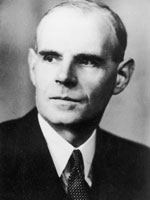

Sir Charles Harington

Sir Charles Harington

A true biochemist. Charles Harington was one of the most distinguished biochemists of his generation. He was a classical organic chemist but with the outlook and approach of a biologist; a true biochemist.

He was part of the generation of chemists and biochemists who laid the foundations of modern biology by establishing the chemical identity of major biological agents. He gained an international reputation for his work on the chemistry of the thyroid hormones and the synthesis of thyroxine.  He also synthesised glutathione, and worked on the beginnings of immunochemistry.  He was Director of NIMR for 20 years (1942-1962), overseeing its move from Hampstead to the new building at Mill Hill.  Harold Himsworth, head of the MRC from 1949-1968, said of him:

“He was able to absorb not only the knowledge but also the outlook of researchers in fields outside his own”.

A man of integrity.  Harington was essentially a shy, reserved person, who could come across as being cold and forbidding. He was in fact a kind man, capable of great affection and generosity. He was particularly kind to younger researchers and helped many scientists at critical stages in their careers.  He had a strong belief in justice and an unusually marked sense of duty.  Harold Himsworth said:

“He was so patently free from self-interest that he induced in others comparable standards of objectivity. Anyone with a contribution to make could be certain of his attention. His intellectual integrity was absolute, and no considerations other than the evidence were ever allowed to influence his conclusions.”

Timeline of his life

  • 1897 Born 1 August
  • 1916-19 Studied chemistry at University Cambridge
  • 1919-20 Postgraduate studies with George Barger at Edinburgh University
  • 1922 Appointed Lecturer in Chemical Pathology at UCH Medical School
  • 1927 Harrison Memorial Medal, Chemical Society
  • 1929-42 Editor of Biochemical Journal
  • 1931 Appointed Professor at UCH Medical School
  • 1931 Fellow of Royal Society
  • 1937 Appointed Director of Graham Medical Research Laboratories and Head of all Departments of Pathology at UCH Medical School
  • 1938-42 Member of MRC Council
  • 1942 Director of NIMR
  • 1944 Royal Society Royal Medal
  • 1944 Royal Society Croonian Lecture
  • 1948 Knighthood
  • 1953 Gold Medal, Society of Apothecaries
  • 1962 Retired from NIMR
  • 1962-67 Consultant Adviser to MRC
  • 1963 Nuffield Medal, Royal Society of Medicine
  • 1972 Died 4 February

Early career and first steps in research

Edinburgh Royal Infirmary

The old Edinburgh Royal Infirmary

Cambridge and Edinburgh.  After completing Part I of the Natural Sciences Tripos at Cambridge, Harington joined George Barger’s laboratory in Edinburgh. Barger had previously worked with Henry Dale at the Wellcome Research Laboratories and at NIMR in its very early years. Harington spent one year with Barger then moved to work with Jonathan Meakins at the Edinburgh Royal Infirmary, where he completed his PhD in 1922.  Barger remained in contact with Harington and exerted a profound influence on his scientific development

First publication.  Harington’s first paper, published when he was aged 24, concerned the ship-worm.  He spent a few months at the Marine Biological Association in Plymouth during 1921, looking at chemotaxis and enzymology of the shipworm.

A note on the physiology of the ship-worm (Teredo norvegica). (1921)
Harington CR
Biochemical Journal  15:736 Fulltext from PubmedCentral

This was research undertaken on behalf of the Institution of Civil Engineers’ Sea-Action Committee, funded by the Scientific and Industrial Research Department (a government body). This committee was charged with investigating the deterioration of structures of timber, metal and concrete, exposed to the action of sea-water.  George Barger was one of the scientists they commissioned to carry out the work and Harington worked with him on the project for ten years on and off.  The committee’s final report was a 320-page tome published in 1935.

The old University College Hospital (Cruciform Building).

The old University College Hospital (Cruciform Building).

Lectureship.  In 1922 Harington was appointed as a Lecturer in Chemical Pathology at University College Hospital Medical School, helped by a strong recommendation from Barger.  Obligingly, the School sent him off to the USA for a sabbatical.  He worked first with Henry Dakin, a colleague of Barger’s, and then at the Rockefeller Institute for Medical Research in New York. Over the next 20 years he rose inexorably through the ranks, becoming a professor at the age of 34 and ending up as the head of the prestigious Graham research labs and head of department for all of pathology at UCH.


Chemistry and physiology of the thyroid gland

Chemical structure of thyroxine

Harington made his name through his work on the thyroid gland and its secretions. In 1926 and 1927 he published three papers, one with George Barger, in which he established the structure of L-thyroxine as the thyroid hormone. Besides being the first hormone to be chemically synthesized, Harington’s synthesis of thyroxine is still considered as a major tour-de-force of synthetic organic chemistry. These three papers are his most highly-cited publications.

Many remained sceptical as to whether the harsh chemical procedures of synthesis in the laboratory gave useful insights about the formation of the hormone within the thyroid gland until, some years later, Harington demonstrated that two molecules of diiodo-L-tyrosine could spontaneously couple to give L-thyroxine under mild conditions. This coupling was later shown to occur within the large, unique iodinated protein of thyroglobulin present in thyroid cells in all vertebrates.

Speaking about the synthesis, and his luck in finding a solution to a particularly difficult step, he said:

a more distinguished chemist, with greater knowledge and experience, would never have tried the experiment.  The recollection of this has remained with me all my life, and has pulled me up many times when I have felt inclined to discourage someone from doing an experiment which seemed unlikely to succeed.

For his work on thyroid secretions Harington was nominated for a Nobel Prize six times between 1928 and 1953, but he was overlooked each time.

His book The thyroid gland: its chemistry and physiology, published in 1933, deals with the chemistry of thyroid secretions, the physiology, pathology and clinical aspects of thyroid disease. It remained the classic work until Rosalind Pitt-Rivers and Jam Tata published their work on the topic, 26 years later.

Harington said that his book “represents the attempt of a chemist to integrate the significant findings of biological sciences, together with those of chemistry, into a reasoned account of a subject which is, after all, of biological rather than of chemical interest”.

Glutathione synthesis.   Glutathione had been known since 1888 and was studied in the 1920s by F. Gowland Hopkins, who thought that it was a dipeptide composed of glutamate and cysteine. In 1935 Harington finally confirmed by chemical synthesis that the correct structure was a tripeptide. As with L-thyroxine, its synthesis was a major achievement. The stability of glutathione in solution latre helped to explain its biological activity as a reducing agent and anti-oxidant agent.

Immunochemistry.   Another of Harington’s major interests just before the last war was immunochemistry. He aimed to produce antibodies to biologically active substances, such as hormones or drugs, by introducing appropriate chemical groups into proteins that would then be used as antigens. He achieved some success, but the war prevented him from exploiting the idea fully. Almost a generation later the technique of tagging antigens with radioactive or chromogenic molecules was used in various research centres, including NIMR, to help clarify many problems of immunochemistry.

Harington recruited the immunologist John Humphrey to NIMR in 1950, and he later set up NIMR’s first Immunology Division, thereby laying the groundwork for much subsequent success. Harington also encouraged the development of the Division of Biological Standards, setting the stage for its splitting off as the National Institute for Biological Standardisation and Control (NIBSC) in 1972.

“the phenomena of immunity are fundamentally chemical in character, and … it is therefore through chemical and biochemical methods of attack that further advances in their elucidation are most likely to be achieved”.
1943 Jubilee Memorial Lecture to the Society of Chemical Industry, entitled ‘The contribution of chemistry to immunology’

NIMR director

At the time when Harington was Director of NIMR the MRC was responsible directly to the Privy Council and was relatively unconstrained by bureaucracy. It was a time when both scientific research and research institutes were held in high esteem.

He was a good administrator, quick to make decisions and painstaking in his attention to detail. Under his direction the Institute was an ideal place for researchers who wanted to devote all their energies to research rather than administration.

Harington considered that the role of a Director was to

  • attract first-class scientists
  • give them good facilities and encouragement
  • avoid encroaching upon their scientific independence

He took pains to know all his staff, both senior and junior scientists.  He would regularly dine in the canteen, sitting anywhere he could find a seat, and chatting with those around where he sat.

“It was a pleasant and exciting place in which to work and most of the credit for this must be given to Harington”.
Albert Neuberger, (Head of Biochemistry at NIMR, 1950-55).

Move to Mill Hill.  Harington became Director in the middle of the Second World War when all research projects were driven by the needs of the war effort. After 1945 he steered the Institute back to a peace-time role and planned its move from the cramped premises at Hampstead into the new building at Mill Hill. Science had changed since the building had been planned ten years earlier but Harington was alert to this:

“Due to the increasingly important part played by physical methods, the new building had to be fundamentally revised to provide facilities such as electron microscopy, electrophoresis, high-speed centrifugation, ultrasonics, radioisotopes, and mass spectrometry”.

Growth and reputation.  When Harington started as Director there were 45 members of scientific staff, in nine divisions.  This expanded to 80 staff when NIMR moved to Mill Hill. On his retirement there were 145 scientific staff, in 14 divisions plus two special laboratories. Because of the Institute’s international recognition there were also many more workers from overseas.

Several new Divisions and Laboratories were opened during Harington ‘s tenure:

  • Organic Chemistry
  • Bacterial Physiology
  • Immunology
  • Engineering
  • Laboratory Animals
  • Immunological Products Control
  • Human Biomechanics
  • Cytopathology
  • World Influenza Centre

The quality of the senior staff appointments made by the director are more important than the addition of new divisions and laboratories in judging the achievements of a large research establishment such as the NIMR. Harington brought to the institute exeptional scientists such as Archer Martin, Rodney Porter, John Cornforth (all future Nobel Laureates), Alick Isaacs (the discoverer of interferon) and others who went on to play decisive roles elsewhere in research establishments and universities such as Albert Neuberger, James Lovelock, Martin Pollock and Tony James.

On his retirement the MRC said that during his tenure

“the Institute has maintained its position of distinction and has continued to train a succession of leaders in research. …this continued success is due to the personal achievements of Sir Charles Harington. The breadth of his knowledge has enabled him to promote collaborative research within the Institute … and the personal confidence that he has won from his staff has been an essential factor in maintaining the Institute as a scientific community”.

NIMR at Mill Hill

NIMR at Mill Hill

Observations on research and research institutes

Over the years Harington thought and wrote a good deal about the purpose of a research institute, the relation between science and medicine, and the best way to manage research. When he had worked at the Rockefeller Institute he had been disappointed by the relative lack of collaboration between the different departments there, and the resulting tensions. He was keen to prevent a similar situation from developing at NIMR and he strongly supported NIMR ‘s tradition of encouraging co-operation between scientists working in different departments.  A few quotes from his writings on the subject are presented here.

Scientific men are less inclined than most to accept a formal framework of organization for their work…cannot be expected to work well and happily in any organization unless they feel that policy is determined by men whom they hold in professional respect and have a real  understanding of scientific work.   David Russell Memorial Lecture, 1957

An Institute is a collection of people with widely differing scientific interests but working together with a common sense of purpose.  [the solution of] many biological problems  … may more readily be achieved by a suitable grouping of workers … within a research institute.   Linacre lecture (1958): The place of the research institute in the advance of medicine

The medical research worker cannot be free from pre-occupation with the ultimate practical outcome of his efforts; … on the other hand, it is disastrous for him always to be thinking in terms of immediate application.   BMJ, 1948. Medical research in the laboratory

A professor with no more than first-class ability in original scientific work, but with the right personal qualities, will probably be a greater intellectual leader than the self-centred near-genius absorbed in his own field of interest.  David Russell Memorial Lecture, 1957

The organisation of divisions within a research institute should be as flexible as possible, and the very existence of the divisions and of the resultant general groupings of staff should be regarded as no more than an administrative convenience. Pre-eminent importance is attached to the principle of flexibility and avoidance of departmentalization.   Talk at the National Physical Laboratory (1956): Staff groupings and the flow of authority.

The preservation of the maximum degree of academic freedom … is of vital importance to the scientific work of a research institute.   Talk at the National Physical Laboratory (1956).

All basic research is a pioneering effort and the man who takes it up is embarking on an adventure.   Talk at the National Physical Laboratory (1956).

A prerequisite for effective collaboration in research is that you should not have to put on your hat when you go to see the man you want to talk to, and he should be ready to listen.  Linacre lecture (1958): The place of the research institute in the advance of medicine

The fringes of the effort may often turn out to be the growing points … studied with the aid of workers in relevant disciplines.  Linacre lecture (1958): The place of the research institute in the advance of medicine

Evidence of originality is more likely to be found in the perception of hitherto unobserved correlations of knowledge than in the conception of entirely new ideas.  Linacre lecture (1958)

Subjects for research in the different divisions are chosen not only for their own interest but for their potential contribution to the common effort.  Linacre lecture (1958)

Science communication and organisation

Communicating science.  Harington believed it was very important that scientists were able to communicate effectively the content and significance of their research, within and outside the Institute. He took great pains to critically examine and edit all publications by NIMR staff, especially those of the more junior members of staff. His criticisms were never negative but always intended to help the younger people with their careers.

Biochemical Journal editor.  He became joint editor of the Biochemical Journal in 1929 and senior editor in 1937, serving until the end of 1942.  He wrote clear and concise English, disliking pomposity and unnecessary scientific jargon. He had an important influence on the journal during an important period of its development. In appreciation of his services, he was granted honorary membership of the Biochemical Society in 1961.

International Union of Biochemistry.  In 1947 the Biochemical Society began to explore the possibility of setting up an International Union of Biochemistry and Harington took a leading part in the discussions.  The first International Congress of Biochemistry was held at Cambridge in 1949, and set up a multinational committee with Harington as Chairman. Six years later the IUB was officially recognized, and Harington must be considered as one of its founders.

Scientific foundations of endocrinology.  The Society for Endocrinology was established in 1946. Harington was invited to give the inaugural address at the first Annual General Meeting of the Society.

 “I regard myself as a biochemist and do not claim to the status of endocrinologist.  Until recently biochemistry itself was a poor relation of physiology. Endocrinology has now in its turn earned independent scientific status. No endocrinologist can hope to know … all the sciences on which his own work rests, but he must know his way about if he is to find his way home; he must have a lively appreciation of the contributions which different techniques can make to his own particular line of effort and be ready to receive inspiration from whatever quarter it may come, whether from … clinical observations or from fundamental studies of biologists and biochemists”.

Medical Research Council. After retiring from NIMR he continued as a Consultant Adviser to the Secretary of the MRC for a further 5 years, up to 1967, serving as Second Secretary for some of that time. He helped to establish the MRC ‘s new Biological Research Board and was also closely involved in planning the Clinical Research Centre at Northwick Park.

Statue

Sir Charles Harington, by Benno Schotz

Sir Charles Harington, by Benno Schotz

Sir Charles Harington’s retirement from the directorship of NIMR was commemorated at a ceremony on 14 November 1962.  Lord Shawcross, chairman of the MRC, presented him with a bust by the sculptor Benno Schotz. Sir Harold Himsworth, secretary of the Council, spoke about Sir Charles’s distinguished contributions to medical research. The ceremony was attended by many of those who had been associated in one way or another with Sir Charles and had subscribed to the presentation fund.

This statue now resides in the Library. I walk past it every day and am therefore very aware of Sir Charles Harington and his contribution to NIMR.  I am told that the left profile and right profile have different expressions, but the difference is ever so subtle. On one side he has a stern forbidding look, on the other side there is just a suggestion, a tiny glimmer, of a smile.

Sources
As ever, the Royal Society Biographical Memoir on Harington, written by Harold Himsworth and Rosalind Pitt-Rivers, is a mine of information about his life and work. The obituary by Albert Neuberger in the Biochemical Journal, the journal with which Harington was so closely associated, has a good account too. This account of the founding of the Society for Endocrinology was also useful. Harington’s own articles about NIMR, published in 1949 and 1950 along with Landsborough Thomson’s history of the MRC, Half a Century of Medical Research were also useful. I also used extracts from Harington’s various writings about research. Thanks too to Jam Tata and Bob Cox for numerous discussions about Charles Harington, and for reading and correcting an earlier draft.


Posted in History, Research Councils, Research management | Comments Off on Sir Charles Harington (1897-1972)

Serendipity luckydippery

Sri Lanka is a beautiful country, with tropical beaches, lush hill country, tea plantations, spice gardens and a fiery cuisine.  The Arabic name for the island was Serendib, from the Sanskrit Simhaladvipa which literally translates to “Dwelling-Place-of-Lions Island”  (thankyou, Wikipedia). There is a Persian fairy tale called The Three Princes of Serendip, whose heroes “were always making discoveries, by accidents and sagacity, of things they were not in quest of”. This tale inspired Horace Walpole in the mid-18th century to coin the word “serendipity”, meaning a faculty for making felicitous discoveries.  The word did not appear in the Oxford English Dictionary until 1912 but its use is now widespread.

Recently while reclassifying some books I came across Erling Norrby’s book Nobel prizes and life sciences. He devotes a whole chapter to serendipity, explaining the history of the word and its occurrence in science.  He suggests that the euphonious sound of the word itself has helped to popularise its use.  The symmetry of it and the inclusion of the word “dip” inside it, as in “lucky dip”, add to the flavour of the word, Norrby says. He notes that the word has been imported into many other languages.  Norrby tells us that in the 1930s serendipity leapt from the world of letters into the world of sciences, thanks largely to Walter B. Cannon, the Harvard physiologist.  In his biography, The way of an investigator, Cannon devotes a whole chapter to serendipity.

In a previous post I touched on serendipity and its role in information seeking. Therefore when I saw an advert for a sameAs event featuring three speakers on the theme of serendipity, my interest was piqued and I attended the event. The discoveries I made were not quite what I had been seeking, but were interesting nonetheless. I left the event feeling decidedly non-linear, and hence this post may be somewhat


disjointed.

The first talk was the most straightforward. Natalie Downe, one of the founders of the website Lanyrd,  explained that Lanyrd aimed to bring together people who have shared interests but didn’t previously know it. Lanyrd is a bridge between your network of contacts and events that are of interest to you.  It attempts to predict future events that will be of interest to you.

Kat Jungnickel and Julien McHardy then took the stage with their Enquiry Machine. This is a contraption formed ftrom a bicycle or two, with two seats facing each other.  It seemed more like an art installation than anything to do with information science.  Kat and Julien pedalled away on the machine and spoke about its purpose.

Enquiry machine

Julien and Kat operating the Enquiry Machine by Rev Dan Catt, on Flickr

At this point my wheels of cognition buckled and my head exploded. I understood little of what they said, but I think that was possibly the point. Because the Enquiry Machine is so off-the-wall (not to say barmy) and incomprehensible, it demands that you stop trying to understand, freeing you from the tyranny of thinking. You must open your mind.

non-linearity           intuition              lateral thinking             creativity                 leap of faith        surreality        humour      irrationality      insanity      superstition        there be dragons           speaking in tongues                     automatic writing       coincidence       serendipity

Once you stop trying to build a ladder of linear logical connections then you give yourself the chance to leap sideways to a different place. Well, that is the best explanation I could come up with.

After that challenge, Aleks Krotoski let us down lightly in her talk.  She ran through some definitions of serendipity, and examined whether services like Amazon’s recommendation engine (“here are some more books you may like”) were really serendipity in action. Her recent Guardian column Is the web a serendipity machine or a tool for cultural homogenisation? makes a similar point.  Alex suggested that such services are insufficiently sophisticated, for instance they mix up different spheres of your life (like buying books as Xmas presents and buying books for your own interest), and they tend to just recommend more of the same, lacking a creative spark.  One audience member characterised such services as merely clever retrieval engines and not serendipitous discovery tools.

I wondered privately whether there was really |
a difference. Perhaps at the extreme, when    |
(if) Amazon knows absolutely everything       |
about my life and interests, then it will be  |
able to surprise me with things I am really   |
interested in but did not know about?         |

Aleks and Kat are to collaborate in building an Enquiry machine mark 2, or Serendipity Engine.  Details as as yet sketchy, but Aleks has posted some notes on her Tumblr page.

The talks between them did a good job of stimulating the old neurons, and softening us up for further thought. Earlier in the day I had been talking with venerable scientist Jam Tata about Charles Harington, a biochemist from an earlier generation. Harington was the first person to correctly determine the stucture of thyroxine and to complete a chemical synthesis of the hormone.  Later he discovered that diiodotyrosine when left standing dimerises to form thyroxine.  This was a chance discovery and Jam suggested that it was Harington’s acute observational powers that led to the discovery.  He saw that something unexpected had happened but instead of ignoring it as something irrelevant, as others might have, he looked further at what had happened.

This reminded me of Pasteur’s dictum that “chance favours the prepared mind”.  So, you need to prepare your mind for serendipity.  Perhaps we all see the same things but only those prepared to really notice them can make serendipitous discoveries. It goes back to that word “sagacity” that Walpole used about hte three Persian princes. Another audience member commented that a broadly-based education, such as that provided by the USA’s liberal arts colleges, provides a more wide-ranging intellectual context than a narrowly focused specialised education.

Later I chatted with Alasdair Allan about how best to preapre our minds for felicitous discoveries.  I speculated that perhaps visiting the bar might be a good method (but that was probably a thought influenced by the pint of beer I had already drunk). Alasdair commented that serendipity – with its surprising linkages – shared something with humour. We laugh at things that surprise us, at things that are similar but not quite (puns, for instance). Humour, too, often relies on knowledge of a context for the joke.

It was an interesting evening and provided plenty of food for thought.  Ian Mulvany has posted another account of the evening, and his thoughts on serendipity, on his blog.

I leave you with two more quotes from Norrby’s book.  Irving Langmuir, the physicist and chemist, came across the word ‘serendipity’ in 1938 in a detective story he was reading on holiday.  He liked it and started to use it.  In 1953 an article about his style of management said:

Cultivating serendipity is, essentially, a matter of being constantly on the lookout for the chance reaction that may lead to a discovery. Irving Langmuir … deliberately nurtures serendipity by never setting himself a specific goal. As he puts it he just has ‘fun in the laboratory… Discovery cannot be planned, but we can plan work that will lead to discoveries’.

Norrby later emphasises:

It is the prepared mind of the scientist-inventor that turned a trivial observation, made by many before, into a lever to a new understanding.

If you want to read more about serendipity in science then you should get hold of a copy of the book below. It was written in 1958 but for some reason not published until nearly 50 years later.

The Travels and Adventures of Serendipity:
A Study in Sociological Semantics and the Sociology of Science
Robert K. Merton & Elinor Barber.  Princeton University Press, 2006. ISBN: 9780691126302

“Beautifully written, the book is permeated by the prodigious intellectual curiosity and generosity that characterized Merton’s influential On the Shoulders of Giants. Absolutely entertaining as the history of a word, the book is also tremendously important to all who value the miracle of intellectual discovery. It represents Merton’s lifelong protest against that rhetoric of science that defines discovery as anything other than a messy blend of inspiration, perspiration, error, and happy chance–anything other than serendipity.”

Posted in History | 8 Comments

A week in the Library

From time to time people ask me what I do all day. Sometimes it’s school students spending a week with us on work experience who do the asking, sometimes it’s my boss at my annual appraisal, sometimes it’s just random people I meet. Sometimes I wonder myself, especially when my to-do list seems just as long at the end of a day as it was when I started in the morning.

Library Day in the Life (Libday) is a global attempt by librarians to let the world know what we do. Librarians around the world blog or tweet about their daily activities for one week. I participated in Libday a couple of years back, using Twitter. This time, Libday7, I decided to write a daily post on Google plus. What follows is a digest of my posts during the week, to give you an idea of what I did last week. See the links at the bottom for the original daily posts.

Some major strands of activity emerged: things to do with journals (dealing with subscriptions, licences and open access); things to do with books (weeding our physical book stock, cataloguing print books and ebooks, ordering books); things to do with writing and editing (news items for the website, historical overviews, essays); things to do with news dissemination (daily research policy and news feed, blogging and tweeting, weekly internal newsletter); some events and meetings.

Journals
It is the season for renewing journal subscriptions for next year and publishers are starting to set their pricing, or to fire the first salvos across our bows. I have to respond, notify colleagues, look at usage stats and consult with my boss to make a decision on renewal, also deal with any paperwork relating to licences and payments.

One major publisher has proposed an increase of 8% for 2012, making it likely we will have to cancel some of their titles. This paled into insignificance when I had an email telling me about an increase of 130% from another publisher, which left me frothing and speechless. Happily that publisher relented, after a robust response from me and some other librarians, though we are still waiting to learn what their new pricing will be. We are also still waiting for the biggest publishers to announce their deals. I am expecting this renewal season to be bloody.

Another aspect is open access – now tied up with subscriptions. I provide advice to our scientists on compliance with the MRC OA mandate, and also follow developments and liaise with with MRC head office and some publishers. The release of the Select Committee report on Peer Review was a key event last week.

Books
For the past year I have been working methodically through our book shelves, deciding which books to keep in the main library and which to send to our store. I have almost finished the main collection now. As well as much hand washing (the books are remarkably dirty when you handle a lot of them) this also involves an enormous effort of catalogue updating- changing locations and creating new entries for books that were previously only in our old card catalogue.

I have also started creating entries for many of the book series volumes that we subscribe to in electronic form. I also did a bit of the routine business of selecting, ordering and cataloguing new books. It is frustrating when systems let you down. Our bookseller is not performing well just now, taking weeks instead of days to supply, and our internal procurement systems are also troublesome. I have to find a way round these problems beyond just stamping my foot in exasperation.

Writing and editing
I produce short news items about key research papers from the Institute, to go on our website. I will either write a draft for the scientist to amend, or they write something that I edit. Just now there is a bit of a spike of interesting papers and I had three or four on the go last week, plus another half dozen on the horizon. I enjoy the contact with the scientists and with the science this provides, though the latter can be challenging.

I was quite involved with the news activity around one big paper, even though the authors didn’t give me much notice of it coming out. That was a good experience but time-consuming to liaise with all parties involved and get all the content ready for our internal and external websites.

I also manage production of our Annual Report and the Mill Hill Essays booklet. I edit the text and, more importantly, persuade people to write it! I had a couple of conversations last week with authors, to confirm what they are going to write.

I spent some time editing text for some posters for an internal exhibition about a former Director. This was my idea so I have myself to blame. I checked with our Photographics department (who will layout and print the posters) and our present Director, so they know what is happening.

News dissemination
Most days I check an assortment of sources, looking for interesting news items about research and science policy. I share these internally and externally via an RSS feed, and sometimes via Twitter. Checking for interesting news requires self-control; it would be too easy to spend hours reading things that look interesting. I see good things appearing on Twitter, LinkedIn, Facebook, and now GooglePlus, as well as my core RSS feeds and regular websites.

A weekly selection of the best items goes into communicate, our weekly internal newsletter. My colleague puts this together, with some help from me and under the watchful eye of our web manager. We also highlight the key papers published here, along with an informal “60 second interview” with one of the authors of the paper. It is a good means of internal communication, with an attractive design and a mixture of items.

Events and meetings
Much of what the Library provides as an information service comes from outside, or depends on other agencies, so it is important to keep in touch with them. Recently I have cut back a bit but often find myself attending this or that event, or small meeting. This week I didn’t have any external meetings, which was a nice change, but I am pondering whether to attend the JISC Collections meeting in November and the Library Camp in October.

On Thursday evening I joined a guided walk around the Kings Cross St Pancras area, with some fellow information professionals from LIKE (London Information and Knowledge Exchange). It was a very entertaining and informative walk. Can you identify where this photo was taken? It was taken 43 years ago to the day that we did the walk.

Almost the final activity of the week was to attend and take minutes at the Heads of Divisions meeting. It was a very short meeting this month, so it was easy to write up.

Overall, I felt I made some good progress with some projects this week. I need to push on half a dozen other projects too, though. Being involved across a spectrum of activity is rewarding, but it is hard to keep a balance and keep all those plates spinning.


Posted in Libraries and librarians | Tagged , | 1 Comment

Subscription rage

Supermarkets are confusing places these days. There are two-for-one offers (BOGOF – buy one get one free) and variations thereon (buy two get one half price, etc etc), combo offers (buy three similar products together for a cheaper price than buying them separately) and all kinds of ways of persuading you to spend more than you had planned to. You need your wits about you and must read a good deal of small print on price labels to be sure you are getting the best deal. Last week I wanted a punnet of strawberries. They were labelled as costing £4, which struck me as a bit steep. Then I noticed that the label also said “2 for £3”. I scratched my head and double-checked the price label, then scratched my head again. Eventually I asked a nearby man in a supermarket uniform how much the strawberries cost and he confirmed that if I purchased two punnets of strawberries then the total cost would be £3. He looked at me as though I was a bit stupid for doubting that was the case, but it was an offer that did not make economic sense to me.

Value and price no longer seem to have a direct relationship.

That is the case too when it comes to buying journal access, or subscriptions as we used to call them. They often come packaged together in bundles and with a variety of special deals. A process of negotiation is required to decide exactly how many journals the publisher will let us have for what amount of money. We have to look in detail at usage of each title and the cost of providing that title. The Big Deal (a large bundle of journals from a single publisher) is coming under pressure recently. Research Libraries UK have told publishers that the Big Deals that libraries entered into in the past are no longer sustainable.

Some publishers use a different tack. They put high list prices on their journals but after negotiation they will offer discounts to persuade you to subscribe. That is fine but then somewhere down the line, in a year or three, they will try to bump you back up to the list price. This is what Nature Publishing Group did to the University of California last year – they just reduced the level of discount.

Publishers no longer have to put up their prices they can just change the terms of the deal instead, or make the special offer less “special”.

Last week I had another moment rather like the strawberries incident, but in reverse. I received notification of an initial offer for 2012 from a certain publisher (I will not mention them by name but they are a powerful US learned society publisher, not well-loved by open access advocates). This was an offer that did not make economic sense to me.

We have had a deal with them for about six years, with a gradual increase in price and decrease in flexibility. They changed their model a couple of years back, to bind my group of libraries into a very tight agreement but we kept with it. For 2012 they have decided that we no longer qualify for this deal. It is teh same one that UK Universities get and the publisher wants instead to put us onto their “Government libraries” deal. By pure chance the Government libraries deal seems to be much more expensive than the University libraries deal – an increase of 130%. The question of whether we are academic or government is a thorny one
that I have written about before and it is perhaps hard to answer with certainty. But the question of whether we can afford a 130% price increase at a time of public spending cuts and global recession is quite an easy one, and I would have thought that the answer was pretty obvious to most observers of the publishing scene. I fear that our researchers‘ ACcesS to that publisher‘s journals is going to be somewhat reduced for next year.

Posted in Journal publishing | 13 Comments

Scientific information in the digital age

Just a quick one.

The European Commission is consulting on scientific information in the digital age. In late 2011 they intend to adopt a Communication and Recommendation on access to and preservation of digital scientific information.

The press release says:

European researchers, engineers and entrepreneurs must have easy and fast access to scientific information, to compete on an equal footing with their counterparts across the world. Modern digital infrastructures can play a key role in facilitating access. However, a number of challenges remain, such as high and rising subscription prices to scientific publications, an ever-growing volume of scientific data, and the need to select, curate and preserve research outputs. Open access, defined as free access to scholarly content over the Internet, can help address this. Scientists, research funding organisations, universities, and other interested parties are invited to send their contributions on how to improve access to scientific information.

Meanwhile, the UK House of Commons Select Committee on Science and Technology has announced that it will be publishing its report on peer review (no custard pies) on Thursday 28 July. I rather imagine that this report will cover much of the same ground as the EC consultation is planning to.

Posted in Journal publishing, Open Access, Peer review | 1 Comment

Citing wrong ‘uns

Quite a bit of attention has been focused on article retractions since Ivan Oransky launched his Retraction Watch blog last year. One recent discussion in blogworld looked at when a retraction is warranted and what a retraction means. Dr Isis suggested that any retraction carries a whiff of fraud, and thus this measure should be used sparingly. Her take-home message, though, is:

it is important to review the related literature in its totality. I am told, after all, that this skill is a critical character of the PhD.

I like that phrase “literature in its totality”. It is a useful reminder that quick-and-dirty searching is not always the answer; sometimes a thorough literature search is useful. This is what librarians are trained to do.

This theme is echoed by Bonnie Swoger, a US librarian blogger, who has highlighted some recent research on retractions and rebuttals which suggests that scientists “aren’t always finding, reading or critically analyzing the original and rebuttal papers”.

A study in the ecology field looked at seven high profile papers originally published in Science or Nature, all of which had at least one rebuttal published. Papers that cited either the original article or the rebuttal were identified and their citations examined. It was found that:

  • Original papers were cited 17 times more than the rebuttals.
  • Several papers cited only the original paper, and 95% of these accepted the original at face value
  • Only about 5% of the citations to the original papers were critical (at all) of the original article.
  • Some papers cited the original and the rebuttals as though they both supported the same position!

The authors suggest that original articles and rebuttals need to be better linked in information retrieval systems. Bonnie Swoger suggests that researchers should put a bit more effort into their searches. Perhaps asking the library for searching assistance would help too.

The study looked only at papers in the field of fisheries policy, and the comments on the blog post suggest that its authors have a particular point of view that is motivating their ‘complaint’ about non-citation of rebuttals. It may be that in biomedical fields the situation is better because PubMed does try to link between original articles and retractions or comments.

NCBI’s published policy on tracking retractions, corrections etc suggests that:

Users who search MEDLINE will be informed if they retrieve a citation for an article that has been corrected by an erratum notice, retracted or partially retracted, corrected and republished, been found to duplicate another article, generated a separately published commenting article, been updated by a subsequent article, if a summary for patients has been published, or has been republished (reprinted) in another journal.

A recent example is the 2009 XMRV paper in Science. The Pubmed record links into various comments and to the recent editorial expression of concern about the paper. However, the PubMed record for another controversial article, a much-criticised GWAS study, has no link to an editorial expression of concern that was issued. I haven’t studied the efficiency of PubMed’s links to commentaries and retractions, so can’t say if this was a one-off omission or a common failure. PubMed of course only refers to published journal articles, not to critiques published on blogs.

A 2008 paper in the Journal of Medical Ethics suggests retractions are being missed by researchers in the biomedical field. It found that 315 retracted papers from English journals were cited 3942 times before retraction and 4501 times after retraction:

Although retractions are on average occurring sooner after publication than in the past, citation analysis shows that they are not being recognised by subsequent users of the work. Findings suggest that editors and institutional officials are taking more responsibility for correcting the scientific record but that reasons published in the retraction notice are not always reliable. More aggressive means of notification to the scientific community appear to be necessary.

During a brief Twitter exchange Cameron Neylon, with characteristic Antipodean understatement, suggested an alternative system of notification.

Until then, the only way to find retractions etc is to look for them, or ask someone else to look for them – such as your librarian.

Original paper:
Banobi, J., Branch, T., & Hilborn, R. (2011). Do rebuttals affect future science? Ecosphere, 2 (3) DOI: 10.1890/ES10-00142.1

Posted in Information skills, Journal publishing | 4 Comments