Latest posts

Surprises: Notes from my first year as a practicing Christian

  1. Christmas 2022, Christ Church, Harpenden: a riot of 200 people in a school hall.
  2. An invitation to join home group.
  3. Joining the Teas and Coffees Rota. Learning the drill, and the importance of the ministry of hospitality.

    The Tea Rota Dave Walker

    The Tea Rota © Dave Walker

  4. Contemporary Christian Music. Commercially obvious melodies, catchy drum beats, repetitive choruses and frequently dubious theology. I love pop music so this was a natural intersection. Terry Scott Taylor hits harder than most. He gets the video with his supergroup The Lost Dogs.

    …He wants our faith,
    But there’s never enough;
    He wants our hearts,
    That’s how He Lo-o-oves…

  5. My phobia of cut flowers got cured.

  6. Flowers a gift from my lockdown neighbour.

    A gift from my neighbour in Lockdown

  7. Easter
  8. Ringing for the King.
  9. Holloway Ringers and Friends

    Holloway ringers and friends ring for the Coronation, 6 May 2023. Photo: Claire Lorenc

  10. The Feast of Corpus Christi, All Saints Margaret Street. Processing the Blessed Sacrament round Oxford Circus.
  11. Spending my Saturday afternoon Googling “Why was Simon Peter fishing naked?” I was reading from scripture that weekend (John 21:1-14, NRSV). Why did he put his clothes on to swim to the shore?
  12. Surprising conversations with the Vicar Part I:

    Erika: Tell me you really need bellringers for the Ordinations. (The Ordination of Priests in Stepney and Two Cities was taking place at St Mary’s, a sell-out event. I wanted to be there. – EC.)

    Vicar: You know, actually we do need bellringers for the Ordinations.

    Ordinations 2023

    Ordinations 2023

  13. I now have the same hairdresser as Rosemary Lain-Priestly. It is a funny story.
  14. Surprising conversations with the Vicar Part II:

    Erika: Why does Paul talk about the gift of exhortion? Doesn’t that mean beating someone up and taking all of their money? (Romans 12:8, NRSV).

    Vicar, patiently: No, Erika. That’s extortion.

  15. Grace
  16. Surprising conversations with the Vicar Part III:

    Vicar: What did you make of today’s Bible Readings? (The Gospel Reading was Matthew 14:1-12, NRSV, “Bring me the head of John the Baptist”)

    Erika: Well, it makes me sad, because I like the Benedictus.

    Vicar: Oh, you like the Benedictus?

    Erika: Yeah…

  17. Helping to run the Study Group. We taught The Prayer Course 2: Unanswered Prayer. Incidentally Pete Greig runs a church in my hometown of Guildford.
  18. Ringing the Bells in St Martin in the Fields. We also visited the Ringing Room and Bell Tower in St Paul’s Cathedral.
    The Bells of St Paul’s.

    The Bells of St Paul’s.

  19. Prayer.
  20. That I no longer flinch when conversations end with “Well, that’s something to pray about.”
  21. Reading the Bible on the bus. I used to wonder, years ago, about the proportion of people reading religious texts to people reading other sorts of material, on public transport. Is the ratio higher on trains than in homes? Now I am the one reading the Bible on the bus. Gotta get my daily dose in.
  22. Communion
  23. How certain things make sense in hindsight.
  24. That one time I was asked to lead Morning Prayer. It felt funny, with the responsories the wrong way around, and having to pray the intercessions on the fly. (For services, I write them ahead of time.)
  25. Ten thousand Christians in a field, what’s not to like? Volunteering with the Access Team at Greenbelt, August 2023.
  26. Failing my way through eight job interviews and several more applications. The first church-based role, they gave me the feedback that I “didn’t talk about God enough” in the interview. Rookie error, I thought. Rookie error.
  27. Getting stuck in with the children’s ministry: a gentle start manning the craft table at the light party and then the same duty again at the Christmas Fair so that their parents could shop. Being invited to help teach the Nativity to local schoolchildren was a bit of a jolt, and felt like quite a step up. But if I don’t say yes, what am I doing here?
  28. Making monsters using stickers at the Light Party

    Making monsters using stickers at the Light Party

  29. My sister-in-law telling me that I seem like a down-to-Earth Christian.
  30. Getting a selfie with the Bishop: Confirmation, October 2023. How enthusiastic my fellow bellringers were about assembling a band to ring for the occasion, once they realised I was the one getting confirmed. Explaining I couldn’t join in the ringing because at the time they will be ringing, I will be being prayed for. Being prayed for as the bells rang.
  31. Selfie with the Bishop.

    Selfie with the Bishop. Confirmations at St Mary’s, October 2023.

  32. How far one can travel in a year.
    The best Christmas present?

    The best Christmas present?

    Leading the prayers, St Mary’s Islington, Christmas 2023.

    Leading the prayers, St Mary’s Islington, Christmas 2023.

With thanks to the good people of St Mary’s Islington and elsewhere, for walking with me on the journey.

Stepping out in faith, I guess.

Stepping out in faith, I guess. Confirmation Day at St Mary’s, October 2023.

Posted in Faith, Faith; Fun; Life; Lists, Fun, Life | Comments Off on Surprises: Notes from my first year as a practicing Christian

In which we celebrate

ornaments

Overlapping festive traditions: new (left) and old (right) baubles

Christmas, I argue, is a space-time continuum where the past and present layer up like sediments on the Jurassic coast. At the appointed time, old traditions are unearthed out of storage to mingle with those spontaneously invented as you go along. The result is slightly different every year, yet grounded with a hefty sense of nostalgic familiarity, the past shoring up the present as if they have always been together.

This time was especially intense because we received my late parents’ possessions over the summer in an overseas container shipment, most of which have yet to be explored. (It is so emotionally difficult to process, I can only do a box at a time.) But when we were putting up our tree last week, I was ready to tackle the one marked “Christmas” that Richard found among the stack in the loft. Feeling that tingly sensation like the moment before the big reveal of a scientific experiment, I slit through the tape and began to delve through the dusty contents within, stirring up the scent of a Victorian farmhouse halfway across the planet.

I found what I was looking for: several cardboard boxes containing the ancient glass family ornaments in faded tissue paper, each nested into a cardboard cell. Some were instantly recognizable, and others, utterly unknown. In the familiar category were all the baubles that I’d forgotten until the moment I saw them, the seeing somehow reconnecting the memory as decisively as a light switch. Some were broken, others intact but with colors faded almost to greyscale, while a few looked nearly brand-new, like the brace of red and green peacocks with their real tail feathers that I used to adore, and which must be close to a century old. The unfamiliar ones included a pretty, gilt-trimmed scarlet sphere in its own special box, with a gaping hole on one side and a little note in the hand of my mother (also a relentless chronicler) stating simply: “Poland, 2002”. (Darling Richard managed to fill the perilously fragile shell with expandable foam, and it now hangs with all the others on the tree, foam-side back.) Did my parents manage to travel to Poland on the same trip when they visited me in Amsterdam? I have no memory of this, but it may be so. So many mysteries, which now will remain forever unanswered.

I wasn’t expecting to find the metal Christmas tree candle-holders, complete with half-burned silver candles still in situ. Dad used to take hours attaching the holders in unproblematic areas of the live tree, then changing his mind and moving them repeatedly, before making us all sit down and not move for half an hour after he lit them, lest we accidentally burn down the house. Just seeing them gave me a shiver of fear, but also an injection of the old Christmas wonder, from back when I was as small as my son, and everything seemed not just metaphorically magical, but actually magical.

My maternal family’s cookie recipe, converted from American to British

Back in the present, the longest night of the year has come and gone and the moon is swelling towards full. We have been baking non-stop – the usual Julpepparkakor cookies, and my recent adaption of Martha Stewart’s sugar cookies, both cut into shapes using the metal cutters that I happily discovered in the overseas Box of Christmas. I like the idea that when Joshua is pressing them into the dough to make stars and hearts and trees, he is handling the same tools that his grandmother used to use, and his mother, when I was his age. Richard has been knocking out stollen, mince pies and sausage rolls with his usual aplomb, all handmade from scratch including the candied peel, mincemeat and marzipan. He’s got a Christmas cake and pudding in the wings, and a magnificent feast for tomorrow night. I am not sure what sort of cosmic lottery I won, but I’m just going to try to enjoy it without pinching myself every two seconds, or convincing myself that I don’t deserve it.

musical notation

How did this abomination slip past the editors?

Joshua and I have been practicing festive duets daily for the past month, which we finally got to showcase last night at our annual cocktail party, with everyone gathered around the piano singing. It’s hard to find decent arrangements of the old favourites, and I usually have to annotate them to set them to rights. But it is wonderful that Joshua is turning into a proficient player, and that I have someone to play with. It’s been nearly half a century since I use to enjoy duets with my father’s best friend Chester, a concert pianist who would indulge my childish enthusiasm, and whose Secondo would include thrilling improvisational flourishes and trills that turned our songs into gold. But now I’m the Secondo, spicing up the bass parts, and Joshua is playing a serviceable melody snuggled next to me.

It’s Christmas Eve, and everything is ready. The lights are up, the mistletoe is hung, I’ve made a wreathe of fir offcuts, holly, ivy flowers and pyrocanthus berries. The larders are full, the older offspring are home and sleeping for 15 hours. The presents are wrapped, and the weather is typical mild English green-and-grey gloom. I am humbled by my excessive good fortune, and strive only not to take it for granted.

Posted in Domestic bliss, Joshua, Music, Nostalgia | Comments Off on In which we celebrate

What I Read In November, And Other Stuff

UntitledBetty M. Owen (ed): Eleven Great Horror Stories As you both probably know I am a confirmed Haunter of the Dark secondhand bookshops, in which emporia I like to paw pore over mossy grimoires anthologies of science fiction, horror and ghost stories. I tend to pick these up when I am too busy elsewhere to invest time and energy in something more substantial (more on this below), and when I do, I am enchanted, once again, by the charm of a well-turned short story. The stand-out story in this example is The Dunwich Horror by H. P. Lovecraft, that master of cosmic schlock, whose fiction is, it has to be said, so bad that it’s good. As Brian Aldiss and David Wingrove wrote about Lovecraft in Trillion Year Spree, their history of SF, his work succeeds as psychological case history even if it fails as literature. Long after reading, and even when one has forgotten all the details, Lovecraft’s fiction leaves a kind of ectoplasmic stain on the mind. None of the other stories tend to stay as much in the memory as this, not even Poe’s The Oblong Box, and I’d say that most of the stories might be classified more as fantasy, even whimsy, than the kind of horror that gives one the heebie jeebies as one lies awake too afraid to see what’s making those strange snuffling sounds under the bed…

Which leads me to an apology. As the astute reader will have noted, this was the only book I read in November. That’s actually not true – to be precise, it’s the only book I completed in November. I am picking my way through an absolutely huge book, of which I am only reading a few pages at a time, and news of that will be fifthcoming forthcoming when I have finished it, whenever that may be.

One will also note that, apart from that, and if to add insult to injury, I’m posting this more than a month late. I offer as my only excuses that I have been in a state of bouleversement over what I shall euphemistically call World Events. That, and I have been busy completing my second album in G&T, my musical collaboration with guitarist Adrian Thomas.

Notwithstanding inasmuch as which I had a deadline weighing down on me — the delivery to the publishers of my thirdcoming forthcoming book. Reader, I succeeded in this task, and you can read more about it at the shiny new book website. The book should be out in 2024 and editions are already projected in Italian, Japanese, Korean and Romanian.

Hoping that you both have a Festive and Floofy winter break —

Comments Off on What I Read In November, And Other Stuff

Not Being in the In-Crowd

Recently I was preparing a talk about work scientists may do that is not simply research and it has provoked me to think about when I fell into doing policy work, or at least moving out of the lab itself. The first role I took on was not exactly policy: it was sitting on a grant giving board (with fixed membership) of what was then the AFRC (Agriculture and Food Research Council), a predecessor of BBSRC. I was still, to my mind at least, an early career researcher. I can have only been in the second year of my lectureship and I can date the occasion fairly precisely, because I know I was still breastfeeding my first child, which caused all kinds of logistical problems. I wasn’t on maternity leave, though, because I only got 16 weeks paid leave back then (which was generous for the time), and my wonderful mentor, Sam Edwards, took a dim view of me saying I didn’t want to attend my first committee meeting because of the challenges of keeping a small child happy, and essentially gave me a three-line whip.

It was definitely a baptism of fire. Leave aside the comments that greeted me when I walked into the room, as a young unknown female, about the papers (yes papers, literally, and a heavy weight of them), coming out late. Perhaps unsurprisingly for the 1980s, given that it could still happen today though one hopes with less frequency, it was assumed any woman present had to be part of the Secretariat. Once I’d worked out why I was being challenged about paper distribution by some grey-haired, grey-suited gentleman, I could push back. But the baptism of fire also got much closer to the science. I forget the precise title of the panel, possibly Food Quality, but I’d only been working in anything vaguely related to food for about a couple of years and felt a complete novice amongst this bunch of established researchers from food science and life science departments. What was I, a mere physicist (as well as the wrong sex) doing there?

It was, of course, precisely because I was a physicist that I was there, with the AFRC trying to reach out to the ‘harder’ sciences to broaden its research base and spread. I was inevitably faced with the prospect of not really fitting in; I was approaching problems from a different perspective which might put others out. Not being one of the crowd can be a plus, as well as a minus. Ultimately, I’m sure it was a plus for me, but it was an uncomfortable time when working on food didn’t fit well into my Physics department (as my colleagues often delighted in telling me) but being a physicist didn’t fit well into any community of food researchers. How different should one be?

When I was writing my book (Not Just for the Boys: Why we need more women in science), I found Paul Nurse had quite a lot to say on this subject. “Always think is there another way of looking at this problem. …creativity is often at the edges, boundaries between disciplines, or subject areas. It’s putting things together that you often don’t put together….If you want to be creative, explore the edges.” as he said in an interview for the Nobel Prize Inspiration Initiative in 2016.  In a 2009 interview he said: ‘I took a risk at the beginning to work on something that wasn’t that interesting for most people’.  He seems to have done this entirely deliberately, whereas falling into food research was more accidental for me, and driven by circumstance much more than design. The funding was there, obtained by my predecessor as lecturer who had then left the country, so I had to make a go of it, willy-nilly. It did, in the end, turn out well, but is going out on a limb something I would recommend to an early career researcher today?

I fear the answer to whether one should or should not do such a thing is only possible to give with hindsight. In other words, did it work out to one’s advantage? It may, as I found it, be an unpleasant experience to be an outsider wherever one is, even if there is something to be gained from it. One advantage I had at the time was that I had another research stream that was much more mainstream, continuing the work I had started during my second postdoc via industrial funding, so that was a safe line to follow, and it went well. I can also date this accurately to around this same time although when I was still on maternity leave, since the person I offered the position to I recall interviewing with a screaming baby on my shoulder. He coped well with that, as well as the rest of the interview. But here was someone else going out on a limb. He was someone who had done their PhD in superconductivity (low temperature, this was before high temperature superconductivity had been discovered) and wrote me a careful letter explaining why he wanted to make the switch to working on polymers – which he clearly thought would be much more useful than some esoteric compound that became superconducting at near absolute zero – and I found him very convincing. He made a great success of the project with me, and went on to have a productive career working on the mechanical properties of polymers in Swiss academia. He may have felt any postdoc was better than no postdoc, but he was willing consciously to make the move away from an area he knew to something else, and then he delivered on it. He was moving from what might be thought of as one mainstream area to another, rather than the bizarre world of food physics, but he still was taking a risk and it paid off for him.

As a young researcher it may feel very hard to weigh up these challenges. To stick with the straight and narrow or move into something unusual? Or, as Nurse put it, into some area others aren’t interested in. However, risk-taking is often a good way to get on, as is standing out from the crowd. I am conscious that, both by virtue of typically being the minority gender, as well as having an unusual name, I have derived the incidental benefit of being more memorable than some of my colleagues. It hasn’t been anything over which I had control, but one should use whatever accidental advantages one happens to possess, since other attributes may be simultaneously counting against you.

Posted in Food Physics, grant panels, maternity leave, Research, Science Culture, Women in science | Comments Off on Not Being in the In-Crowd

Skills and Post-16 Education

In his Anniversary Day address to the Royal Society’s Fellowship last week, the President, Adrian Smith, drew attention to the state of our education system, recognizing that the Prime Minister’s intent to

“reform the education system to include some form of maths to 18 for all – [is] very much in line with the Society’s arguments for a broader school curriculum and in particular our work on rethinking what is needed for maths education.”

The so-called gold standard of A Levels in England is out of line with our competitor nations in terms of its breadth of disciplinary coverage, and the ability to drop out of any sort of mathematics education post-16 does not provide a sound base for an extremely large number of jobs, including many far away from the STEM sector itself. He went on to say

“It is also crucial to ensure that people of all ages can develop the broader range of skills – both technical and academic – they will need for the well-paid jobs of the future and to be an active participant in a life that is ever more shaped by science and technology.”

It is all too easy for academic scientists to overlook the contributions made by members of their team or department who don’t have PhDs, nor even first degrees, but who make the whole operation run smoothly, be it in their research laboratories, workshops or teaching laboratories. For this reason, Kelly Vere’s work at Nottingham leading on the Talent Commission, and their work on raising the profile of technicians in the university workplace, is hugely important. But one also has to consider wider issues. Many of the technicians who contribute to innovation and raising levels of productivity will be working in industry, in both small and multinational companies. Many of them may not have followed the linear pipeline of A Levels to university before entering the workforce.

Some of them will have chosen apprenticeships, some will have taken vocational routes into employment, perhaps via BTECs or the more recent (and not altogether successful) T Levels. However, it appears Rishi Sunak now intends to ditch these latter, before their roll-out has even been completed, in favour of the projected amorphous qualification he is calling the Advanced British Standard, even though he has no jurisdiction over the devolved nations’ education system.

Philip Augar, in his 2019 report, had a lot to say about post-18 education, remarking

“But what of the neglected, the 50 per cent of the 18-30 year-old population who do not go to university, and older non-graduates?”

As he said of Further Education Colleges over the years,

“despite widespread acknowledgement that this sector is crucial to the country’s economic success, nothing much has happened except for a steep, steady decline in funding.”

He laid out a number of recommendations, in particular around  this fundamental issues of funding, which have fallen on stony government ground. In their long-delayed response, the government had little to say about this issue.

Now, in a recent HEPI report, London South Bank University Vice Chancellor Dave Phoenix takes a further look at what happens in Further Education and other parts of the education system post-16. He identifies many problems, including the fact that the current system of incentives and distribution of cash encourages competition between different parts of the ecosystem, to the detriment of all of it. And, of course, to the detriment of the individual students (as well as employers), who are faced with a confusing landscape of choice and a lack of coherent advice to help them negotiate the maze that faces them while they try to find a satisfactory career path.

With central money in short supply, this competition between different parts of the sector – further education colleges, sixth forms being rapidly added on to secondary schools and universities offering more Level 3 courses – is wasteful.  Class sizes diminish, which will only get worse with the changing demographics going forward, and become uneconomic to run and so are terminated. Teachers across the board (at least in subjects like my own of Physics, plus Maths, Computing etc as well as languages) are in short supply and FE Colleges pay worse than other parts of the sector making jobs there even less attractive. We do not have a working system, yet this is a crucial training for parts of the future workforce.

Industry itself has a key role to play, since exposing children early on to what sorts of roles are out there may help them to understand what qualifications they should aspire to. Careers programmes in schools are too often woeful – again due to both a lack of money and qualified professionals – but, as the Gatsby Benchmarks make clear, employers and employees need to get into schools to help provide a rounded view of what skills lead where.

Finally, remembering the Government’s much vaunted pledge to level up, where there is most disadvantage the outcomes are worst. For the most deprived quintile, 53% of young adults have only achieved Level 2 qualifications (or worse), compared with 19% of those from the least deprived quintile, of whom 49% go to university. For schools with the highest number of Free School Meals pupils, 60% of teaching hours are taught by someone without relevant maths/science degree; it’s not surprising that such schools have worse outcomes than for those with the lowest proportion where (and this is still bad) the figure is just over 40%. Children are being deprived of life-chances because of our failing system. The country is losing out on potential talent, productivity gains from having the workforce we need to deliver in the right place and with the right skills, and hence overall economic benefit.

We have an education system post-16 that fails at every level, that is inefficient, not least because of damaging internal competition, and with insufficient numbers of subject-specialist teachers who are themselves inadequately recompensed.

Posted in Augar Review, Dave Phoenix, education, Further Education, Kelly Vere, T Levels | Comments Off on Skills and Post-16 Education

In which I age backwards

Autumn leaves

I don’t know if it’s just me, but for the last few years, I’ve forgotten how old I am. Because I spend so much of the year pessimistically rounding up, I’m rendered unsure by the present state of affairs. When the inevitable question comes, from a doctor or someone else official, a few embarrassing seconds tick by while I’m forced to do the math. This morning, I woke up to realize that, despite it being my birthday, I’ve actually lost a year of age. Not a bad present, that.

Blue pumpkins

Headed for a pie

The latter half of November is always my favorite time of year. My birthday and Thanksgiving fall in the same week, giving a glimmer of excitement and occasion to my life against a backdrop of autumn color, dark mornings and nights, the snap of cold against my skin. From the garden, we harvest pumpkins and squash, withered apples, sweet potato, kale, quince, crabapple, the last of the bolting autumn lettuces. A crop of Christmas potatoes and parsnips awaits in the damp earth, and we cloche the over-wintering patch of cauliflower, broccoli, kalette, broadbeans and peas (but leave the garlic to fend for itself). I snip the final few roses to unfurl indoors, find unoccupied space in the ground for yet more tulips and daffodils (violating some arcane law of physics in the process), and force narcissus bulbs in the garage.

In dripping local woods smelling of moss and loam, we gather fallen sweet chestnuts, carefully extracted with a boot toe from their lethal acid-green cases, and roast them over the fire. The solar panels no longer produce surplus energy, the hens lay fewer eggs, and our bees slumber in their hive, much missed. Richard’s amazing homemade eggnog develops in the fridge, soon ready to be served with freshly grated nutmeg.

chestnut on a branch

Headed for an open fire

Out and about, London has long since succumbed to premature festivitis and is decked in Christmas lights, with boughs and wreathes up in St Pancras International station. The commuting capital teems with life, as if the pandemic were a long-ago nightmare, and at night, as we go to the theatre or dine out, the joy of life is almost overwhelming. My lost youth is out there in the revelling crowds, just around a corner, shivering in the queue of some club in heels and inappropriate clothing. Truth be told, I’m far happier at home, on the sofa under a blanket with candles as the rain and wind pound against the bay window glass. The joys of middle age are definitely underrated.

Posted in Domestic bliss, Gardening, Nostalgia, The ageing process | Comments Off on In which I age backwards

Conversations in Amazing Libraries

Remarkably, I have been in three magnificent rooms of books in the last week, starting off with the Wren Library in Cambridge’s Trinity College. The first photo (which I admit I have taken from Diane Coyle’s Bluesky feed) gives an impression of its massive shape. It’s very high ceilinged and consequently, as we discovered, also very cold. Equally, it’s extremely long with, apparently, 80,000 books still in situ and a wonderful smell of ancient leather tomes which greets you as soon as you walk into the space. I was there, along with Tabitha  Goldstaub, Director of Innovate Cambridge, and fellow Fellow of Churchill College and Bennett Professor of Public Policy Diane Coyle, to discuss ‘Why we need more women in science and beyond’ building on my book Not Just for the Boys: Why we need more women in science.

Wren library Trinity College

Tabitha is the author of How To Talk To Robots: A Girls’ Guide To a Future Dominated by AI. She did not start off life in the world of tech, but got her degree in advertising, but she has moved further and further into this sphere, becoming increasingly worried, for instance, about the gender bias frequently lurking behind algorithms. Her fears about a tech world full of ‘bro’s’ as she put it, became very clear during our discussions. Diane is an economist, author of a number of books, and her concerns about the lack of women in her field have often been expressed there and elsewhere (e.g. see here). So, there was much common ground between the three of us, as we expressed worries about a world where women are so often ‘not in the room’, leading to decisions which may be biased, ignore half the population or be based on misconceptions.

Despite the chilly temperature in the library, there was a lively Q+A session with the audience after our introductory discussion, overlooked by austere male busts. I had to wonder how many books by female authors there were amongst the 80,000. The Trinity Librarian Nicholas Bell who introduced the event, tried valiantly to make a connection between the library and women in STEM, by pointing out the College possessed the papers of Ada Lovelace’s father, but I’m not sure that connection is very strong, given that Byron seems never to have met his daughter.

A couple of days later I found myself being interviewed in the Georgian Room at the Royal Institution (see the second photo) by Suze Kudu for Digital Science. As with the event in the Wren Library, this interview will appear on YouTube in due course, along with the lecture I gave, also about my book shortly after the interview with Suze, in the famous Royal Institution Lecture Theatre. The Georgian Room also contains a number of old tomes, although nothing like 80,000. Again, we wondered how many books by women graced the shelves. Not many, we guessed, and the portraiture also appeared to be only of males.Georgian room RI Unlike my previous lecture at the Royal Institution that I gave a decade or so ago, I was not required to wear evening dress, for which I was grateful. My thanks to Digital Science for sponsoring the lecture. Once again, there was a lively discussion in the Q+A session. Once again, the audience was largely female. I always like talking to audience members afterwards, as I sign their book copies, and I was particularly touched by the comments from one group: they told me how my blog had helped to get them through their PhDs. Years ago I reflected on the possibility of this blog amounting to some sort of online mentoring, and I guess their comments indicate, for some, that is exactly how it has been. I take that as a great compliment.

Finally, I ended up in a room not formally a library, but formerly the Reading Room in the Royal Society, although now it rejoices in the name of Wolfson 1. Busts adorned the room, along with splendid decoration but, finally, a woman could be spotted. The third photograph shows Mary Somerville, for a long time the only woman whose features were on display in the Society’s rooms. Far from true now with, for example, a painting of Jocelyn Bell Burnell being prominent in the entrance hall, portraits of Julia Higgins and Anne Maclaren both – I believe, although I’ve not checked recently – downstairs in the canteen amongst others. Anne was the first woman to be an Officer of the Society (she was the Foreign Secretary, as was Julia subsequently). However, Somerville’s bust was a breakthrough when it first was commissioned in 1832 (it was not received by the Society until 1842), preceding by more than a hundred years the admission of women to the Fellowship. A recent blogpost on the Royal Society’s site will tell you more about the origin of the bust.

Mary Somerville bust

I was in this particular room, not to talk about gender issues, but leading a round-table discussion considering what the PhD of the future might look like, and what needs to change, as part of the Royal Society’s Science 2040 project, aimed at imagining what an ideal overall system for science might look like in 2040. Suffice it to say, there were many views, many places where we could all identify the current system was far from ideal but with less agreement on where we would like to end up. I will be fascinated to see what the facilitators distil from our wide-ranging discussions. With Somerville watching over us, a woman whose education bore no relationship to modern structures, yet who made significant contributions to science through the translations and books she wrote, it was interesting to remember PhD’s just weren’t a ‘thing’ in her day anywhere in the world. Times have changed.

Posted in Communicating Science, Diane Coyle, Mary Somerville, Royal Institution, Tabitha Goldstaub, Women in science, Wren Library | Comments Off on Conversations in Amazing Libraries

Talking to Strangers

I was struck by an article in the Guardian written by Catherine Carr about the pleasure she derives from talking to strangers, which forms the basis of her podcast ‘Where are you going?’ (disclaimer, I’ve never listened to it or, indeed, come across it before today; perhaps I should). Conversations with strangers, she opines,

are perhaps a cross between the confessional ….. and the last few ticks of the clock in the therapy room. Interviewees are always anonymous and – after we chat – we go our separate ways. Even though the conversation can become intimate very quickly, it is also only a brief moment shared, which then sort of closes up behind us.”

I can absolutely relate to this. I can remember some quite extraordinary conversations with people I have confidence I will never meet again. There was a usefully therapeutic conversation I had with a journalist in Paris. She and I had both been attending the L’Oreal For Women in Science awards (I as a member of the judging jury, she in her professional role of interviewing one of the prize-winners), but the ceremony was over and we ended up in the hotel bar, having sat next to each other on the official bus that had brought us back from UNESCO HQ where the ceremony had taken place. I have no memory of what we specifically discussed, possibly aided by some lubrication by alcohol, but I absolutely remember the pleasure of the conversation and the feeling of finding someone on the same wavelength with whom I could be open. I do remember worrying the next day that I had opened up to a journalist, a journalist who could make hay with whatever personal angst I had downloaded, but as far as I know she never did. (By this point, I neither remember her name nor the newspaper she represented).

That conversation had felt safe in a way talking to a colleague from my department, or indeed anywhere in my own professional sphere, probably could not have done. It was an accidental encounter with someone I found I clicked instantly with, but none the worse for it’s unplanned nature. Sadly, such meetings are rare, and far too often a chance conversation never gets beyond the easy exchange of facts. Or, as Carr put it, “Not the drinks party kind with all that, “Did you come on the B359 or via Porchester?””.

However, you never know what may transpire from a stray encounter. I am of the generation that travelled as a teenager and student quite often on my own and on trains. Back then there were no airpods and headphones into which one could sink and cut out the rest of mankind with loud music or, indeed, a podcast. It was not uncommon for casual conversations to be struck up with strangers to pass the tedium of the journey. It still happens a bit, as I spot on trains, but to a much lesser extent and I, for one, almost certainly will be working on my laptop to keep up with the dreaded email mountain. I don’t think I ever looked particularly encouraging (my sister seemed to manage far more of these conversations than I ever did; I was quite shy at 18), but one particular conversation sticks in my mind. I was reading Vera Brittain’s moving memoir  Testament of Youth, and the guy across from me asked me how far I’d got through it. He then helpfully told me that page xx (I forget the page number) would absolutely have me in tears. And he was probably right.

But perhaps the most important conversation I fell into was on a Greyhound Bus between Ithaca (I was living in the city; it’s where Cornell University is situated, where I was a postdoc in the Materials Science and Engineering Department) and New York City (where my husband then lived, and whom I was visiting for the weekend). This was at something of a turning point in my career, although I couldn’t know that at the time. I was in the second year of my second postdoc at Cornell, and an opening had arisen for a faculty position in any of the Engineering departments at Cornell, if a suitable woman could be found. These were the days of affirmative action in the USA, and this was the condition. My problem was that, the first two years I’d spent at Cornell had been an unmitigated disaster from an academic point of view. Essentially no papers, not even joint ones, and a poor relationship with the professor who’d employed me and who was still in the same department in which I continued to work. How could I make a case that I was worthy of consideration – as my current employer, my great mentor Ed Kramer, believed – when I had these two years of nothingness behind me and which would undoubtedly be used to question my abilities and potential?

It turned out that the woman I was sitting next to on the bus taught at Ithaca College, the other, but non-Ivy League university in the town. Somehow, I opened up about my quandary. Again, I don’t remember any details from our conversation, but over the approximately five hours of the bus journey, she encouraged me to be upfront. She felt I should write a clear statement stating my position. Based on her own experience of what she thought would be acceptable, she provided me with a framework to make my previous failure seem more explicable, even if not exactly justified, and to make a case for why I was worth taking a punt on to the faculty. I got off that bus feeling far more excited and positive than I had got on it. Pure chance, but I put her advice into action.

Ah, you might say, but you didn’t get that position and ended up back in England. That is only partially true. I applied for the job and, over an extended period, the faculty made their decision about who to appoint. Initially I wasn’t offered the position but, when their first choice (working in an area far from mine, which may have been relevant) turned them down they turned to me, by that time on a short-term fellowship in Cambridge. Ultimately, for reasons not least associated with my family all being in the UK, but also because of the opening up of the Royal Society’s University Research Fellowship scheme the summer before I would have left the country, I turned the Cornell position down. Having five years of guaranteed funding under the URF scheme meant the incentive to return to the USA decreased. So, in Cambridge I have been ever since.

I’m quite sure that random conversation with a woman – whose name I may never have known and whom I certainly never saw again – made a difference in both giving me confidence and a stronger application for the faculty position to set against those first two miserable years at Cornell. Talking to strangers, of course in safe situations only, can be strangely beneficial and perhaps therapeutic too.

Posted in advice, Greyhound bus, Ithaca, Science Culture, therapy, Women in science | Comments Off on Talking to Strangers

An open letter on EDI matters to the Secretary of State for the Department of Science, Innovation and Technology (DSIT)

The letter below started out as a ‘closed’ communication sent to DSIT on 11th October but in the absence of any response, despite two reminders, and the revelation in the meantime that the Secretary of State herself sometimes has  occasion to write open letters, I have decided to publish it.

Although my letter precedes the furore ignited by Michelle Donelan’s missive to UKRI raising her concerns about tweets by members of Research England’s Equality, Diversity and Inclusion (EDI) Advisory Group, it touches on a related issue: the use and interpretation of evidence in political discourse on matters that are central to research and higher education.

Donelan’s UKRI letter put a very particular spin on a small number of words in a few tweets and proceeded to call for the disbandment of an EDI committee that has yet to meet. It seems to me that greater diligence was needed to ascertain whether or not the individuals involved are actually biased in a way that would compromise their role as advisors on EDI before any challenge was made regarding their participation in the committee. It would also have been more rigorous of the Secretary of State to have provided a rationale for her call to disband the committee completely.

The issues involved here (attitudes to the Israeli-Hamas conflict) and in my letter (a request for clarification of claims made by Michelle Donelan with regard to questions of sex and gender) are complex and important. They deserve serious attention. That means that any and all discussions should pay particular attention to the totality of evidence, rather than being selective with the facts.

Of course, the difference between scholarly and political discourse is very often located in the way that facts are used. The best scholarship will embrace all relevant information, including that which might contradict an argument that is being advanced. By contrast, it is in the nature of the rough and tumble of politics for people to play a faster, looser game.

In reality, the differences are not always so marked. We all – scholars and politicians alike – cling to our predilections and worldviews. Our minds are not changed so easily. But none of us has a monopoly on the whole truth, which is why it is so important to try to be open-minded and curious about what people we disagree with are really thinking.

I still hope therefore to get an answer to my letter and a clearer insight into the mind of the Secretary of State. On the face of it, she and I see the facts differently and have different views on the importance of work to promote equality, diversity and inclusion within our universities and research institutions. But I am curious to know if there is scope to explore what commonalities there might be between our perspectives.

11 October 2023

Dear Secretary of State

I write in a personal capacity as a scientist who has spent their entire professional life working in academia and been closely involved in addressing a range of issues related to research culture. These include the impact of incentive structures, and efforts to create a more diverse, inclusive, and productive academy. As I’m sure you are aware, these are knotty subjects.

I was pleased to read of your commitment to facts and evidence in your speech to the Conservative Party Conference last week, but troubled by some of the vaguer claims made about the ‘slow creep of wokeism’. I realise party conferences are occasions for rallying the troops, but you touched on complex issues that require serious deliberation, not least because of the impact they can have on the people most affected by them.

Therefore, there are two points in your speech on which I would be grateful for a clarification of the facts.

First, you said that Scotland’s Chief Statistician had issued guidance to the effect that “data on sex can only be collected in exceptional circumstances”. I have had a look at the guidance document but did not get a sense that that was his intention. Please could you or someone in your team point me to the sections where your claim is substantiated?

Second, you said that scientists are being told “by university bureaucrats that they cannot ask legitimate research questions about biological sex”. Could you please list the instances where this has happened that you had in mind? If there are very many, perhaps just mention four or five that you consider the most disturbing. I’m bound to say I have not come across such direct interference in my own work in science or in the EDI space. I am fully aware that questions of sex and gender are discussed, often in an uninformed and ill-tempered manner in the media and social media, but in my experience universities grapple very carefully with these questions.

There is of course a rapidly evolving discourse around sex and gender, and one that is important for our society. That is why it is crucial for us to create space for constructive dialogue. Perhaps this is your aim with the investigation to be led by Prof Alice Sullivan? I hope that will provide an opportunity for an informed discussion that is broad enough to embrace not just academic and policy research, but the women and LGBT+ communities closest to these matters.

Yours faithfully,

Professor Stephen Curry


Posted in Equality Diversity & Inclusion, Science & Politics | Comments Off on An open letter on EDI matters to the Secretary of State for the Department of Science, Innovation and Technology (DSIT)

It Has Not Escaped Our Notice

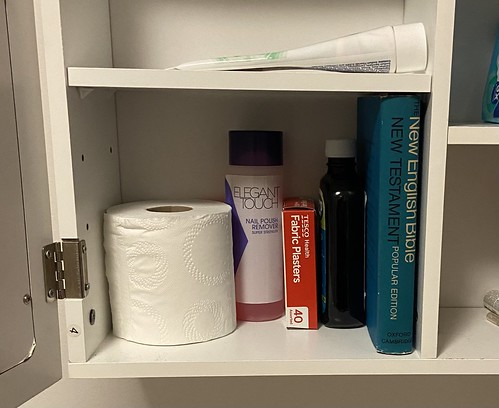
This eldritch example sent in — preternaturally, of course — by the ever-chthonic Mr C. D.  of Leeds. Ai, Shub-Niggurath, notwithstanding inasmuch as which other imprecations of a similar sort.
Untitled

Comments Off on It Has Not Escaped Our Notice