Latest posts

Hunstanton Sand

I’ve just started reading a book called The Spirit of Enquiry by Susannah Gibson, celebrating the 200th anniversary of the Cambridge Philosophical Society, an interesting society of which I was once a committee member (as well as a prize-winner). I am struck by the fact that the building where my GP’s surgery now hangs out, was actually purpose-built for the Society, something I had not appreciated before. The room where I’ve sat around waiting for Covid vaccinations was once their Reading Room, at a time when that was quite a novel concept (the College Libraries were only available to current members, and not MA’s still resident in the city, for instance). Having found this a fascinating book, written by someone attached to this University’s History and Philosophy of Science Department, I am pleased to have been invited to the book launch of Gibson’s next book. Bluestockings: The First Women’s Movement is due out at the end of this month.

The Spirit of Enquiry starts off describing what motivated Victorian natural philosophers in Cambridge, led by Adam Sedgwick and John Henslow, to feel such a society was necessary. The latter was a botanist. Indeed, he was Professor of Botany although, late in life, apparently a very delinquent one. The former was Professor of Geology, and spent time walking the cliffs at Hunstanton examining the strata. These are fine cliffs, tending to erosion like so much of the East coast, cliffs I have visited just for the pleasure of visiting the seaside, but also (in my much earlier life) for ornithological ventures in the cold of winter. My most recent interactions with Hunstanton’s beaches are, however, more closely allied to my Physics: Hunstanton sand.

The last lecture course I taught before I retired from the Physics Department was the first year Waves and Quantum Waves. It was an unsatisfactory course in many ways, as I was required to include a great deal of classical optics (stuff such as the Lensmaker’s equation, for instance), when the students wanted to be let loose on the quantum material, which consequently got very squeezed. The syllabus was not of my making. However, in an earlier incarnation of this course, when the classical waves part was taught at a more advanced level (and without the optics material) and there was more time to think deeply about implications of some of the topics, I had a lecture demonstration I loved involving Hunstanton sand. And I know it was Hunstanton sand because it came in the sort of shaker good cooks use to spread flour on the worktop to stop pastry sticking, to which an ancient luggage label was attached reading ‘Hunstanton sand’. Although I doubt this went back to Sedgwick’s time, indeed the Cavendish Laboratory only opened in 1874, it certainly gave the impression of being very venerable. It came along with a heavy brass plate about 30cm wide (probably in reality it was a foot square), an example of a Chladni’s plate.

If you look on the web for what the point of a Chladni’s plate is, you will find all kinds of neat videos demonstrating how it can be used to show a pattern of standing wave nodes by plugging a sand-covered plate into a frequency generator: at appropriate frequencies, when the wavelength is some suitable fraction of the length of the side of the plate, standing waves are set up. It is indeed a beautiful way of revealing complex patterns, building on the mathematics of standing waves in two dimensions (which is what I was teaching). But the demonstration I gave was more arresting and memorable, I think, even if also more risky. With a device to generate a wide range of frequencies, it is easy to dial up the exact frequency you know will give the desired pattern. No risk there at all. But perhaps students remember things that don’t go according to plan rather more than something they can find easily on YouTube. That was at least my motivation in doing things the hard way.

The third item of this ancient lecture demonstration consisted of a bow. It was an utterly appalling bow, if you were a string player, with no tension in the hair remaining after all these years, and no way of increasing it except by manually holding it taut. I suspect it once had been a double bass bow as it was quite short. (As an ex-viola player, upon occasion I took in my own bow to make life easier, given that mine was in rather better shape.) Instead of electrically generating different frequencies to set up the standing waves, the original demonstration design relied on ‘playing’ the plate with the bow.

There were some marks scribed on the plate to indicate where the bow should be placed to get the appropriate resonance, but they were pretty approximate. Consequently, in my experience, it was necessary to move the location of the bow back and forth a little to find the place where the plate ‘sang’ – which it would most pleasingly when I got it right. A beautiful harmonic would be forthcoming, echoing round the lecture theatre (large: I used to lecture to well over one hundred students). More than once I got a spontaneous round of applause when this happened. Every year (at least five I think) bar one, I managed to find the sweet spot. Sometimes, I even risked finding a higher harmonic to show how the sand bounced around until it found the new pattern of nodal lines. It was immensely satisfying – apart from that one year when, try as I might, I never quite got it and the standing wave pattern on the plate was blurred, the true note transformed into a messy noise.

All in all, it was far more satisfactory, for me and, I hope, for the students, than simply playing a video of someone else’s experiment uploaded onto YouTube. Every year, at the end of the lecture, I would try to return my Hunstanton sand to the flour shaker. This was a messy enterprise, but I felt the sanctity of this particular ancient sand in its luggage-labelled container. Who knows who’d made the trip out to Hunstanton to collect it? After the end of the lecture, the kit would be replaced in some wooden cabinet in the Cavendish Museum. I wonder if any of this will survive the move to  the third incarnation of the Cavendish in the soon-to-be-finished (but who knows quite when, building work being what it is) Ray Dolby Centre, otherwise known as Cavendish III. I lectured in the so-called New Cavendish, its second home; the equipment no doubt was first used in the original Cavendish on Free School Lane (a brief history can be found here).

My days of undergraduate lecturing are over. I’m sure, just as I participated in the translation of delivery style from blackboard and chalk, to writing on an overhead projector, to prepared overheads, to powerpoint which may, for all I know, be superseded by a further electronic transformation, I fear too many demonstrations will be called up from the web. I loved my old-fashioned experiment, even as I also used more modern approaches too. The latter is certainly more likely to be fail-safe. So, happy memories of Hunstanton sand.


Posted in Adam Sedgwick, Chladni's plate, Communicating Science, lectures, standing waves | Comments Off on Hunstanton Sand

Heart of Glass

Had I not been out the front of the house, watching Joshua earning some pocket money by washing the car,  I’d probably have sent the milk round sales droid on his way. But I was, and we talked, and seduced by the idea of reducing plastic use and a faint tang of nostalgia I signed us up to the thrice-weekly delivery schedule.

We talked about cars—the droid was thinking about learning to drive and we covered insurance and no-claims bonuses. He said that driving on the left wasn’t a problem because they drive on the left ‘back home’. “Oh,” I said, having already established that he lives the other side of the M25 and he didn’t know our area, “Where’s home?”.

“Mozambique”—which surprised me. I’d expected him to have been from Manchester or somewhere equally exotic.

But here we are, and I’ve been teaching Joshua the ways of the foil top, about how you have to hold the sides and not the milky surface, and indeed how to open the bottle. He is discovering the joys of either gently inverting the bottle with your thumb protecting the lid, or else having creamy milk on his Weetabix.

Got a lotta bottle

Do you want it pasteurized cos pasteurized is best?

The milk is delivered into an enclosed porch, so it’s unlikely he’ll see what happens when the local blue tits get thirsty, or even how the foil lid can be pushed up when it gets really cold. But soon he’ll get used to the new normal and maybe in time forget what plastic milk bottles look like.

Posted in 15MinutePost, Joshua, milk, Nonsense | Comments Off on Heart of Glass

What do you do when God comes for your LinkedIn?

My Father’s house has many rooms

2 My Father’s house has many rooms; if that were not so, would I have told you that I am going there to prepare a place for you? 3 And if I go and prepare a place for you, I will come back and take you to be with me that you also may be where I am.

In September 2022, The Guardian published an article Divine comedy: the standup double act who turned to the priesthood. The article sketches out what happened when two university friends of the author became Christians. Both friends explore whether or not they had a vocation to the priesthood.

I remember this passage:

Recently Jack has started picturing his life as a great house comprised of many rooms. There are rooms for your friendships, your love life, your career, rooms that you put signs outside declaring: I do not want this changed by my religion. Gradually, though, God starts knocking on the doors of more rooms, asking to join you in there, too. “And it’s difficult and painful and annoying,” he told me.

Born-again blogging

19 Pray also for me, that whenever I speak, words may be given me so that I will fearlessly make known the mystery of the gospel, 20 for which I am an ambassador in chains. Pray that I may declare it fearlessly, as I should.

If you become a practicing Christian as an adult, there is a process of coming out to go through. Whilst God rifles through all of those rooms in your life, forcing you to come out to yourself over and over, the question arises of who to tell. In the years before I made any sort of commitment to Jesus, I observed I was being told stories of faith, commitment and conversion by friends and colleagues. The colleague who video-called me up from abroad and confessed she had gotten baptised; the friend I met through Imperial who talked about the tension between her faith and her work, and later took me to her place of worship; a colleague and friend who said he would pray for me when I was going through the divorce.

Telling people mattered. I needed to explain that something significant was happening, a bit change. I was nervous coming out on the blog. If you recall this blog was born under New Atheism – close inspection reveals that the blog launched the day after the launch of the fundraiser for the Atheist Bus Campaign. In the blogging community of the time, I remember vociferous and to me somewhat stupid seeming below-the-line arguments loosely centred on faith. I was terrified of a hostile reaction to a position I did not yet know how to defend.

So when I cited Jerry Coyne in the first blog post in the Faith category, I did not tag him on the socials lest I brought forth an argument I was ill equipped for.

But bit by bit over the past year or so, God has taken over my web presence just like He is working on the rest of me. Priest friends warned me that Anglican Clergy Twitter is a tough space but I have seen worse in those early science blogging days.

On Instagram, I follow churches and cathedrals, flooding my feed with photogenic buildings. When I joined Threads and BlueSky, craving a Twitter replacement, the first people I followed were – well, you lot. Thank you all for being there. And for not attacking me. I was scared of what I might lose.

Let me be employed for you, or laid aside for you

From The Methodist Covenant Prayer

Put me to what you will,

let me be employed for you,
or laid aside for you,

A Christian without a job feels like the oxymoron I am. I left the workforce when my health precluded; recovering, repent-and-believing, and returning to the job market happen for me in one and the same moment. But where was I headed? I set out with not a lot more than scripture to guide me:

5 Trust in the Lord with all your heart
and lean not on your own understanding;
6 in all your ways submit to him,
and he will make your paths straight.

For the first half of 2023 I hedged my bets, applying in parallel for Church-based roles and stats ones. By the middle of the year, six interviews down and a corresponding half-dozen rejections in hand, I sacked off the stats thing for now and focus on doing the Church thing.

LinkedIn is my current least favourite social media platform, in part because it reminds me of the former career for which I continue to grieve. I thought I was going to leave LinkedIn when I decided to put a soft pause on my biostatistics career, but I have too many friends in my former colleagues on there. Even if scouring the LinkedIn job listings for the term Church leads mostly to jobs in Church Stretton.

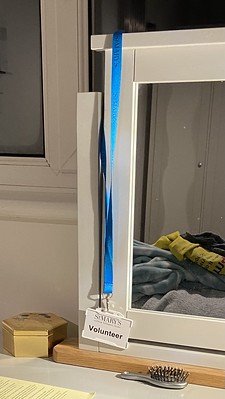
My friends at St Mary’s placate me with tales of their own job hunting eras, trust in the Lord, and the multipurpose epithet wheeled out after every failed job interview

Rejection is God’s protection.

The bellringing crowd assign themselves as my cheer squad, not once questioning my change in direction. They take me to the pub and cajole me into not overthinking, telling me instead of Church job openings they have heard about. I double down on morning prayer and the gym, and give up trying to explain why I think I might be headed for ministry rather than the glorious career in middle management at Glaxo once understood by others to be my assured destiny.

My social media platforms fall one by one. I go from being a statistician with a tongue-in-cheek thread about church, to a Christian nostalgic for stats.

I face remarkably little pushback over my new worldview, online nor off. A few relatives struggle at first. I infer they are concerned I might be being drawn into some sort of cult. But they come around quickly. I think they can see the difference this is all making. I get little challenge from friends of friends, and my oldest friends draw close and defend me, caught up in excitement for me and fascination.

But now I need to out myself to LinkedIn, which at the time of writing is portraying me as a statistician-scientist with an oddly long CV gap. I have been stalling, thinking I will update my profile – or take it down entirely – when I finally land that church job. It is every bit possible I will get rerouted back to stats later. Roughly a third of clergy in the Church of England are self-supporting ministers and a proportion of those are bivocational, juggling another career alongside the ministry for which they do not get paid the equivalent of a salary. Conscious that some of my former colleagues are religious and unsure what they might make of it all, I write draft after draft in my mind. I am acutely aware of the ambiguity of my current situation. Leaning towards something light and humorous I call to mind the difference between the statistician joke and the church one. My working tagline, which I test out on my new profile on BlueSky:

Statistician for Jesus. What are the chances?

I will come back and take you to be with me that you also may be where I am

Revelation

His name will be on his servants foreheads, and they will worship him.
From Revelation 22:4 and The Brick Testament

Cutting deals with God is ineffective; threats of vengeance liable to backfire. Ask me how I know this.

Advice from a priest friend

Advice from a priest friend.

However, in ambivalence, it is hard not to think, teeth gritted

when I get to that house, with His many rooms, I’m gonna take my time and rifle through all of them. See how He likes it.

Posted in alternative careers, Ambivalence, Blogging, careers, Faith, Life, linkedin, social media | Comments Off on What do you do when God comes for your LinkedIn?

A Place Called England

I planted snowdrops in the green in the woods last Sunday morning, and this Saturday when we visited they were already demurely in bloom.

Snowdrops

The first fruits of them that sleep

We usually get one crazy forerunner between Christmas and New Year in our garden, but it’s not until the massed banks of praying white heads start to appear that we allow ourselves to believe that Spring is merely a Solstice away. There will be a hard frost, perhaps even snow, towards the end of the month, but you can’t stop it now.

We dropped into a new (to us) garden centre on the way home and I picked up a couple more asparagus roots. I’ve been trying for a few years to get a patch going, but after one very successful year it’s been a bit of a struggle. So I dug over the entire bed today, gently rescuing the alien-looking plants and sprinkling in blood and bone. I carefully replaced them, from large to small so I could keep track of which I expect to crop this year and which need nurturing carefully—adding the new ones on the end and telling them they’re going to like it here.

Asparagus bed

No slacking now, fellas.

Fingers crossed.

PS. If you’re wondering about the post title, check out Maggie Holland’s version. Perfection.

Posted in 15MinutePost, asparagus, Gardening, nature, snowdrops | Comments Off on A Place Called England

Transferable Skills and Career Paths

I am honoured to have been invited to give the Gareth Roberts Lecture in Durham next month (in the Physics Department), following a long line of distinguished speakers. To be honest, I did not know that he had been associated with Durham because, by the time I was aware of all he was doing in the Higher Education space, Roberts was Vice Chancellor at Sheffield. I think I only came across him in person a couple of times, once at a lecture in Sheffield, once when he was reviewing the Research Assessment Exercise (REF’s predecessor) after the 2001 exercise, although why I was personally presenting evidence to that review I can no longer recall. However, for many – postgraduate students in particular – it is the 2001 review known as SET for Success that is probably most pertinent, even to this day.

Sir Gareth was an example of someone who had moved between academia and industry (and back again) with great success, picking up an FRS, a knighthood and many other accolades along the way. He demonstrates that ‘porosity’ between sectors is possible, something that soon-to-be-retiring CEO of UKRI Ottoline Leyser has often talked about. In the current system, it may still be possible, but it certainly isn’t particularly easy. There are some schemes designed to facilitate the exchange of personnel and ideas between industry and academia, with the Royal Society (for instance) running both Industry Fellowships and Entrepreneurs in Residence schemes. However, particularly in the pure sciences – less so in engineering and computing – such mobility between sectors is neither easy nor common.

Roberts recognized in his report that lack of mobility was a drawback for the health of the system (and the economy), but also that postgraduates’ education was often falling short on a variety of points. I would highlight the following, which I feel sure will still resonate today with many students and staff.

  • low stipends, when seen against the option of entering employment and reducing the substantial debt that many students will have built up during their first degree;
  • concern from students that they are likely to take more than three years to complete their PhD, while generally, funding is only available for three years; and
  • inadequate training – particularly in the more transferable skills – available during the PhD programme. As a consequence, many employers do not initially pay those with PhDs any more than they would a new graduate, viewing the training (particularly in transferable skills) that PhD students receive as inadequate preparation for careers in business R&D.

Issues about money most certainly won’t have changed for the better, and the duration of a PhD has only increased, although at least there is some recognition of that fact in the length of time for which many funders provide a stipend. The last bullet point I’ve pulled out is the one I’ll be considering at more length in my lecture: what beyond their lab/computational/analytical skills training (according to what is directly relevant to their thesis) do students get exposed to and what additionally might they need in their future careers, wherever they end up? What options are there if someone wants to get involved with activities that may not be completely aligned with their thesis research, both now and once their PhD is completed?

Following the SET for Success Review, a new pot of money was established, colloquially known as Roberts’ money. It was supplied to universities to enable them to provide a new sort of training in transferable skills. In Cambridge additionally, I know some of this money went to creating posts in the Careers Service for advisers specifically to help the PhD population, with separate posts created for the physical and life sciences so that there was a fair degree of specialisation in those who held the posts. Whatever a PhD supervisor may think and even, all too frequently, say, there is a world beyond academia where scientific training is crucial. Even a world beyond industry. With an aspiration that the Civil Service reach 50% of its Fast Streamers from the STEM disciplines (a number apparently already exceeded in its 2023 hires, though it will take a long time for those sorts of numbers to permeate the entire system), there is one route to a career outside the obvious.

There is no doubt, more members of the Civil Service who are numerate and confident about handling data would be likely to benefit us all, when you think about the decisions that need to be made on a daily basis.  Policy-makers who had the confidence to use data to inform decisions and not, as I fear may happen and as one former politician and Civil Service employee once told me, expecting policy-makers to search for data to back up an already-decided policy. That’s just one example of a career outside academia. There are plenty of other jobs in a wide range of sectors that neither a supervisor nor a student may immediately think about as the student reaches the end of their PhD (patent law, journalism, the creative industries, thinktanks…..to name but a few).

There are many skills the modern PhD student needs to master, which fall into the transferable skills bucket: management (of projects, people and resources) is a key one that one hopes at least postdocs and freshly independent researchers are being exposed to, but probably not students. I am struck by the breadth of training the Royal Society now offers its research fellows, such as the course  in ‘Innovation and the Business of Science’, but also in handling the media, public engagement and communicating your research more generally. Relevant to what I said about the Civil Service, there is additionally a science policy primer, to help researchers understand the nature and process of policy-making. All good stuff that it seems likely Roberts would have approved of.

As I write my talk for Durham, I will have these different aspects in mind, linking Roberts, the relevant recommendations from SET for Success and my own wandering career trajectory and personal experiences.

Posted in careers, Civil Service, Policy, Sir Gareth Roberts, Transferable skills | Comments Off on Transferable Skills and Career Paths

On the Freedom of Misunderstanding of Speech

Close up of the Tube sign at Warren Street station showing just the letters W-A-R

Misreading on the tube leads to WAR

“The Ruffian” is great title for Ian Leslie’s Substack given his predilection for roughing up lazy thinking. I first came across him as the author of “Conflicted”, an excellent book about how to disagree constructively, a practice he frequently deploys in his Ruffian pieces. I sometimes disagree with Leslie, but not often enough to stop me paying the £4 monthly subscription to his Substack. He’s a sharp-eyed and sharp-tongued observer of contemporary life and there’s a substance to his writing that can’t easily be dismissed.

A couples of weeks back Leslie’s sharp eye was directed towards the critical reception of the recent Netflix specials from Ricky Gervais and Dave Chapelle, both of which have been branded as “anti-woke” by commentators who dismissed the performers as lazy and out of touch. In characteristic hang-on-a-minute mode, Leslie observes that both shows are among the most popular currently on the streaming service and mounts a pretty cogent defence that in his show Armageddon, Gervais (whose work he is most familiar with) is laughing not at minorities but at the po-faced strictures of the members of the ‘wokerati’ who have set themselves up as censors.

I think he has a point, even if the piece did raise a couple of uneasy thoughts that I wanted to chase down. I agree with him that comedy doesn’t have to have a moral purpose – it’s about the laughs. And like him, I want to live in a society where comedians are free to push at boundaries and to play with the hypocrisies and discomfort of their audiences. Indeed, I think that comedians have a licence to transgress. Those watching have made a choice to do so and there’s an understanding that what’s being watched is a performance, even if some performers work hard to disguise their artistry.

Even so is there any collateral damage? The comedian’s licence to transgress isn’t easily transferred to the workplace or other social environments. Gervais can’t reasonably be held responsible for the retelling of his material, but it is nevertheless absorbed into broader discourse.

As others have said elsewhere, Gervais’s show is a bit lazy in its content and construction. He’s done smarter work and I’ve seen edgier and better crafted shows challenging social mores from the likes of Stewart Lee, James Acaster, and Hannah Gadsby. Armageddon lacks their fire and sophistication, though admittedly, Lee, Acaster and Gadsby were approaching transgressive boundaries from different angles in their work (I am probably revealing my tastes and biases here). Gervais leans too heavily on simplistic caricatures of some of his targets such as critical race theory or statue protests (though he had a good joke about cultural appropriation). These things are fair game for comedic attack but do jokes that operate at a Daily Mail level of critique of the underlying ideas erode the foundations of efforts to create a fairer and more tolerant society (efforts with which Gervais admits at the end of the show he supports)?

On balance, I suspect not. I felt I could take what I liked from Ricky Gervais’s show and discard the rest and my guess is that many other audience members are probably doing the same. Is it a problem that not all are – that some are clapping and nodding along without seeing the artifice in Gervais’s act? I find it hard to believe that the political divisions over the merits and demerits of ‘wokeness’ depend much on any one comedian, however popular.

I’m very likely over-thinking this, but I still think there’s a broader point here about the impact of misunderstanding in public discourse. Misunderstanding is the raw material of comedy, which is part of the justification for its license to transgress. Jokes often play on people’s misperception of the set up: “By my age, my parents had a house and a family, and to be fair to me, so do I, but it is the same house and it is the same family” – you can see why Hannah Fairweather’s was judged one of the funniest jokes at the 2022 Edinburgh Fringe Festival. However, in discussions that aim to critique one viewpoint or another, misunderstanding is more problematic, whether it’s intentional or not.

The intentional part is obvious in the rhetoric of political posturing. But there’s another aspect of the problem that seems to be more common in the age of quickfire social media and was highlighted in Helen Lewis’s Substack on the reaction to the Gervais and Chapelle shows on Netflix: the politicisation of arts criticism. Lewis writes “Many people are making political judgements, rather than artistic ones, and using these cultural avatars to signal their political beliefs,” and suggests this is happening both because “it’s easier to write about the ideological content of an artwork […] than it is to appraise its technical details” and because controversies over ideology, particularly ones stoked by half-truths and superficial analyses, attract readers and clicks. The problem extends to those of us who engage in social or political debates on Twitter/X, Instagram, and in blogs or Substacks, where the primary purpose is to attack or defend a given position, because we are on show in a technologically enlarged public square. It’s human nature to fall back on snap judgements and assume that any given statement defines a person or the full contours of their political viewpoint. We’re all prone to this sort of kneejerk or system 1 thinking, which is most likely to be unleashed in the heat of partisan politics or – to return to my starting point – the work and anti-woke enmities that inflame the current culture wars.

The temptation to react without thinking more deeply might be augmented by the rapid-fire format of much of social media but is not confined to it. Even in longer form writing it can be difficult to convey the totality – dare I say complexity? – of what we want to say. Even as I write this post, already festooned with mid-branching qualifications, I aware of the compromises between the clarity and conciseness. Ideas spill and meander in branching lines of thought and can be hard to shape into concrete forms. This is why Pinker argues it’s so much easier to explain yourself in conversation than in writing, where you cannot react to your audience and have instead to anticipate their needs.

I write all this as someone who has given in to the laziness of system 1 thinking on occasion (mostly on Twitter) and who has in turn, as a result of working in matters of EDI and research culture in a university setting over the past several years, found myself misunderstood. I have been variously accused in the press and on social media of being a stifler of academic freedom, a remover of statues and, on one particularly memorable occasion, “a witchfinder general”. As far as I am concerned, each of these accusations was based on misunderstanding or misreporting, but maybe part of the fault was mine for not expressing myself clearly enough. While each accusation was an irritant, I mostly opted not to respond. This was because although I was being criticised personally, as a member of the senior leadership team of the university, I risked any reaction being seen – misunderstood? – as an institutional pronouncement. I no longer hold that position, so it is now easier for me to write about these incidents, but I don’t feel completely free of the constraint of institutional association.

Still, the lack of response still feels like a failure. I am well aware that contested matters of EDI present no easy solutions, which is why I made openness to challenge and dialogue the seventh seven pillars in our university EDI strategy and have striven to live up to that commitment in responding to concerns raised by colleagues and students. But it’s hard to know how much faith people have in that commitment (both internally and externally) and it certainly remains the case that universities struggle to engage meaningfully in public-facing discussions about what they are doing.

The facile answer to this challenge is that everyone should read and absorb the lessons of Ian Leslie’s bookabout how to have a productive argument. That’s easier said than done, alas, even at universities which, of all our public institutions, are supposed to be the places where ideas can be tested rigorously – to destruction if need be. The places where thinking should be the least lazy.

However, it doesn’t always work like that. As we have seen last week with the Employment Tribunal judgement that Professor Jo Phoenix was subjected to victimisation and harassment at the Open University for her gender critical beliefs. The lesson to draw here is not that such behaviours are to be found at all UK universities. In my experience of leading on EDI at my own institution and through talking to my opposite numbers across universities in the UK and Europe, there is serious engagement with the myriad intersecting issues (including academic freedom and freedom of speech) that affect efforts to create environments that more equal, more diverse and more inclusive. Although some might accuse universities of mindlessly quaffing the Kool-Aid of wokeism and identity politics, what I have mostly seen is recognition that we are grappling with complex and shifting debates and that dialogue to find a way forward has to embrace the full range of views that are advanced in good faith.

Perhaps these internal discussions are too internal. It remains true that creating a space within universities for critique of difficult issues – the appropriate balance between trans rights and women’s rights, the Israel-Gaza conflict, the frictions between sexuality and some religious beliefs – remains, well, difficult. There is nervousness about internal and external reactions that crowd out efforts to have a more informed and nuanced discussion between different perspectives. But if universities aren’t prepared to shoulder that risk, who will? They are not helped by the fact that these issues are now grouped under the simplistic and misleading term, ‘culture war’. Different perspectives on our aspirations as a society or a culture aren’t going away, so why condemn ourselves to endless bitter conflict? As a first step, wouldn’t it be better to stop warring and have a conversation? Who’s brave enough to go first?


Posted in Equality Diversity & Inclusion, Science & Art, Science Culture, Scientific Life | Comments Off on On the Freedom of Misunderstanding of Speech

What I Read In January

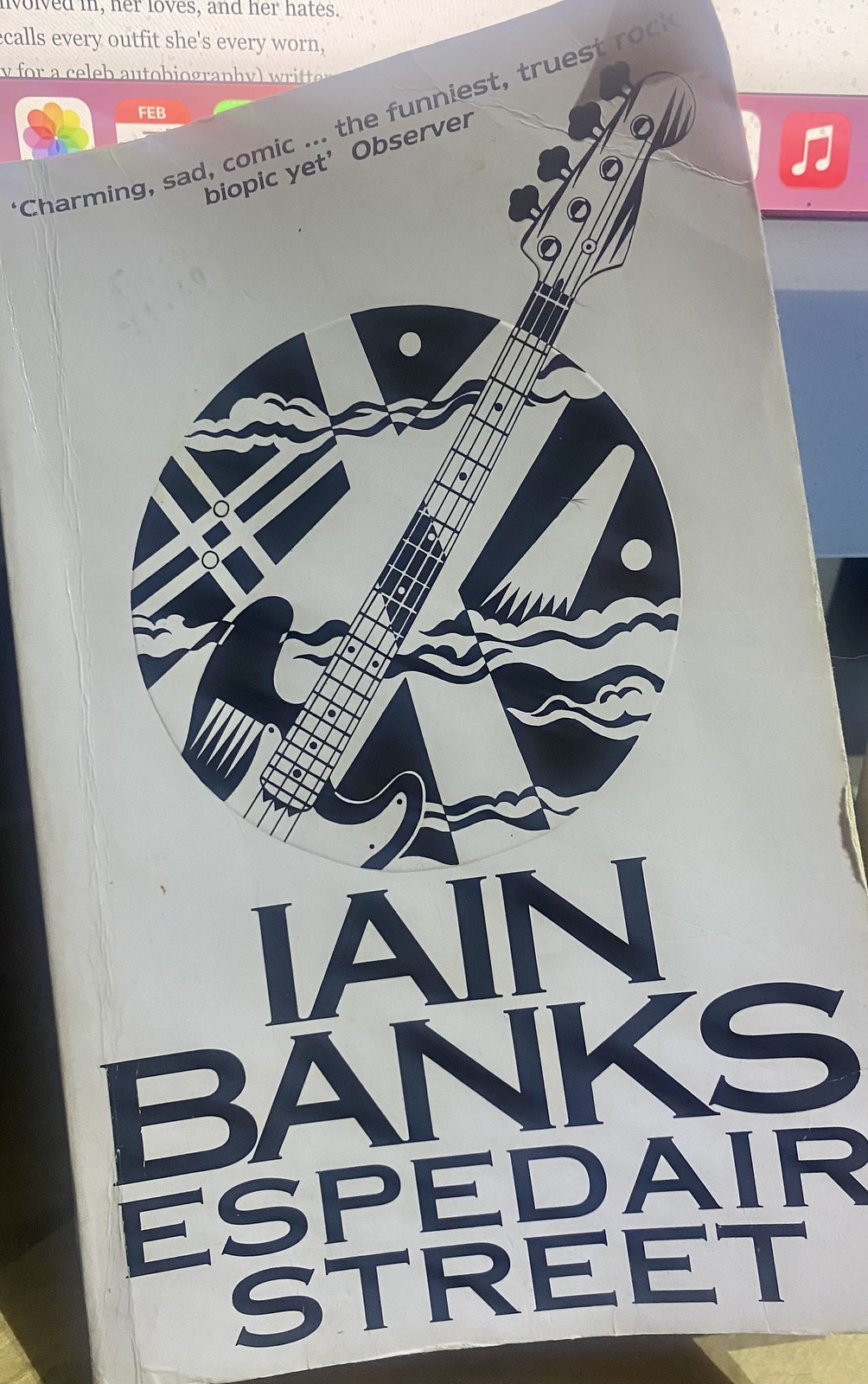
UntitledGeddy Lee: My Effin’ Life Frank Zappa once quipped (and I am working from memory here) that rock journalists are people who can’t write interviewing people who can’t talk for the benefit of people who can’t read. I am mostly inclined to agree — the memoirs of rock musicians, often ghost-written, are not generally works of great literature, and neither is this one. It is however a great deal better than most, for two reasons. First, the author (who had a little editorial help) is the bass player and lead singer of the rock band Rush, which, as they came from Canada, have what can be described as a cult following (that’s me, and possibly Ricardipus) but only if one regards Peter Jackson’s Lord of the Rings as the biggest home movie ever made. Rush was very much on the intellectual end of the rock spectrum, combining dense, complex arrangements with lyrics based on science-fictional themes or social or historical commentary. Although much of this came from the drummer and lyricist, the late Neil Peart, it would hardly have succeeded were his bandmates, Geddy Lee and guitarist Alex Lifeson, not also intellectually in tune, and this depth is echoed in this book. The second reason is Lee’s background. He was born Gershon Eliezer Weinrib to two Polish Jewish emigres who’d come to Canada following the Holocaust. Indeed, Lee’s parents met in a Nazi concentration camp, and that both survived can be put down to a series of hair-breadth ‘scapes. Lee has researched the Holocaust and his parents’ experiences and these and the wider context are described in two moving chapters. (‘Gershon’ became ‘Gary’ became ‘Geddy’ following his mother’s inability to pronounce ‘Gary’ in her thick Polish/Yiddish accent. ‘Eliezer’ was shortened to ‘Lee’). Lee’s father died when Lee was just twelve, leaving this nerdy boy with the responsibility of saying kaddish thrice a day for eleven months just before his own bar-mitzvah, a period he describes as his ‘year of woe’. Although Lee gave up formal religion after that, his Jewish background informs his writing and world view, and as a fellow Red-Sea Pedestrian whose mother was a Holocaust survivor, this part of the book resonated strongly with me. I suspect that many Rush fans will skip those chapters. The rest of the book will probably be of little interest to anyone else. But for Rush fans who happen to be Jewish, this will hit the spot.

UntitledHilary Mantel: A Memoir of my Former Self: A Life In Writing The late Hilary Mantel was the author of Wolf Hall and its sequelae, together a fictionalised account of the rise and fall of Thomas Cromwell, the canny and ruthless advisor to King Henry VIII. Wolf Hall and its immediate sequel, Bring Up The Bodies, both won the Booker Prize, but even more prestigious accolades awaited: Wolf Hall was my read of 2016, and the third volume, The Mirror and the Light, was in my top ten in 2021. A Memoir of my Former Self is an anthology of her journalism. It’s an eclectic collection, including assorted film reviews for the Spectator (she liked RoboCop, but not Mickey Rourke); delvings into her ancestry; reflections on the craft of writing historical fiction (and for her, writing was very much a craft); occasional pieces on travel; musings on a fetish for stationery; and — most of all — her reprinted Reith Lectures. What shines through this scatter of pieces, sometimes funny and demotic, occasionally dense and philosophical, is a barely suppressed rage at her own treatment by the medical profession. In her twenties she experienced agonising abdominal pains, which were brushed off by (male) doctors as symptoms of depression. It’s turned out that they were gynaecological and very real. Severe endometriosis required a complete hysterectomy and the excision of parts of her bladder and bowel at the age of 27, the consequences of which she was to endure for the rest of her life. Even in this supposedly enlightened age, the medical profession treats female patients as so many hysterical women, to be patronised with valium and told to go away and pull themselves together. Mantel’s death in 2022, aged only 70, from a stroke, was a grievous loss to literature.

Posted in Writing & Reading | Comments Off on What I Read In January

Bookshelf

Recovery

Shelfie.

Shelfie.

You’re reading again.

my brother remarked, last fall.

You said you couldn’t read before.

I jolted. It was true.

When I am depressed I lose the ability to read books. This is one of the worst symptoms. Staring at the same paragraph over and over, unable to make words stick, knowing I need distraction and unable to escape. My brother loves books, and conversations about them. I envied him ploughing through novels, plays and biographies. But by the second half of last year, I was talking about books I was reading again.

Hallelujah!

Bible Study

Four years earlier, abruptly in need of a Bible, I consulted Amazon. The choice overwhelmed me so I asked Fiona

which Bible should I get?

She picked one out for me. When I screenshotted the dispatch notice email to assure her – and myself – I had gone ahead with the purchase, she spotted that I had thrown a box of posh chocolates into my basket too:

can recommend eating chocolate when reading the bible

Clergy-approved approach to scripture.

Win!

Bog standard Bible

Bathroom cabinet containing a bible.

Blasphemy or pragmatism? You decide.

I found getting to grips with God’s word one of the toughest parts of the journey, In true depressed fashion I berated myself for this. Was I sceptical? Faithless? Stupid?

With osmotic ambitions, I acquired lots of Bibles and put them everywhere. I carried paperback Gospels around with me, only for my copy to get soaked by the rain. I bought an NT Wright commentary on the New Testament which I thought might be easier going but was not. A Dorling Kindersley commentary on The Bible aimed at younger readers with lots of timelines and illustrations is a surprisingly useful reference.

I even bought a cheap copy of the New Testament NIV from a thrift store, to put by the loo.

In hindsight writing this all down now I can see that in a large part the challenge was not that I was unable to read the Bible, but more that I was unable to read at all. It was also last fall that, frustrated with my progress, I hit the start button on the Bible in a Year plan on my app. To my astonishment I have stuck with it ever since. At the time of writing I am more than a third of the way through, often reading the day’s assigned portion on the bus.

You might call it God’s timing.

Room at the Inn

Ask an Anglican, get a book

was a trope Fiona taught me.

They hand you a book when they don’t know what else to do.

True to form, whilst depressed-me set to work trying to convince myself I was too deep a miscreant to ever be worth of God’s love (Ha! Nice try!) Fiona dispatched me a copy of The Ragamuffin Gospel by sometime alcoholic and former Franciscan priest Brennan Manning. I flicked through the book but the fact I was unable to read seemed to only emphasise my unworthiness of All Of This. I abandoned the book to gather dust under my bed (sorry, Fiona). I returned to Ragamuffin later, won over – finally – by among other things, Philip Yancey’s What’s so Amazing about Grace? (Great title.)

I cleared space on my bookshelf for church related books, and for several months found that I had gone from being unable to read at all, to being unable to read anything other than church-related stuff. I quickly graduated from books covering the basics, important though they are. I read books about calling, communion, grace, parish life and ministry; Lancelot Andrews’ sermons and their commentary, biography. Prayers and books on prayer. One of the most bizarre experiences was that when I went to church for those few months pre-pandemic in early 2020, I considered getting confirmed. I downloaded a book on confirmation on Kindle and discarded it quickly, for it made no sense at all. But returning to it around the time of my confirmation for real, last October, everything had fallen into place.

The book had not moved, but I had.

Pretty soon I will have to move those Oxford University Press Very Short Introductions on the right. My bookshelf of faith is running out of room.

Bookshelf of faith

Those small weight plates are fractional plates, for strength training.

Echoes

I had my First Meeting with James about All That. Mostly, we looked back, on how far I had been brought by God and the good people of St Mary’s during the past year. How much I was gaining from my relationships with my church friends. And from bellringing, and the bellringers, my other church family.

James suggested some things for me to think about, and some things to do. These days, I lead Morning Prayer regularly on Wednesdays. Me, leading worship!

And, like Fiona, James sent me on my way with a book to read. This one is about leading churches.

Unnerving does not cut it.

Posted in book review, book reviews, discernment, Faith, Life, Vocation | Comments Off on Bookshelf

Filming

IMG_7242I met this small grey seal (Halichoerus grypus) on the beach at Cromer last week. Although grey seals are fairly active at this time of year — you see their heads bobbing up just offshore now and again — in all my years of beachcombing this is the first time I have seen a live and apparently healthy seal on the beach. Please be reassured that I didn’t get quite as close as this picture suggests. I used quite a high zoom and cropped the image.  It’s always wise to keep some distance from wildlife, especially seals on the beach, to avoid distressing them: seals on the beach, especially young ones, can end up stranded, and die. This one didn’t seem ill or in any way discommoded, and a short time after I took this picture the seal flopped off towards the sea.

This sighting was all the more remarkable because I happened to be on the beach with a film crew. It was from European TV channel Arte, which came all that way to Cromer to interview me (me!) on the history of life on Earth as part of a fifthcoming forthcoming show, my recent volume on this subject having now appeared in five of the six languages in which it is broadcast (the six is French, and that edition is available for pre-order).

So I was accompanied by the producer and two cameramen. One had a small movie camera (it looked just like a top-spec SLR to me) on a ‘steadycam’ apparatus, which meant that the camera kept pointing in the desired direction no matter how the support armature was moved, rather like a bird of prey keeping its eye on the prize while hovering in mid-air. These things will be familiar to anyone who makes movies, but I had never seen one before, and it was eerie to watch. The other cameraman had a remote-controlled quadcopter drone, which was tiny. We were on the beach to get some atmospheric, establishing shots (luckily the rain and wind held off until after we had finished). You know the sort of thing, pictures of me walking up and down the beach looking thoughtful, all of which will be edited down to 0.003 seconds in the Final Cut, but which were fun to do. What was disconcerting to me (doing the walking up and down) was the drone hovering a few feet away from me at head height. It took quite a bit of concentration not to turn my head to look at it. But it was there, just out of the corner of my eye.

All of this was enjoyable recreation for a short spell, before I take up the cudgels of publicity again. I have been guesting on the occasional podcast (my latest is here) and am gearing up for an appearance at the Norwich Science Festival next month. By ‘gearing up’, I expect I shall turn up and open my mouth, hoping that something intelligible will come out of it. Winging it — it has always worked for me in the past. And the manuscript of my next book is now submitted, so in a few weeks I’ll probably have edits to take up, galleys to check, indexes to compile and so on and so forth. But I already have a website up so you can check on progress. It won’t be out in English for another year, but I’ve already sold translation rights for several foreign-language editions.

Apart from that I am enjoying recreations such as reading Barbra Streisand’s autobiography and learning to play songs by Queen on the piano. The former is fun and engaging, and I’ll post a review when I’m done (it’s a very big book). The latter are fun and engaging in a different way. Queen, especially the late Freddie Mercury, wrote proper songs, you know, with proper chords and melodies and everything, and it’s fun to engage with sheet music again. Most pop songs can be comped from a chord chart, but the only way to learn Love of my Life, for example, is from the dots, and the experience is comparable to playing a very simple Mozart piano sonata: simple enough that I can almost read it at sight. I’ve often thought that Mercury didn’t write pop songs so much as show tunes. The rusty gears of a long unused part of my brain grind into life once more, as they did when I read Bohemian Rhapsody from the sheet music aged 15.

To all of this tuneful activity must be added Shaken and Stirred, the second album from my recording project G&T. This took far longer to complete than it was meant to, but it’s here now, and it’s even getting some airplay. OK, it’s community internet radio, but it’s definitely something: my co-conspirator, guitarist Adrian Thomas, was interviewed on Poppyland Radio by DJ Simon Pink (you can listen to it here). Simon has interviewed me too for a broadcast soon.

In other news I am starting to dig a large pond in the garden. It’s fun planning such an exercise, and it’ll take some months to complete. There is a lot of earthmoving and levelling to be done, and at the age of 61 and three quarters I can only manage a small bit at a time (I am digging it by hand). Each spring the pond we currently have heaves with hot frog-on-frog action, but the space is my newt minute, and I’d like to give them a bit more elbow room for next year.

All of which means that I am climbing out of the slough of despond in which I had been mired last year, which basically wiped out spring and summer last year for me. I’m not out of it yet, and I may never be, but if I look after myself and get plenty of sleep and don’t take on too many commitments simultaneously all at once at the same time and all together, things will start to look up, I hope.

Comments Off on Filming

Distant Sun

Solar is never going to meet all our energy needs, especially not at these latitudes. But even though the one aspect of our roof that is completely covered in solar panels faces west, we still generate significant amounts of electricity. In summer that’s more than we can use, and we sell it back to the grid. In winter, well that’s a different story.

Our generation has been creeping up since the solstice, breaking the 7 kWh barrier yesterday and pushing 8 kWh today. That gets you about 30 miles in an electric Mini Cooper, or one sauna session. Not a great deal, but better than nothing.

In the 488 days we’ve had the panels, we’ve generated 6.76 MWh of electricity, and sold a quarter of it back into the grid. Nearly 14 kWh per diem on average, so we still have a way to go to reach that—unfortunately the crappy Chinese website that handles all the data seems to be having a meltdown so I can’t accurately predict when we’ll be producing more than we eat, but it’s probably going to be around the end of April.

Yes, with the data at our finger tips (CCW malfunctions notwithstanding) it’s endlessly geeky and great fun. Combined with a smart reader thing that tells us what we’re using in the instant does mean I run round the house turning lights off, but I guess that’s no bad thing.

I am currently considering setting up a series of mirrors to reflect sunlight onto the west-facing roof in the morning, but maybe that’s taking it too far.

Posted in 15MinutePost, home, Nonsense, solar, wibbling | Comments Off on Distant Sun