When the NIH and UK Research Councils sneeze…

…does the CIHR catch a cold?

From an email I received last week, titled “CIHR Funding News: Issue 104 – Results of the March 2011 Operating Grants Competition”:

Looking ahead, it seems clear that we will continue to be challenged by our own success in building a vibrant, creative and highly competitive health research community. We do have some concerns about the funding process. We know that a tremendous amount of effort is required to prepare an application. We also appreciate the many months of work dedicated by over 860 reviewers to evaluate these applications. The increase in number of applications – especially in those that are essentially resubmissions of unsuccessful applications – represents a growing concern for our peer reviewers. Consequently, we intend to ask researchers to submit only their most competitive applications. Conversely, we discourage researchers from immediately resubmitting unsuccessful applications to the next competition with no change or reflection. As well, we suggest that after an application has been unsuccessful 2 or 3 times that it not be resubmitted.

We encourage these voluntary measures in the hope that the research community and the institutions that CIHR supports will work with us to manage the volume of work required by your peers to review and rank applications.

(emphasis mine).

Reading as I do a large number of US- and UK-based academic blogs, these voluntary measures remind me of:

a) recent moves by the UK Engineering and Physical Sciences Research Council (EPSRC) to restrict the number of applications that can be submitted by investigators with a poor track record in previous EPSRC competitions (see for example this old Nature Network blog post by Katherine Haxton); and

b) the recent NIH restriction on the number of times a previously unsuccessful grant application can be revised and resubmitted (see for example two posts by DrugMonkey and one by DrDrA).

I appreciate the CIHR attempting to appeal to the famous Canadian sense of politeness, but since I don’t know (m)any PIs who are likely to change their habits based on this email, I wouldn’t be surprised if the voluntary measures are not so voluntary in the future…

A-choo!

Posted in Canada, grant wrangling, UK | 7 Comments

Cost to benefit ratios

From today’s RSS feeds:

1) Alilain WJ, Horn KP, Hu H, Dick TE, Silver J: “Functional regeneration of respiratory pathways after spinal cord injury“. Nature 2011: 475: 196-200

(This article also showed up in my BBC science feed, with the title “Spinal cord repair restores independent breathing“).

The authors grafted nerves across spinal cord scar tissue in paralysed mice, while simultaneously injecting a chondoitinase enzyme to clear proteins that would otherwise inhibit nerve growth. The mice regained 80-100% of their lost breathing function within a few months.

Isn’t that amazing?!

2) Li H, Haurigot V, Doyon Y, Li T, Wong SY, Bhagwat AS, Malani N, Anguela XM, Sharma R, Ivanciu L, Murphy SL, Finn JD, Khazi FR, Zhou S, Paschon DE, Rebar EJ, Bushman FD, Gregory PD, Holmes MC, High KA: “In vivo genome editing restores haemostasis in a mouse model of haemophilia”. Nature 2011: 475: 217–221

In this study, the authors essentially cured an inherited blood clotting disorder in mice by targetting an enzyme-and-template repair kit to the livers of living animals.

Science rocks!

3) Wu G, Liu N, Rittelmeyer I, Sharma AD, Sgodda M, Zaehres H, Bleidißel M, Greber B, Gentile L, Han DW, Rudolph C, Steinemann D, Schambach A, Ott M, Schöler HR, Cantz T: “Generation of Healthy Mice from Gene-Corrected Disease-Specific Induced Pluripotent Stem Cells“. PLoS Biol 2011: 9(7): e1001099.

More reversal of inherited gene mutations, this time in stem cells that were subsequently used to generate healthy animals.

All this in one day?! Isn’t it great to live in the future?!

4) BBC News: “Animal experiments increase again“.

In a well-regulated system, I do believe I can live with that. Not without regrets that there isn’t a better way, mind you… but there is no other way. Not one that could have yielded the three studies described above, anyway.

Keep up the good work, science!

Posted in current affairs, medicine, original research, science, the media | 5 Comments

Lab-fab abs and post-lab flab

And bend and stretch and rack those tips and run to the water bath to rescue your samples and walk to the fridge to put them away and lift that big heavy bottle of isopropanol onto your bench and run to the store room to get more tips and rack those tips…

When I worked at the bench, it didn’t feel like a particularly active job, especially when compared to Mr E Man’s. I never got winded, or came home feeling physically exhausted, or found myself with sore joints or aching muscles the day after a long experiment. All those seemingly little things really added up to significant calorie expenditure, though, a fact I didn’t appreciate until after I moved from a postdoc to a desk job and pretty much immediately starting putting on weight (OK, so all the food that seemed to pretty much constantly be on offer in that office – leftover sandwiches and cookies from meetings, birthday cakes, random baking donated by awesome colleagues – didn’t help, either. Those lab health & safety guidelines can be a real pain in the arse, but banning food from the labs really helps people stay slim!).

Almost everyone else I know who’s made the switch from bench to desk experienced the same phenomenon; sitting at a desk typing and drinking tea just doesn’t burn as many calories as standing at a bench, moving around the lab to use different pieces of equipment, and moving around the building to use the tissue culture suite, dark room, or other labs’ kit. (I’ve also found that sitting all the time has exacerbated the lower back / sacroiliac problems that started in grad school, but that’s a whole other story).

I’m currently on a health kick, and have managed to lose a leeeetle bit of weight1 in the last few weeks, thanks to a revolutionary strategy of consuming fewer calories2 and expending more3. It’s a good start, and my will power has been encouragingly strong as long as I remember to keep my work food stash well stocked with fruit! Now fully aware of how seemingly inconsequential movements add up with repetition, I’m also trying to move around more: I’m taking the stairs instead of the lift; only getting as much water as I need for one cup of tea (rather than filling the whole kettle and boiling it multiple times), so I have to run downstairs to the kitchen and back more often; standing up and stretching once or twice an hour; and I’m thinking of buying a big bouncy ball to sit on instead of a chair.

I’m also thinking of making and marketing a “lab-fab abs” exercise DVD, featuring cheerful, fit and healthy students and postdocs wearing lab coats and performing simulated lab tasks in time to music.

D’ya think it’ll catch on?

~~~~~~~~~~~~~~~

1) inferred from better-fitting clothes; I have never owned a set of scales in my life.

2) smaller breakfasts, healthier lunches, no snacks other than fruit (and one cookie or equivalent per week), red meat no more than once every two weeks, no desserts, no alcohol on weeknights if we’re eating in rather than going out (i.e. most weeknights). I eat what I want on Friday nights and on Saturdays.

3) after a few months of laziness I’m starting off with pilates and hand weights, and cycling more often and on hillier routes. I’m planning to re-introduce short runs, circuit training, and swimming over the next few weeks.

Posted in career, exercise, food glorious food, personal, science, silliness | 18 Comments

Tuesday Pet Peeve: shoulder check

I’m a reasonably competent computer user. I can’t do anything fancy, but I’ve got the basics down pat. And I’ve built up my folder (and sub-folder and sub-sub-folder and sub-sub-sub-folder) structure in a very logical manner that allows me to find any given document in a matter of seconds.

I can even type somewhat rapidly and decently.

However, the second someone starts watching over my shoulder, I fall apart. I click on the wrong folders, I highlight the wrong pieces of text, and if I have to type with someone watching me, it starstt lookng like this wich is really very embarrasiogmn becase likes I sadis I’m usoelaly nots thtbad.

(I was the same way in the lab; I could pipette and perform other techniques as well as anyone, rarely making mistakes or losing track of which tubes had already been processed and which were still waiting for the next reagent. However, as soon as I had to train someone in a given technique, it all just went horribly, horribly wrong).

When people come to my desk to ask for something*, I often ask them if I can just email them the required info or document once I’ve found it. However, too often for my liking the reply is “oh, this won’t take a minute” and the person then stands there watching me flail about like an eejit.

A PLAGUE OF CRICKED NECKS upon people who watch me work over my shoulder!

~~~~~~~~~~~~~~~~~~

*another context-dependent pet peeve, depending on the person, the nature of the request, and what task I’m engaged in at the time. There are some people I’m always happy to see, and times when any interruption is a good interruption. And of course some issues can be resolved in either 32 rounds of email OR a five-minute conversation. However, if I’m in the middle of something urgent and/or complicated, and especially if I need to be in the writing “zone”, the interruptions can really impede my progress; I truly believe the studies that found that it can take 6-20 minutes to recover your focus after each interruption. Many of the people who come by seem to assume that their issue must automatically take priority over whatever I was doing before they arrived, and very few people ask if this is a good time or if they should come back later. I’ve even had people come to my desk, say “hey, I need to show you this document on my computer” and then just walk away, leaving me little choice (if they’re a PI) but to immediately leave my desk to follow them. If it was just one person every once in a while, it would be OK, but sometimes it’s two or three per hour. GAAH! I need an office with a door, or maybe just somewhere else to escape to when I’m in the middle of something complicated or urgent. A PLAGUE OF COITUS INTERRUPTUS on these people!

Posted in career, communication, personal, plagues, rants, technology | 19 Comments

Geeky Grossness Gauntlet

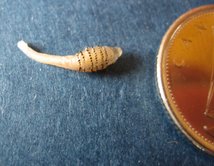
Long-time readers may remember my friend Kyrsten’s famous guest post about Bob the bot fly.

Bob in March 2008.

Commenters’ reactions on the original post ranged from mild (“kinda icky”) to ambivalent (“horrible. but very cool” / “utterly revolting, but sort of fascinating” / “this is both disgusting and cool”) to extreme normal (“disgusting and disturbing” / “seriously? ewwwww….”)

Jeanne Sather, author of The Assertive Cancer Patient blog, found the post just this week, and commented as follows:

And I just about pass out when I have to remove a tick, either from my dog or from my own ankle after hiking! You geeks are made of strong stuff.

However, she then went back to her own blog and wrote a post called “A Challenge–Who Can Gross Me Out?”:

My interpretation of that post was that a bunch of smart and funny geeks were having a great time commenting on a truly disgusting parasite one of their number picked up on a trip to Belize.

The parasite has a name, Bob the Botfly, and there are photos as well.

With all due respect to the scientists/geeks, I think we cancer patients can top this.

So let’s get started. I want to hear about your absolutely most disgusting cancer experience.

OK, geeks – challenge accepted!

What’s your absolutely most disgusting science experience?

I wrote about my own absolutely most disgusting science experience on my old NN blog back in April 2008; the post describes the experiment I did with an empty bucket by my side, and which resulted in me being called Dr. Monkey Bum for several months during my postdoc. Ah, memories…

Let’s hear your story! Can anyone beat Kyrsten?!

Posted in blog wars, career, freakishness, medicine, meta, monkeys, nature, personal, photos, science, silliness, TMI | 17 Comments

Visual cymbal

Here’s an astounding slo-mo video of a cymbal strike:

Isn’t that amazing?!

I mean, you know at some intellectual level that sound is a wave caused by the vibration of a solid object… but actually seeing that?

So cool.

(H/T Blogra, by The Georgia Straight)

Posted in music, science, videos | 5 Comments

Seeking reader input on internal pre-submission grant review practices

I received the following email last week:

“Hello All:

As  you are aware there has been some discussion about the relevance of the form 100 as part of the grant application package. At the Department Head meeting yesterday it was decided to retire Form100.   So that means starting today, the Peer Review Form 100  is no longer required  as part of your  grant application signature package”.

and there was much rejoicing in the land of grant wranglers!

Seriously – within five minutes I’d sent two and received three celebratory emails to/from fellow sufferers. At a seminar later that day, with lots of grant wranglers in the audience, there was a round of applause and an outbreak of grinning and thumbs-upping at friends when the news was repeated. One colleague has suggested that we throw a party to celebrate Form 100’s demise, and I don’t think she’s joking.

Ding dong, the pink form's dead!

Until today, obtaining institutional sign-off of any grant required the submission of the abstract, budget summary, budget justification, an internal cover sheet signed by the PI and their department head (printed on blue paper)…

…and two copies of the internal peer review form (printed on pink paper), each one signed by a different PI who was not a co-applicant or collaborator on the grant.

In theory, the latter requirement ensured quality control and pre-submission exclusion of no-hoper grants. However, in practice, grants were not reviewed thoroughly enough (or early enough) to make a real difference. Whenever a big deadline approached (and for some of the big federal competitions the PIs in our building will submit literally hundreds of applications between them), the requirement for two peer reviews of every grant created a frustrating bottleneck: our internal deadlines typically fall a week or so before the funding agency’s deadline, so everyone would still be working on their proposals and no-one would have a final version ready for review; and almost every potential reviewer would be frantically trying to finalise their own grants, leaving them little time to spend reading their colleagues’ drafts.

The process was stressful on the grant wranglers, too. We’d all spend far too much valuable editing/proofing time running around making deals with PIs and with our counterparts in other departments (“my PI will review your grants if your PI reviews mine”), not to mention trying to find out if there was any pink paper left anywhere in the building and, if not, whether pale purple would be acceptable.

I think internal peer review can be a very good thing, if it’s done right – and in my opinion, right means selectively. Established PIs with a good track record of funding should be left alone to judge their own grants’ merits, whereas newer PIs, or those without much recent grant success, deserve a much more thorough and thoughtful review of their grants at a much earlier stage of the process.

I’m sure we haven’t seen the end of pre-submission internal grant review at our institution, although I have no idea what form it might take in the future. I’m expecting that the PIs and grant wranglers will be asked for our input, and so, dear blogosphere, I’d like to hear about the practices in place at other institutions around the world:

  1. Does your institution have any kind of formal pre-submission peer review of grant applications?
  2. If so, at what stage of the submission process is it applied?
  3. Do all grants go through this process, or only those submitted by new investigators?
  4. If the process is selective, what are the criteria for a grant requiring review?
  5. Do you find the practices in place at your institution to be helpful?

Thank you in advance!

Posted in career, grant wrangling | 13 Comments

Waiting for my congratulatory telegram from the Queen

I realised recently that I’ve:

  • lived in our current house for five years, which is longer than I’ve lived anywhere since I left my parents’ house (previous record: two years and two months in a shared flat in Glasgow during my PhD);
  • been in my current job for almost four years, which is longer than I’ve had any other job (previous record: three years and four months as a postdoc in a different department in the same building);
  • been with Mr E Man for over eight years, which is longer than any of my other romantic relationships (previous record: two and a half years, but that was an outlier).

Am I… a grownup, now, then?

Huh.

Posted in career, personal, silliness | 28 Comments

Trees do the darndest things! (Part II)

TREE HUG!

Awwwww!

(Part I is here, if anyone cares to relive the horror).

Posted in nature, photos, silliness | 8 Comments

No con/census consensus

Dilemmas, dilemmas… life is full of them. However, there are two in particular that are causing me much internal debate at the moment:

The census

It’s census time in Canada!

Every household in the country is obliged to fill in a very basic short-form census, which we’ve already done online. In every census up to and including 2006, an additional mandatory long-form census was sent out at random to 20% of all households, to enable Statistics Canada to extrapolate detailed information (education, income, commuting habits, housing, and other information essential to infrastructure and service planning) to the entire population. However, last year the federal government announced that the 2011 long-form census will now be sent to 30% of all households, but will be optional – a decision that essentially obliterates the statistical robustness of the information collected.

Well, people were outraged. Never have I seen or heard so much public discussion of statistics. StatsCan’s chief statistician, Munir Sheikh, promptly resigned, while his predecessor called BS on the government’s claim that they were merely following StatsCan’s advice. There was an editorial in Nature, no less, among other online and mainstream media rants.  The change was made under the auspices of privacy concerns and small government, but c’mon, we all know how much Harper dislikes evidence-based legislation… and the government themselves admitted that they made the change without consulting with any of the end users.

So, predictably, given how much I’ve been thinking about the census, Mr E Man and I recently received the voluntary “National Household Survey”. And it’s been sitting on a shelf ever since as I undergo an internal debate. A debate between “a large part of the reason I was so outraged by the change is that I understand the value of the information they’re asking for, so I should complete the form and send it in”, versus “people opting out en masse sends a very strong signal to the government that a voluntary census will never work and that the compulsory long-from census should be reinstated before 2016″.

The con

My second dilemma relates to the upcoming referendum on the Harmonised Sales Tax, or HST, in British Columbia. The HST is a 12% sales tax that recently replaced the 5% federal Goods and Sales Tax (GST) and 7% Provincial Sales Tax (PST). 5 + 7 = 12 = no problem, right? Well, not quite – some items, including restaurant bills, services such as hair cuts and so on – that were previously subject to only one tax are now subject to both, meaning that the consumer pays more, and some restaurants and other service industry businesses claim to be suffering as a result. However, other small businesses (including my friends’ two-person operation) welcome the HST, as it results in much less bureaucracy than dealing with two separate taxes. When applied to the province as a whole, the HST is predicted to generate a net economic savings due to this reduced bureaucracy, although most consumers are predicted to end up losing some money.

Now, as an unapologetic champagne beer socialist, I have no intrinsic objection to higher taxes, IF they are applied fairly and the revenue is used sensibly. However, I do object to being lied to; the Provincial government claimed during the last election campaign that the HST (already in effect in other provinces) was “not on their radar”, when in fact their negotiations with the federal government about the introduction of the tax were already well underway at the time. I’m not alone in my objection; while the official opposition stood back and did nothing, a grass roots petition campaign was started. When 10% of all registered voters in each electoral riding had signed the petition, the government was forced under BC law to hold a binding referendum on the new tax.

Yay, democracy! Take THAT, lying politicians! How often do you get an opportunity to directly punish these guys?!

Except, of course, it’s not that simple. The government has done a surprisingly decent job at reversing the tide of public opinion, partially via a promise to reduce the HST rate from 12% to 10% in a few years. (Whether or not we can trust them when they’ve already been caught in one HST-related lie is, of course, another story). My friends who run their own business are voting to keep the HST. The forecasts of restaurants closing left right and centre seem not to be coming true – at least, not yet.

And so now I have another dilemma: do I vote according to the rational, the-economic-arguments-look-sound side of my brain, or the more primal that’ll-teach-you-to-lie-to-me-you-bastards side?

~~~~~~~~~~~~

I know I’ve joked before about being a chronic over-thinker, but this stuff is important: the HST referendum will have an immediate and direct effect on me and millions of others, probably for decades; while the government’s decision about the future of the census will have less tangible, but no less important or long-lasting, impacts on all Canadians. And I need to decide soon…

HELP ME, oh wise internets! What’s a politically engaged, socially conscious, lefty scientist to do?!

Posted in activism, bad people, Canada, current affairs, personal, politics, rants | 17 Comments