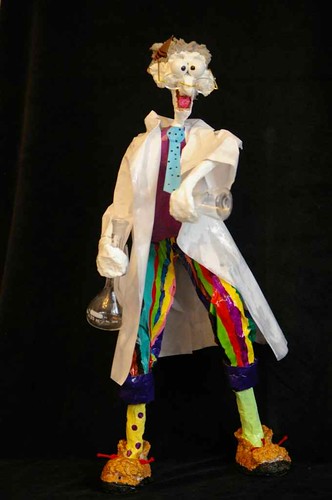
However…

Have you ever had a manuscript was accepted unconditionally without any revisions? In speaking with many scientists, it turns out that this seems to be a once in a lifetime phenomenon. Indeed, it has happened to me but once.

A long time ago in a galaxy far far away, I was once a graduate student. Actually, this manuscript was submitted in the course of my Masters reserach, and was my very first paper. As the first-author, and as a student with two advisers, I actually took care of the submission process myself. Not knowing any better, I also put myself down as the corresponding author. Little did I know that this is not something that a Masters student normally does.

In the month following the submission, very much against my will, I was serving a bout of the most awful reserve duty in the Palestinian city of Nablus, based in the old British headquarters building (shown 50 years earlier in this video from the Guardian) when the reviews came back. Part of my tour was spent guarding the so-called “Joseph’s Tomb” a flashpoint of contention between Israeli settlers and Palestinians in the midst of a large Palestinian city. But I’ll save this for another rainy (stormy?) day.

Joseph's Tomb: Israeli settlers and Palestinians have all but ablated any meaning for this site

I spoke to my wife on the phone–a pay phone (remember those?)–and she read me the editorials letter and critiques. I was crushed. I thought that was the end of my attempts to publish this manuscript. When I finally returned to the lab and showed the letter to one of my advisers, he glanced at it and said immediately “Oh, it’s in. We should have sent it to a better journal.”

As it turned out, my inexperience in reading and interpreting letters from editors led me to believe that a request for changing a few words in the title was an absolute rejection. Little did I know that I would never have it so easy with future submissions.

Today the standard for publication in most self-respecting journals has become very high. While this is a good thing, overall, it has led to some things which aren’t so good. Inevitably, now, every author quickly scans letters from the editors of journals looking for the “However” word. This is because these letters frequently begin by saying how the manuscript does not meet the standards for the journal and so forth, but often there is a small opening in the form of a “however statement.” This statement often leaves the door open for a series of revisions and additional experiments that if successfully carried out will allow the editor to re-examine the manuscript. And we all know that in today’s scientific environment this usually means months and months of additional work leading to a pile of new figures often taking shape as “supplemental figures.”

Having said that, “however” can also work the other way around. Many a grant review explicitly writes that the proposal is “novel, interesting, and well thought out” and then shoots everything down with a “however statement.”

But back to the issue of supplemental figures and additional data. This has become a consistent theme in modern biomedical research–for better or for worse.

I am currently on the editorial boards of 3 journals, and most recently joined the editorial board of a major and long-standing general biochemistry journal. At a recent meeting, the issue of reviewers requesting more and more data to be deposited in never-ending files of inadequately reviewed supplemental PDFs, underwent serious discussion. Indeed, I am happy to say that this journal has taken a leadership stand and decided that overall supplemental figures should be reserved for Excel files, lists of proteins, arrays and other such data that doesn’t properly fit within the manuscript itself. At the same time, the journal would like to discourage reviewers from requesting that authors who have shown data using cell line A, also show similar results with cell lines B-Z.

Back in 1994, when my first paper was accepted with only a textual revision to the title, there were no supplemental figures. There were no online journals. It seems that the ability to publish online without the necessity of paper has led to a new standard where authors are clearly discouraged from using the phrase “data not shown” or “unpublished observations.”

I think it’s fine and desirable to hold authors to rigorous scientific standards. At the same time, as a reviewer and also as an author I would like to believe that minor points that do not directly relate to the key findings of the manuscript do not all have to be shown and should not slow down the publication and advancement of science. After all, isn’t the goal of publishing to allow other scientists to take advantage of these findings and move science forward?

NOTE: As it turns out I’ve just scooped “The Journal of Cell Biology” editorial with my blog! For more discussion on this very issue (!!!) please see: http://jcb.rupress.org/content/197/3/345.full

Published April 30, 2012 // JCB vol. 197 no. 3 345-346
The Rockefeller University Press, doi: 10.1083/jcb.201203056

    • Editorial

Minimizing the “Re” in Review

  1. Elizabeth H. Williams1,
  2. Pamela A. Carpentier2, and
  3. Tom Misteli3


Posted in research, science | Tagged , , , , , , , , | 18 Comments

The Hunger Games: educational assessment

It seems that these past few weeks have been insanely packed with travel, and some of it not particularly fun. As I await boarding of a flight to an editorial board meeting, I recall that a week ago I drove 200 miles to (and 200 miles home from) Grinnell College in Iowa (directly east of Omaha) for an invited talk and pleasant meetings with faculty and students.

I enjoyed my visit and returned to Omaha only to drive another ~200 miles in the other direction early the next morning to Grand Island, Nebraska, for another speech contest that one of my kids was participating in. While the contest was fun, driving there in fog as thick as soup (literally) and returning through driving rain, heavy winds, some light hail, and almost no visibility on the famed Interstate 80 was not so much fun. My muscles ached all week from straining forward to see through the windshield.

But rather than complaining, which is something I’m quite good at, I thought that I’d do something different (something I’m probably not very good at) in this blog and review a film based on a young adult fiction book that both my kids have recently read. I should note that as a child I never read any young adult fiction, stepping directly into adult fiction at quite an early age (and I recall being rather puzzled at sex scenes in some of them…).

The film is “The Hunger Games,” the first of a trilogy, and my 10 year old son was my companion. As I do not want to give too much away, I’ll make this a relatively brief review. The film (novel) is set in a futuristic environment (USA) in which the premise is that there is a very strong and powerful central “capital” that controls 12 poor and subservient territories (or districts as they are known). Having rebelled against the mighty capital many years earlier, as punishment the capital holds a gladiator-like competition every year in the capital collecting 2 youths (12-18 years old) by lottery from each of the districts. The competition is one based on survival of the fittest, with the contestants being required to kill or be killed, and the last-standing survivor of this horrific “game” being declared the winner and allowed to live on as champion of the “games.”

I have heard many negative comments about the film and book trilogy–that it is too ‘graphic,’ that children and youth don’t need any additional violent films to add to the growing repertoire, and so on. Having seen the film, I beg to differ.

Yes, there are graphic parts to the film. But at the same time, I see this as a highly critical and very educational portrayal of western society. The film depicts the gluttony and hedonism of those in the capital who are only seeking their next “fix” of entertainment in a world where attention spans are often measured on the second hand of a wrist watch. The audience and television commentators and interviewers who are mindlessly immune to the idea that lives are being lost in these games, and are merely plying for humorous and witty comments and ‘ratings’–along with their quirky hairdos and attention-seeking dress. These segments, in my humble opinion, are far more intense and difficult than the graphic fighting scenes of the youth in the games themselves (not that those are easy to stomach).

One of my first reactions to the film, watching the combination of thrill-seeking audiences and mind-numbing TV interviewers and commentators was today’s reality of “Reality Shows.” Not that I actually ever watch television and have ever seen them, but I know enough of what they represent to see that the author and director of the “The Hunger Games” has certainly taken offense at these new icons of popular culture and aimed arrows at them. As it turns out, in reading an interview with author Suzanne Collins, she notes that she came by the idea while channel surfing and seeing station after station presenting reality shows and images from the Iraq war.

So while this film may stretch the imagination a little far from present day life in the western world, the gladiator-like scenes combined with ridicule of the path of instantaneous make for a very compelling discussion with one’s children, or perhaps even just to serve as a reminder that our own adult lives should never be taken lightly as a point for amusement. This film has earned a strong recommendation from yours truly.

Note added April 22: I have failed to make perhaps the most important point that I had intended. This post was supposed to correspond with Holocaust Day–and while not addressing the 11 million Jews, Gypsies, communists and many others who were systematically gassed to death by the Hitler regime–the film does evoke a very pertinent question: “AT WHAT POINT IS LIFE NO LONGER WORTH LIVING?

The concept of putting someone (or an entire country) in a situation of “kill or be killed” is a recurrent and critical theme in the film. And we all know that if this particular dilemma had been answered differently by those under the control of the Nazi murder machine, the outcome of Hitler’s attempts to wipe Jews and others off the map might have ended differently.

Posted in Education, Uncategorized | Tagged , , , , , , | 11 Comments

Relativity Theory

How many times have we been told in the course of our lives “It’s all relative?”

I hear that over and over. And I suppose that there’s a lot of truth in that statement. If we push aside considerations of moral issues, the “Non-Einsteinian Theory of Relativity” probably holds true in many cases.

When I was a child, one of my father’s Uncles, Dr. Wilfred Gallay, was a renowned chemist and the head of the International Union of Pure and Applied Chemists (IUPAC). He lived in Ottawa, Canada, but in his fairly frequent visits he made a strong impression on me. In fact, his stories of DNA and cloning probably set me in motion for a career in biomedical sciences. But great Uncle Wilfred, who by the way patented a new type of glue that enabled the Allies to manufacture planes far more rapidly, left me with a legacy of his own personal “Theory of Relativity.” My own relative’s relativity theory.

My great uncle, a highly competitive man by all accounts, once made the following statement to me: “It doesn’t matter what grade you get in school or university, as long as it’s higher than that of everyone else.” Hence, his personal “Theory of Relativity.”

Why I am suddenly sounding off on the relative nature of things? What set me off? Allow me to explain.

Over the past 6 months I have received a number of international grants to review. Unlike my jobs reviewing grant proposals in the US system, which usually include a heavy stack of proposals (10 or more per review session), most of these international grants arrive as a single proposal to review. Sure, it’s easier than reviewing 10 of them, but it means that the reviewer has absolutely nothing to compare them with.

To their credit, some of these agencies supplied an online critique form that explicitly gave instructions to the reviewers to say “Should be funded” or “Should be funded if there are sufficient resources” and so on. Others, however, had an arbitrary scoring system leaving the reviewer (me!) guessing as to what that means.

So how would someone, having received a single proposal to review, have a basis for judging whether a grant should score “Top 1%, Top 5%, Top 10%” and so on? And what does that mean? If the proposal is great, and I score it top 5%, is that a mark of complete approval? Or are only first percentile-scored grants funded?

This is very frustrating for a reviewer, and I’m sure even more frustrating for the applicants. So for those of you on the other side of the pond who have any influence on your funding agencies, it might be worthwhile to use it!

As for me, while great Uncle Wilfred’s “Theory of Relativity” may seem rather cold-blooded to some, my respect and appreciation for him continues to grow.


Posted in research, science | Tagged , , , , , | 2 Comments

A Secular Passover

First, my best wishes to anyone celebrating Easter, Passover or any other holiday. As a representative of one who celebrates the latter, in my own secular way, I thought I’d post a few words about it. After all, my knowledge of Easter is quite limited, although I was happy to send Jenny her Paas Easter egg dyes a few weeks ago. I wonder if the “Paas” has anything to do with Paasover…?

Passover is a Jewish holiday that is supposed to celebrate the biblical (and mythical?) exit from slavery in Egypt. Archaeologists are not entirely confident of the biblical account, but no matter; whether the Jewish slavery story is concrete or metaphoric, its message is important.

To a certain extent, the true meaning of the holiday (in my humble opinion) has been hijacked by a host of largely irrelevant rituals. “Kosher for Passover” stamps on foods at the supermarket and so on. I have little patience for what I deem as superstitious rituals, but the meaning of the holiday has a lot of symbolic importance for me.

So did I have a Passover meal with my family? I did.

bttachment-3

Perhaps not what you envisioned? A Chinese and Thai combination Passover meal? Well why not?

But we did have home made Matzah ball soup. Well more precisely, Matzah ball and Matzah cube:
bttachment-4
My son asks “why is this Matzah shape different from all other Matzah shapes?”

To a certain extent, secular Jews have been attacked by their religious counterparts for being “lite,” for not having any serious “content” and for being immersed in materialism and capitalism with little regard for moral and educational matters. As though only through religion can one be conscientiously concerned with issues of morality. I find this truly condescending, to say the least.

So at our little family Passover gathering, what did we do (aside from the food, of course)? My spouse brought up the question of what values do we all want to pass down to the next generation. Language, heritage, culture. And why this is important.

As for me, I have recently become interested in the Jews who lived in America’s deep south, in the pre-Civil War Confederate America. It turns out that there were about 25,000 Jews living in the south (many fewer than the north), mostly in New Orleans, Shreveport, Lousiana (where I visited for a seminar a couple years back, not knowing that this was a key city for southern Jews ~150 years ago), and Memphis, Tennessee.

While most of these Jews were not wealthy plantation owners, some were, and I asked my children to imagine a “Passover Seder” where Jews were celebrating freedom from slavery while being served by African American slaves. How surreal!

The Jews of the south were, by all accounts, extremely loyal to the Confederate, with over 1000 Jewish men who served in the army. This seems to have stemmed from a strong desire for acceptance, which was clearly lacking in Old World Europe. In any case, we learned the fascinating story of Judah Benjamin, the so-called “Brains behind the Confederate.” He was a Jew from a Sephardic or North African background, probably quite brilliant as he attended Yale law school at the age of 14.

Benjamin rose up the ranks of the south and became perhaps the closest confidante of Jefferson Davis, the Confederate leader. Some say that this was enabled because Davis felt no threat of being “overthrown” by a Jew, especially one as loyal as Benjamin. He was alternately finance minister, minister of war (during the civil war times) and played a major role in all decisions in the south. At one point he owned a plantation with 150 slaves, which he sold when he became entrenched in politics.

During the course of the civil war, and particularly as the south began to crumble, Benjamin became known for his radical proposal that the south should emancipate any slave who volunteers to fight in the army against the north. Imagine that idea: African American slaves potentially fighting to keep their fellow slaves enslaved! This was strongly vetoed as going against everything the south was fighting for. One politician criticized Benjamin’s idea by saying that “if the black slaves could make good soldiers, this jeopardizes everything that our belief in slavery stands for.”

Following the assassination of Lincoln, despite his having nothing to do with it, Benjamin was rumored to be involved. He fled over the pond to England where he lived out his life as a successful barrister. An American historian and biographer, Eli Evans, speculated that had he stayed in the US, America might have had its own “Dreyfus Affair.”

Based on these issues, we were also able to explain to our children the “Blood Libel,” the centuries’ old story that Jews make the unleavened bread, or Passover Matzah from the blood of Christian children. Absurd as it sounds, my own grandmother and her family propelled themselves away from the “Pale of Russia” to the New World to escape the pogroms carried out to avenge the alleged killing of Christians.

Well, enough said. I suppose that my explanations of our secular Passover will not convince those who make it a point never to be convinced, but I am secure in my own lack of faith and secular lifestyle–secure in that I do not feel any moral inferiority.

Posted in Uncategorized | Tagged , , , , , , , | 16 Comments

Ph.D. Pranks and Comeuppance

Seeing as April 1st has come and gone, I would like to dedicate this blog to one of my favorite Ph.D. pranks (I’ve reported on a few in this forum in the past)–AND to tell you about a little email note that I received a few days ago. Let’s start with the e-mail, and here it is, verbatim:

Dear Dr. Caplan-

My name is Jim Hager, and I am the manager of Publishing Corps. We have read both of your novels, Matter Over Mind and Welcome Home, Sir. Our publishing editors believe your novels to be fantastic and very well written.We would like to present you with an Outstanding Author’s Award for 2012. Congratulations! In a few days time, you will receive a check of $525 for your efforts.

It was a pleasure to read your books, and we hope to read more of your novels soon.

-Jim & Publishing Cops. 

Well, how flattering! And a nice sum of money. But something didn’t ring kosher. Why would anyone award me money “out of the blue?” And would an editor from a publishing company sign off as “Publishing Cops” rather than “Publishing Corps?”

Suspicions aroused, I scoured the internet and did not turn up any “Publishing Corps” although there was a Jim Hager who wrote a book called “Alligators under my bed and other Nebraska stories.” Nonetheless, I became quickly convinced that someone “was having taking (thank you Richard) the piss” as you people on the other side of the pond would say. But who could that be.

I thought of enemies and people who would love to see me embarrassed or trodden on. Who could it possibly be?

And then a hunkering suspicion floods my brain. After showing the e-mail to my spouse, I sidled up to our home office on the 2nd floor. Only to find my 13 year old daughter and 10 year old son huddled over a laptop in stitches from laughing. What did I do to deserve such treatment from my own kids? Probably telling them about my own pranking exploits. Such as this one:

As a graduate student in Jerusalem, my mentor was desperately trying to attract an experienced and talented postdoctoral fellow. At the time this was particularly difficult, because the Hebrew University in Jerusalem, unlike the Weizmann Institute in Rehovoth, had an attitude that the Hebrew language must be preserved at all costs–including in science. I will save stories about this unusual and outdated position (which is now defunct) for another time, but suffice to say that learning Hebrew was a daunting way of limiting the international applicant pool. And practically every Israeli-trained graduate student with an eye to continue in science goes abroad.

So one day I invented Bruce Miller. Yes, invented. I wrote up a sparkling CV for him, which included a Cell paper (but only one so as not to arouse too much suspicion). Bruce completed his Ph.D. in Australia, and though outside the field of T cell receptor signaling (because then my mentor would have known of his work), he was extremely interested in T cells. Better yet, his wife had just received a position with the ballet in nearby Tel Aviv, making it necessary for Bruce to find a position in Israel. Ahhh yes, the art of a credible prank (that’s where my kids went a little awry).

When the e-mail came through and was read, I was sitting and ‘reading’ patiently at my desk. After all, as a senior graduate student in the lab, who else would my mentor turn to in her excitement at having–perhaps–identified a strong postdoc candidate?

I feigned a complete lack of interest, saying “Oh nice” with no conviction, and I could sense the frustration mounting in my mentor. After all, we’d worked closely for 4 years or so, and she-knew I-knew how hard she wanted to find a suitable postdoc. By this time, I was on the verge of completely disassembling my intestines, trying so hard not to break out in guffaws. I had to leave the room. And quickly, excusing myself with a mere grunt.

As it turned out, my mentor was deeply insulted about my lack of “loyalty/interest” in this wonderful possibility! So when I did finally ask her about Dr. Bruce Miller, without her ever telling me his name, it took a few minutes until she caught on. Fortunately I could run pretty quickly in those days, and a 40 m dash around the department allowed to to outrun a tough PI with a 25 ml glass pipette raised over her head. But she managed to equal the score some time later–perhaps a story for next April Fools Day…

So regarding the prank my offspring played on me–I have no one to blame but myself!

Posted in humor, research, science | Tagged , , , , , , | 12 Comments

Accountable Anonymity

Being heavily involved these past few weeks in reviewing piles of grants, I have been thinking a lot about the power that anonymity can confer. And how it can, when there are no checks and balances (or in the case of misuse by a person lacking in moral standards) be abused as a power base.

Despite these concerns, first as a reviewer and now as a chair and reviewer for a certain funding agency, I do believe that overall the system works. The fact that there may not be sufficient funds available to support many outstanding projects and the necessity of choosing between “outstanding,” “better than outstanding,” and “almost outstanding” does resonate in my nightmares, but unfortunately we are all in the same boat. And I hope it isn’t sinking.

So how does this process succeed despite the cloak of anonymity? Why is power generally NOT abused? First, I like to think that most scientists and reviewers are fair-minded people who can easily imagine the situation reversed with their own grants on the line. That’s probably sufficient for most instances. But in addition, there are other “checks and balances.”

For example, as chair, I assign a proposal to 3 reviewers. Not only are these reviewers anonymous to the researcher who submitted the proposal (although the list of all the reviewers on the committee is made public knowledge), but the identity of reviewers remains unknown to each reviewer until the actual meeting. So the net effect is that each reviewer wants to appear knowledgeable, reasonable, fair, and consistent to his or her peers on the review group. I perceive that this desire to do a good job and be recognized by one’s peers is a major positive influence in the review process. It is similar for manuscripts reviewed, although in the latter case recognition comes primarily from the journal editors. The reason for this is that journals don’t disclose to a reviewer the identity of the other reviewers, although they do share the comments made.

Thinking about anonymity and the responsibility that comes with it, I couldn’t help thinking about the internet and the growing problem of cyber-bullying. My 13 year old daughter recently had her first paid acting gig for a play called “The Secret Life of Girls” and was interviewed in this article.

SLOG poster

This play deals with cyber-bullying, and the conditions that allow this type of bullying to prevail in a teen-age environment.

But teen-agers are not the only ones who bully or suffer from bullies on the internet. The ability to hide one’s true identity and post vile and vulgar comments seems to be rampant, and not unknown in the realm of science bloggers. For one who believes that pretty much anything I write about can and should be read to to my spouse and 13 + 10 year old children, I am appalled at the language and–well–abuse that I see spewing from some bloggers. All in the name of some lofty ideal (gender equality, racial equality, and so on)–yet the impact is to turn away supporters from these ideals. After all, if this blogger is a “supporter,” why would I want to have any part of that? I often feel fortunate that I don’t usually have time to read the blogosphere more widely, as I am not anxious to come across more of such distasteful behavior.

Let me be clear: I do understand the need for anonymity in certain circumstances. However, along with anonymity there comes an extra burden of responsibility. People who hide behind anonymity for the sole purpose of bashing others, stirring up controversy and wielding power are misusing their anonymous stature. Not only is this cowardly, but it’s immoral.

And they should probably think carefully before doing so. After all, in the age of wikileaks and wikianswers, anonymity is hard to keep. Just ask “Who is X?” online and it is easy to unmask the identity of many such anonymous bullies.

Posted in science, Uncategorized | Tagged , , , , , | 10 Comments

Updates

Update #1: I had my first book signing at the University of Nebraska at Lincoln book store, where 10 copies of my book were graciously ordered.

book store

I had a lot of fun and talked for a couple hours to some really nice people. All three of them, though, were employees in the book store. Ah, well, I’ve often said that I would give a seminar on my science work to a single interested person. So why not a Q & A about Welcome Home, Sir?

Update #2: Well I’ve now owned my iPhone for several weeks. After a bit of a learning curve, especially regarding how the various emails link together,  and after downloading a variety of applications that were already part of my old BlackBerry—I admit that this thing is a cut above the BB. In every way except one, and that’s the ability to type quickly.

Now I admit that the iPhone does have a pretty smart auto-correct program that frequently anticipates words and can really save typing time; at the same time I found that it’s easy to get into trouble. Writing to a female researcher and saying “I’d like to see the way you work with those “THONGS” (rather than “THINGS”) and I’m up the creek without a paddle. Or I may have to use the iPhone to paddle…

So emboldened by my appreciation of the new technology, I set out to explore the famous APPs that I have been hearing so much about. In fact, I remembered some time ago on Cath’s blog, reading about various humorous applications to measure productivity, and Henry describing how he “wiped the floor” at scrabble.

Well searching for myself, I was immediately able to download a program called “Molecules,” which I believe that Stephen Curry discussed at one point. Pretty fascinating to be able to carry with me a little 3-dimensional image that can be rotated at any angle to show off the protein domain whose structure I helped solve a couple years ago.

Among these applications I came across a little program called “Cal Concentration.” In this APP, the researcher need only type in the concentration desired (for example 50 mM), the molecular weight of the solute (let’s say 121 for Tris) and the target volume (let’s say 500 ml)—and lo and behold the thing spits out the following:  Dissolve 3.025 g of solute into the solvent and make up the final volume to 500 ml. Similarly, the APP will calculate mass-volume percentages and volume-volume percentages just as easily.

Wonderful?! I suppose. Planes fly on auto-pilot and the pilots can still land on their own if necessary. At least I hope that’s true. How long will it be until such basic calculations are no longer done manually? Will this lead to advanced thinking and greater calculations? Or will students and researchers stagnate and no longer be able to function without a smart-phone in their pockets?

I’d like to be optimistic—after all, one can’t stop technology. One needs to “go with the flow.” But I think only time will tell.

Posted in humor, research, science | Tagged , , , , , , | 2 Comments

Which oath? Hippocratic, hippocritic or hypochondriac?

This blog has been years in the making–possibly long before I had ever heard the term ‘blog.’ Spurred on by the recent series of blogs by Henry which have at least indirectly addressed the medical profession and the sensitive and often incompatible relationships between doctors and patients, here I am ready to throw in my own two cents worth. Well, with inflation, make it a dime– or ten pence, or whatever your currency may be.

What gives me the right and immunity from moral turpitude to open my mouth (or computer) and discuss these issues? I do have a few reasons:

First, I have declared openly in previous blogs of my own hypochondriac tendencies. I don’t intend to elaborate in this forum, except to say that my recent novel “Welcome Home, Sir” (or on Kindle) deals with a scientist suffering from hypochondria and hiding it from his colleagues. For those interested in so-called mental illnesses and their potential impact on people, and scientists no-less, this is your opportunity. But I shall say no more on this particular matter now. The point is that hypochondriacs have a unique vantage point concerning doctor-patient interactions.

Second, I have lived almost equal periods of time in 3 countries, each with its own and very different system of medical care and insurance. This I feel qualifies me as a semi-expert in making comparisons, at least from these 3 systems.

Third, I work as a scientist at a major medical center, which provides me with a lot of peripheral insight into the way things work at a research and teaching hospital.

Finally, my own father is an pediatrician in Canada, and through frequent discussions I have gained a lot of knowledge of how things work–or rather how they don’t–on the northern side of the border.

So let’s start with the two radical opposites, situated so close together, yet so far apart in their respective medical systems. Here in the US, I feel that the medical care available (compared to Canada or Israel) is vastly superior. Of course, that depends on whether one has insurance and can afford that care. But if we remove cost from the equation–with money not an object as they say–I think there is little doubt that the system here offers the highest level of medical care. Specialists of all types available (this also has to do with the size of the country), and a plethora of high end medical tests routinely done.

Just a few years ago I was telling my father about an episode of cluster headaches I had been plagued with, and how my GP sent me for an MRI that they were able to schedule for the very next day. Why not, with dozens of MRI machines available at the various hospitals and clinics here in Omaha. Not an issue. Taken for granted. Yet my father had explained to me that on his side of the border in Winnipeg, a city roughly the size of Omaha (750,000), there were only 4 MRI machines in the entire city with a waiting time of 6-8 months for any test that wasn’t deemed a life threatening emergency. As a pediatrician, he had been sending families who could afford it to do private MRIs across the border in Grand Forks, North Dakota (population ~50,000), which had at least a dozen MRIs available.

So what is wrong with Canada’s socialist medical system? Nothing–except that it’s gone bankrupt. And people begin to take medical care for granted. So for example, if new vaccines (ie., chickenpox) are not covered by Canada’s medical system, the vast majority of patients will not vaccinate their children. Pay for vaccines? They must not be necessary if they are not covered. They are “frills” and frivolous.

Now I fully realize that these are all anecdotal comments and observations, and quite possibly regional differences within Canada make things better (or worse?) in other areas of the country. But as I am not writing a peer-reviewed paper now, but rather just passing along my impressions, I have no qualms about making these observations.

I won’t say much about the system in Israel (because it generally falls in between the US and Canadian systems), except to note that I often encountered a weird situation in Israel. While doctors here in the US will do a battery of tests to ensure that the patient is healthy and that they are not missing any hidden ‘signs’ about the patient’s health, in Israel I’ve noticed that many doctors seem to do the opposite. They try to show the patient that he/she is healthy. So coming to an orthopedic surgeon without a torn ligament, but just moderate pain in the patella region (that’s hard to quantify), someone such as myself always had the uncomfortable feeling that the doctor thought I was trying to “cheat”–perhaps to get a doctors note to avoid military reserve duty? Or work?

My hypothesis is that since most doctors served for some time in the military and did encounter hordes of sick and not-so-sick soldiers, some of whom were indeed trying to evade one type of duty or another, this has caused generations of physicians to become overly suspicious of patients’ complaints and colored their vision of the medical profession even in civilian duty for years to come. It’s certainly no fun seeing a physician who doesn’t really believe you when you profess your symptoms. All the more so for any issues dealing with mental health…

Back to Canada, (or at least Winnipeg) there seems to be an acute lack of certain specialists–children in Winnipeg in need of pediatric nephrologists need to fly to Toronto or Vancouver. And this is only one example.

Having children, I have visited pediatricians here in the US many times. The doctors seem to have a lot of time for each patient, to answer parental questions and do full physicals. Nurses and assistants give the vaccinations and do the weighing and measuring. Sources tell me that pediatricians typically see 20 or so children a day in a US clinic. In Canada 50-60 is more typical; doctors are paid much less and also do not usually employ nurses and assistants for vaccinations and measuring/weighing. Where would you expect care to be better?

But as I alluded to earlier, better care depends on the ability of patients in the US to handle their medical costs, or be covered by insurance. Those unable to pay and up to their eyeballs in debt can burn out their retinas with no help on the way. For many, getting sick just isn’t an option; the only possibility is emergency room visits–often when it’s too late. Stories abound of chronic illness causing families to sell their homes and undergo painful bankruptcy. A merciless system, and one that some democrats in the US have been dreaming of improving for years. Time will tell how much Obama’s health care plans and reorganization of the medical insurance system will improve matters.


Posted in science, Uncategorized | Tagged , , , , , | 5 Comments

More on scientists and creativity- “Art and Soup”

Time is flying by in a blur. I know this, because I have begun measuring time in blogs. Not “a few weeks ago,” but rather “a few blogs ago.” Yes, well a few blogs ago I brought up the issue of creationism creativity and science, intent on making the point that contrary to some popular misconceptions, many scientists are creative.

I met with a little bit of resistance from some of our own bloggers, perhaps due to my poor choice of examples of such creativity. For example, I used blogging itself as a mode of creativity, with the members of our little collective putting forth unique samples of their writing. I also took a frustrating example of my own: in having to devise creative methods to overcome the disastrous e-mail system that will soon be only a bad memory by next week. My ingenious solution to these e-mail issues, it was argued by some some of the readers, was more on the line of a problem-solving task–perhaps not akin to true creativity. Point taken.

But now I want to relate to an example of real creativity–creating something from nothing. Or worse than nothing–from the ashes of unfunded grants or unaccepted manuscripts. True creativity. Allow me to explain…

Let me begin with a photo:

Dr. Naava Naslavsky, recipient of the 2012 Best Artist award at the annual Visiting Nurse Association (VNA) “Art & Soup” fundraiser

Naava has always loved sculpture, but has been increasingly refining her paper mache skills over the past few years. The VNA fundraiser invites only a few dozen jury-selected artists to participate each year, and I believe that this is Naava’s 3rd year in a row. Many of the artists indeed do art on a full-time basis, so for a researcher slogging away at experiments, papers and grants to find the time to put together an exhibition to compete with such focused artists is no trivial matter. It’s not merely creativity, but a burning desire or dedication to churn out art.

Naava’s newest pieces are often exhibited at Omaha’s Blue Pomegranate art gallery (see the paper mache section).

So the 2012 Art & Soup began well last Sunday morning, and we were able to set up Naava’s pieces nicely, very glad to have the extra table that she had requested in advance. Until—a person who never actually introduced herself but assumed a posture of authority (and it later turned out was another artist) came by demanding that we down-scale our display to a single table.

Being a pleasant sort, Naava regretfully began to agree, seeing that the authority figure was bent on having her way, claiming inequality to other artists. But that’s why I was there. No, no no. You don’t survive the military and 10 years in an academic position by bending over to receive a kick in the butt. The table stayed.

And justice for all. The double-table display just before starting.

Let the fundraiser begin!

The ballerina. Recently.

The beetles. Only 1 of the pair was sold!

Suntan lady was also sold.

Split reader.

The needle nurse went within minutes. What do you expect at a Visiting Nurse Association fundraiser?

Shopping therapy was also a hit.

Finally, a few animals:

And finally, the one I’ll never let her sell. It’s MINE!

The-Science-Enthusiast

The science enthusiast. First featured in my second-ever blog, “The Age of Reason” in 2010.

All in all, the Art & Soup was a great success, with 50% of the proceeds going directly to the VNA. I also didn’t realize one could fill up on so many different kinds of soup!

So who still says scientists aren’t creative?

Posted in humor, research, science | Tagged , , , , , , , , , , | 8 Comments

A roller coaster week…

I am not usually one to walk around with a big grin on my face on Friday, glad to bid good-bye to the week at hand. No, I enjoy my work (most of the time), just as I enjoy the freedom that weekends provide for me to mop up any urgent work, and combine it with my own doings. But I admit I’m happy to see the back end of this week.

Why? Working my way backwards, the week ended with a bang–a quick snow squall that popped up out of nowhere–but did leave a beautiful reminder that winter has not yet abated.

My backyard, recently

Couple that with a marathon of exam grading this afternoon, and I could use a beer. Or a glass of wine, or 4.

But that’s not what really irked me this week. No, it wasn’t that. It wasn’t even the fact that ‘usually-organized me’ (almost) missed a good grant opportunity and found it at noon on the very day it was due at 5 pm. And I had a 2 hour meeting that same afternoon. My urgent phone call from Omaha (Central Time) to ask whether, by any chance, 5 pm might not be Pacific Time, met with a “Nice try, but no!” But I am happy to report, the grant went out at 4:50 pm Central Time.

My most constant worry has been the ever-crashing and ever-troubling issue of a reliable e-mail system. In my previous blog (“Who says scientists aren’t creative?“), I described my utter frustration with our e-mail system– known as Lotus Notes. I noted my dismay at having to “do figure eights-in-the-air” to be able to load e-mail on the web-based system from home. I probably forgot to mention the many e-mail attachments I have been forced to send to journals, colleagues and collaborators using my daughter’s g-mail account (until I finally opened my own). Not exactly what one would expect from a system supposedly designed for serious work.

It turns out, from the many comments and sympathy statements that I received, that I am not alone in this frustration. In fact, there is even a website called “I hate Lotus Notes” that discusses “the healing process” and has items for sale (Share the pain, get gear). Such as this T-shirt:

"I hate Lotus Notes" T-shirt. Not recently--NOW! and always!

But–relief is on the way. Microsoft Outlook, with it’s Macintosh capabilities is scheduled to kick in on March 6, 2012 to replace LN. Yes! But wait…

I was informed that my beloved BlackBerry will not be compatible with the new Outlook, that my calendar won’t be synchronized, and I will no longer be able to have my client e-mail work seamlessly with it. It is important for me to point out that through all my frustrations with LN, my trusty BlackBerry never failed me. Not once. After being set up, these past 2-3 years it has worked seamlessly with my LN calendar and many, many times has saved me–being my only workable e-mail. The muscles on my two thumbs can probably rival those of the strongest body builders.

So I was in great despair to find that I would need to trade-in the old BB for an iPhone. Now everyone who is anyone says, “Wow, what an upgrade!”

But I’m not so sure. The BB did everything I asked of it and more. True, it’s internet capabilities were a bit limited, but ultimately there were few websites that I couldn’t get into. It was easy to use, I could control making the whole thing silent, vibrations for e-mails, rings for the phone, beeps for IM, dings for twitter and FB. Everything worked! And at night, charging in the corner of my room and used as an alarm clock, one finger click and the thing was silent until the next morning. Ahhh, and that blinking red light in seminars–a much awaited e-mail!

Yes! Yes! I was hooked. Crack-Berry.

And now, I sit with my new iPhone beside me, still struggling to unravel the puzzles it presents. It took a day or two to get it coordinated with the university e-mail. That now seems to work okay. Whew. But g-mail? All week I was trying to figure out how I could possibly IM on g-mail without having to open Safari. And STAY OPEN–otherwise people wouldn’t know I’m online. Hours of digging through comments and posts online, and I finally found an application that could be uploaded–and it works. Whew!

I admit that the internet is faster, more sophisticated, more possibilities. All true. But my number one beef–aside from the complexity of learning to use it properly–is the speed at which I can (or rather can’t!) type.

On my old BB, I could e-mail with 2 thumbs as fast as I can type on this computer. With the iPhone, I can’t use my thumbs and still hit the correct keys. Perhaps my thumbs are too brawny from BB exercises, but it just won’t go. So it’s poking away like a real amateur. SLOW. People say I’ll get used to it. I don’t know if they mean I’ll learn to type faster (and with fewer mistakes) or that I’ll just get used to typing more slowly. Probably the latter.

Well, enough said. A traumatic week. And my kids are making fun of me–“What, you don’t WANT the iPhone? Get with it!”

Any advice for an iPhone novice? Aside from anti-depressants?

Posted in humor, research, science | Tagged , , , , , | 5 Comments