Chair

chair

Over the past week I have assumed position as “chair” of my departmental graduate and admissions committee a task that I am excited to carry out, but simultaneouly dreading.

Given that our department has the largest number of graduate students of all those in the medical center, numbering about 35 at any given time, this will be a major commitment in time and effort. Although I have been serving on the committee for several years (in fact, for the past 5 or even 6 years), the lion’s share of the work–even for those like me who are not afraid to delegate–will fall under my jurisdiction.

The new task does not come with a lot of “personal benefits;” it’s truly a service to the department, requiring considerable good will, discretion and the willingness to be a mentor to students outside of one’s own lab. What does it entail? Aside from the yearly recruitment and admissions of new students, which is a big undertaking, the primary job is to monitor new students in their first year as they rotate through the department searching for a lab to join, deal with personal, professional and academic issues that crop up. If that isn’t enough, I will also be following the more senior students as they move through their qualifying/comprehensive examinations to become candidates and advance towards their dissertations. The chair frequently serves as ombudsman, peacemaker, motivator, and a host of other roles.

Is there anything in my academic career that has prepared me to function as part-time psychologist, part-time conflict-resolver, part-time-judge, part-time party whip?

The resounding answer is NO. It’s “on-the-job-training.” But I do feel up to the task. Why? I’m not sure, but perhaps it has to do with chess.

Now don’t stop here! I’m not going to resort chess notation–I promise! No Chigorin or Nimzo-Indian defenses (my apologies to Austin). Then why chess? Has it helped me prepare for this undertaking? Again, no! But former world champion Gary Kasparov wrote a book entitled “How Life Imitates Chess.” I want to suggest a personal twist of this idea, and stray to “How Life Imitates Fiction.”

By now I know that my credibility must be weak; what on earth am I rambling about? Well, my very first novel (Matter Over Mind), written as a graduate student, featured a hero who was a PI struggling for tenure in an academic institute. Years later, I went through that very process in my own life.

Then came novel number two, “Welcome Home, Sir.” The hero of this novel is a mid-career professor who happens to be chair of his departmental graduate committee! Moreover, his experiences in the military, delegating responsibility, dealing with all kinds of people in less than optimal conditions–has prepared him to deal with parallel issues in his academic career. How eerie is that?!

So all this got me to thinking–since we scientists understand cause and effect so well–perhaps my next novel needs to be about a protagonist who makes wonderful scientific discoveries, cures cancer in 99% of all humans (as well as mice) and wins the Nobel Prize. How far will fiction go in imitating life?
Posted in Education, research, science | Tagged , , , , , | 2 Comments

A real education in astrobiology

aim for the stars

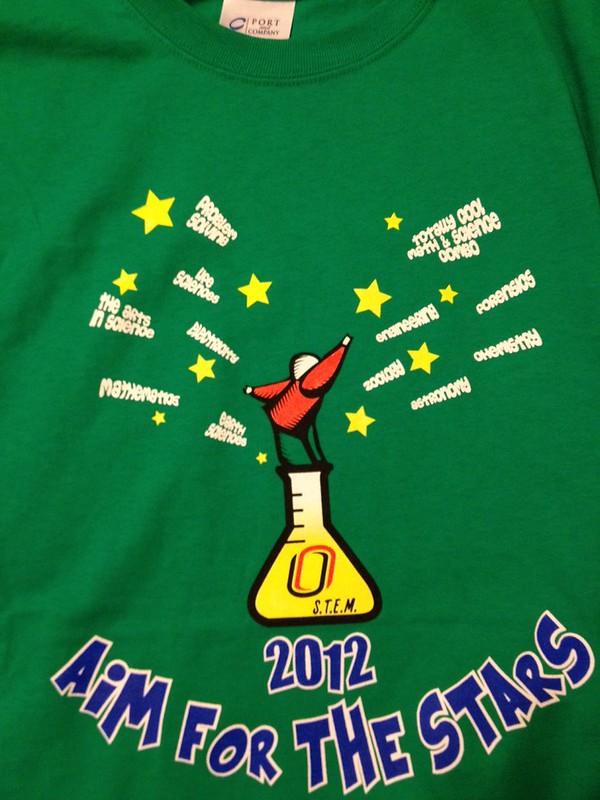
Another summer. More exciting and educational science camps! This year my 10 year old son is again partaking in the University of Nebraska at Omaha’s “Aim for the Stars” series of summer camps, with exciting weekly topics ranging from robotics, biology, electricity essentials and forensics, and on to astrobiology. Forensics was a big hit, with everything from DNA and blood typing, to decomposition where a raw chicken was left outdoors in the heat all week to be examined daily by the campers. Yum, Yum!

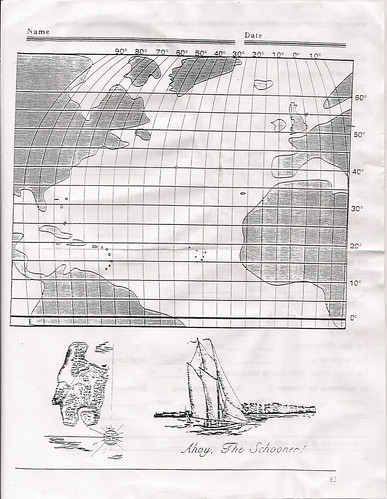
I would like to briefly point out an exercise in astrobiology that I found particularly creative—to the point of ingenious—and I think the instructor deserves huge credit. The campers were taught about navigation by sailors, and how they used the night sky to find their way to far away lands–to the Jamaican Islands. The kids were each given maps, told the time relative to Greenwich Mean Time, and their goal was to navigate using the sky to the island containing the treasure. But, you say, the camp is during the day!

Well, how’s this for a creative solution to this minor problem? They used the planetarium on site for this exercise! I love it: kids sitting in the planetarium, measuring and approximating the angle to the north star, plotting and triangulating on their maps!

trip to treasure island

Calculating and approximating latitude and longitude, to get to the Treasure Island?!

treasure map

Can anything compare to brilliant creative teaching coupled with taking full advantage of great on-site facilities?! No matter what I teach for the rest of my career, I doubt I’ll ever be able to make such an impact—certainly not on enthusiastic 10 year olds.

Posted in Education, science | Tagged , , , , , , , | Comments Off on A real education in astrobiology

Conference

I doubt that anyone has missed me over the past couple weeks, but I have been busy at a scientific conference, with another on the dock for next week. So I shall be brief, and leave you with a photo taken on an outing to a pretty little lake near Andover, New Hampshire. You can decide what kind of scientific meeting you think this is…

conference

Posted in humor, science | Tagged , , , | 13 Comments

Imaginings

What happens to someone who is “swallowed up” by work commitments? You start to imagine–or think you do…

Imaginings

The departmental hallway, recently

Posted in humor, research, science, Uncategorized | Tagged | 4 Comments

Lonely One

It’s been quite a week for me; an assortment of 6 different grant proposals having been submitted from my lab–most of them co-investigator proposals requiring a good deal of interdisciplinary coordination. In fact, the last few days I felt very much the way a chess grandmaster must feel when playing those “simul-chess” games against 20 opponents at the same time.

And this of course reminds me that I cannot fail to mention the incredible World Championship Chess between contender Boris Gelfand (Israel) and reigning champion Vishwanatha Anand (India) who managed to maintain his title after 12 tough regular games that ended with 10 draws, and a victory for each. So during this time I was further preoccupied with getting up at 5 am CST to watch the 12 noon rapid chess tiebreaker games on Wed. morning, in which Anand prevailed.

But I have fallen into a familiar chess trap–in that this blog was not intended to discuss chess–I’ll leave that to my more chess-advanced colleague in Manchester–and go back to what I was trying to say.

Which was–is: that in thinking about careers in life sciences, I think one of the  differences between students/postdocs and principal investigators that is rarely mentioned is the “loneliness factor.”

What is he on about now, you ask. Has he actually gone bonkers? Is it a breakdown of some sort?

No. Truthfully, for those students or postdocs out there aspiring for an academic career, this is something to prepare for. Really. It’s lonely at the “top.”

Think of it: Scientifically, at most academic institutes, as a PI you will likely be the resident expert in your general field. In other words, scientifically speaking, it’s unlikely that you will have someone to talk to about your studies on a routine basis. Not like a postdoc or student who can discuss his or her work with another student or postdoc in the same lab in a collegial manner. And I’ve witnessed some PIs who have had a terrible time internalizing this idea.

Then all the administrative and grant-writing work; all done “behind the scenes” in a sterile office. As a PI you can hardly go and whine about the status of funding to your students and postdocs (well, perhaps occasionally!)–it’s my job to encourage and motivate, not scare the living daylights out of them! lt’s lonely out there!

So it’s no wonder PIs get the “blues” now and then. And I just happened to discover a beautiful old song by 17 year-old Janis Ian, a favorite singer/songwriter of mine, from the 1960s entitled “Lonely One.” That did it for me. I guess I’ll just curl up and drool into a bucket. Until the next deadline.


Posted in Education, research, science | Tagged , , , , , , , , , , | 17 Comments

We don’t need no education–at least not like this…

Anti-semitism is on the rise in Europe. Strictly speaking, this may not be true, as Jews have traditionally had a difficult time in the “old world,” to say the least.

Why? Good question! Or is it?

I recently came across an article in Israel’s Haaretz newspaper describing a very distasteful situation in the UK. According to the article, “British high school pupils were asked to explain bias against Jews in an official religious studies exam, British media reported on Friday. More than a thousand religious studies students sitting a General Certificate of Secondary Education (GCSE) exam last Thursday, set by one of the U.K’s three major examination boards, AQA, were asked, “Explain, briefly, why some people are prejudiced against Jews.””

In defense of this brilliant question, a former chief examiner for religious studies for another examination board, Clive Lawton said “I do understand why people might react negatively to the question, but it is a legitimate one,” he said, adding, “Part of the syllabus is that children must study the causes and origins of prejudice against Jews.”

Out of curiosity, I wonder what the correct answers are to this brilliant question. Is there a real cause and origin of prejudice? Blaming Jews for killing Jesus? The blood libel? Protocols of the Elders of Zion and attempts by Jews to rule the world? Can any of this explain the Spanish Inquisition? The Dreyfus affair? The pogroms in eastern Europe that my grandparents survived? The Holocaust?

Taking things one step further, I can’t help wondering whether these high school students in the UK are awarded “bonus points” for rationalizing entirely new and as-yet-undiscovered causes and origins of prejudice against Jews. Does being creative and inventive bring extra exam points? Or should students stick to the basic and known reasons?

I think I have made my point. I sincerely hope that somebody in the education system has enough sense to put a stop to this.

Posted in Education | Tagged , , , , , , | 27 Comments

The most important biomedical-science technology advance–do we have a consensus?

I’ve blogged in the past about the changing nature of the life-sciences, and about how today’s graduate students need to be “jacks of all trades.” As I’ve noted, in the past, graduate students were required to use fewer experimental systems, but perhaps to master them more thoroughly. However, the advent of kits and companies galore has radically changed the way we do science.

But more has changed in science in the last 10-20 years than merely having biotech companies simplify techniques by selling standardized “kits” to robotically carry out a wide variety of experiments. No, there have been major and revolutionary advances in scientific technology that have been driving life-sciences forward.

Given that most of us have been in science for a few years (heh, heh), I would like to pose the question as to what you think is the most important technical advance that has driven biomedical science forward in recent years. I am going to list a few possibilities, but please feel free to add your own candidates, as I’m sure I’m going to miss quite a few.

Here are a few techniques that I think have really advanced science:

Going back a few years:

Monoclonal antibody generation–the ability to specifically design a cell line that secretes specific antibodies. Such antibodies are the mainstream of any work involving proteins.

Blotting–the detection of specific proteins on a piece of filter paper with antibodies, dubbed Western Blotting, and the detection of specific sequences of DNA or RNA on filter paper (dubbed Southern and Northern blotting, respectively). As a student, every instructor was eager to explain these techniques ad nauseum in every course offered.

Cloning and molecular biology techniques–the ability to make cDNA constructs that can be used to generate protein factories in bacteria for a variety of purposes, or to express specific proteins in actual cells.

More recently:

Model organisms–mice or even invertebrates such as flies and worms (or even zebra fish) are generated lacking specific genes or containing flawed ones to determine developmentally and in adult animals what these genes are responsible for.

Silencing RNA (SiRNA)–also known as RNA inhibition (RNAi). This revolutionary technique, barely a decade old, has allowed researchers to study the function of individual proteins in cells by blocking the expression of a specific protein of interest. This has now become the ‘gold standard’ for assessing function of a given protein, but was almost unheard of before 2002.

Proteomics–the use of mass spectrometry to rapidly and specifically identify proteins has become a key tool for all biomedical scientists.

Arrays–the use of “chips” containing hundreds or thousands of genes to determine which ones are ‘turned’ on and which ones are ‘turned off’ under various conditions or in disease cells.

The Human Genome Project–sequencing of the entire human genome, base by base, providing researchers with an online database containing all of our genes. Also unheard of 10-12 years ago as I began my post-doctoral studies.

The PubMed, online data banks, and online computation programs–not to underestimate the degree to which information technology has driven our progress. The Public library of Medicine at NIH, allowing instant access to millions of scientific abstracts (and open access papers) by simple search words, along with all the tremendous advances in computational biology have had a huge impact on the way we do science today.

Well I know I’ve only scratched the surface, so feel free to tender your own favorite technologies, and please vote! I’m going with the SiRNA, which has perhaps made the biggest impact on my own science.

Posted in research, science, Uncategorized | Tagged , , , , | 13 Comments

Thinking about science–what do I look for in a graduate student?

One of the questions that I was asked recently is “What do you look for in a graduate student?”

Just as an aside, that vaguely reminds me of a film I saw some time ago where one character asks another “Have you found Jesus?” The answer, of course, was “I didn’t know he was missing…”

But back to the serious issue of what a graduate student should be like. Ideally, I could say many things: honest, curious, meticulous, trustworthy, talented and bright, and the list goes on and on. But the really important trait, that separates the wheat from the chaff–in my humble opinion–is dedication.

Now we’ve had this discussion multiple times over the past year on OT–about what dedication really means. In particular, Jenny’s recent blog extolled the virtues of reasonable work hours, eschewing a 24/7 work mentality. I don’t disagree!

So how do I see dedication? Although some may disagree, I think dedication comes from a willingness to really engage in the science–in a manner that one is willing to keep part of the mind open to thoughts of science even outside the lab.

I don’t mean that every waking second outside the lab needs to be spent planning experiments and reading papers (although a certain amount does help, especially for those early in their careers)–but it is leaving one’s mind open–“on standby” so to speak, that shows me which young scientists are really involved in their work.

Do I have a concrete example? Well these are examples from my own experiences:
I work a lot with membrane tubules and vesicles, that look like this under the confocal microscope:

Slide1

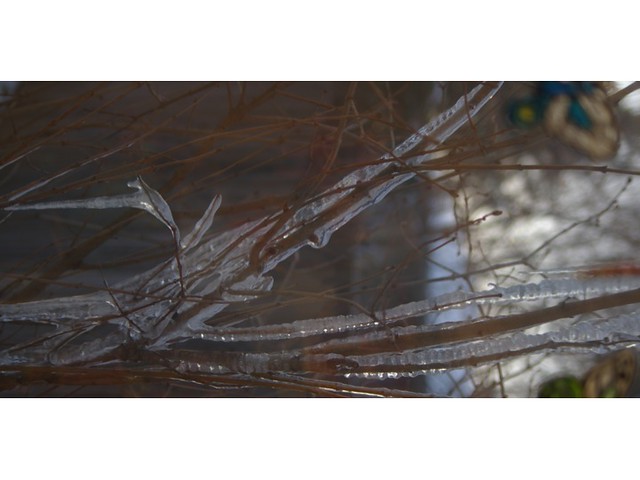
So during the winter when I looked out the window and saw these icicles, immediate my brain was seeing tubules!

Slide1

And more recently, as rain pattered down the window on the 7th floor by my office, I was also astonished to see how water drops formed “tubules” and underwent “fission” into vesicles before my very eyes!

Do I expect everyone to have such unusual imaginations to be good scientists? No.

But I do think that a 9-5 workday where science and any vestigial thoughts of it are shutdown down after hours—just won’t cut it in the big leagues.

Posted in research, science | Tagged , , , , , | 3 Comments

Art and Science–take 2

Last evening I had a wonderfully unique opportunity to sample a complex mixture of art, science and creativity at the elegant Orpheum Theatre in Omaha (circa 1927)–in the form of modern dance!

If you can spare just a few moments for a few highlights of the performance, please have a look at this video of the Momix Botanica modern dance group:

http://www.youtube.com/watch?v=WrBZmZY91oI

The group made phenomenal use of costumes, special effects, lighting and talented dance to recreate everything from a flower’s growth to fireflies on stage. Spectacular! Greatly recommended to any of you who have the opportunity, and they travel the globe…

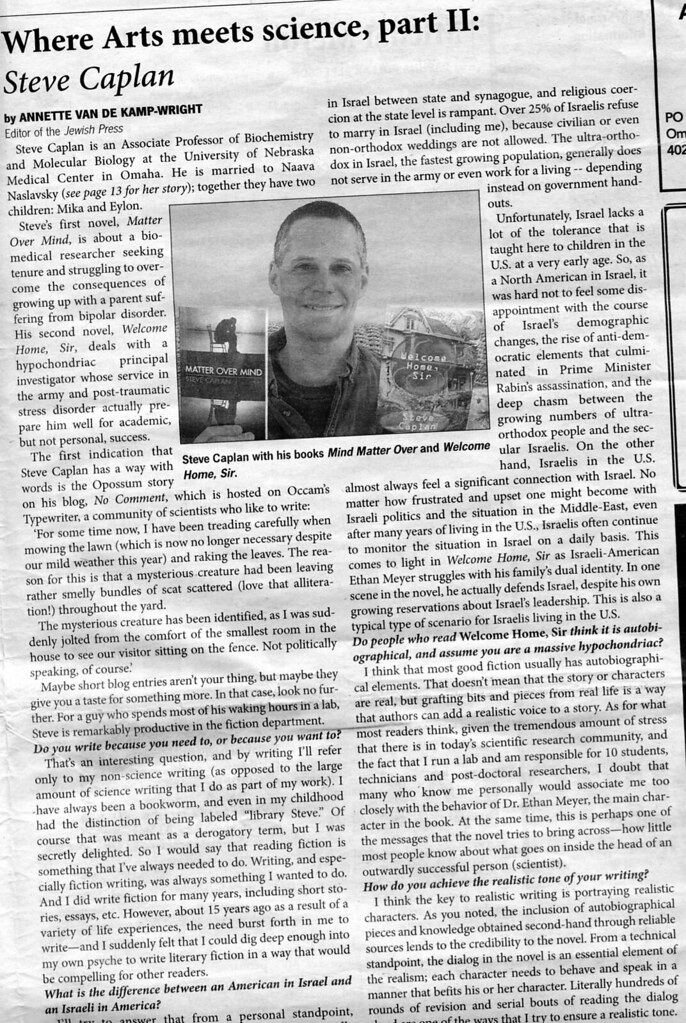
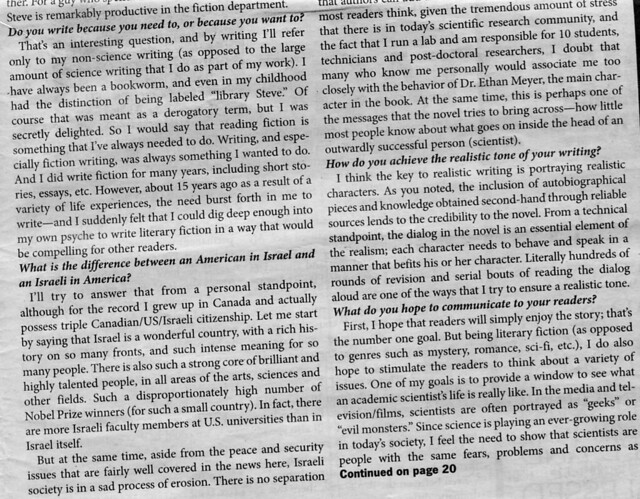
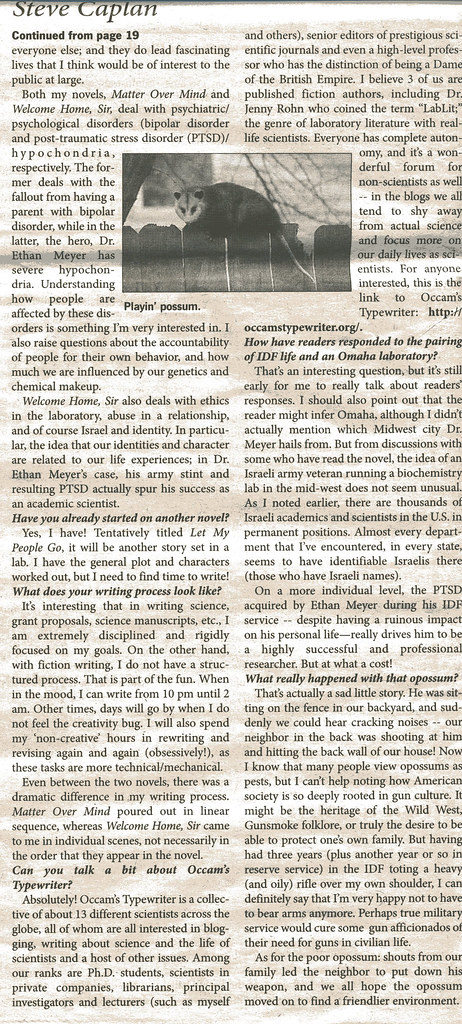
In other recent news–I’m in the news. The editor of the “Jewish Press” of Omaha interviewed me–about my two novels. I even managed to put in a plug for Occam’s Typewriter into the mix. The interview, for those with insomnia or otherwise bored-to-tears, is given below.

Happy Mother’s Day to all those mothers out there! I must say that there is clearly an unfair bias to fathers, in that Father’s Day falls outside the school year and is therefore largely a forgotten event…


steve-jp-page1

steve-jp-page2

steve-jp-page3

Posted in science, Uncategorized | Tagged , , , , , , , , | Comments Off on Art and Science–take 2

godless (yes, not goddess or goodness)

This is a post that has worked its way in my head to the top of the pile. It’s initiation was triggered by a cluster of stimuli, including discussions with friends. However watching the American Public Broadcasting Service (PBS) program (available in its entirety for free at this link) on the well-publicized Dover school board’s attempt to introduce intelligent design into the science curriculum of schools in this district several years ago (Kitzmiller vs. Dover area school district), was the real motivator.

I didn’t watch program alone; in fact the entire family climbed into bed together and watched our little laptop in fascination as the story depicted the attempts of new earth creationists to disguise their “intelligent design” as a valid scientific theory.

While I had been aware of this famous court case, I have not been up to date on all the specific details. It was remarkable observing to what lengths the anti-evolutionists went to disguise the inherent fundamentalist religious agenda that they were trying to promote.

The parents and science teachers in Dover country, Pennsylvania, eventually triumphed over the school board in court–and were even able to show that a creationist textbook had merely been converted to an intelligent design textbook by changing a few words in a few sentences. Famously, one sentence wasn’t even properly “proofed” and it could actually be demonstrated that it still contained remnants of the word “creationism” (instead of the “intelligent design” it was now supposed to support). This intermediate, “cdesign proponentsists” (supposed to be “design proponents” but not having properly erased the “creationist”), became dubbed the “missing link” between creationism and intelligent design (see below)!

Of Pandas and People (1987, “intelligent design” version), p. 3-41:

But I do not want to debate intelligent design or creationism in this forum; it would be ‘preaching to the choir,’ as a semi-appropriate metaphor might indicate.

No, instead I would rather go a bit deeper and stir some additional controversy. One of the charges of the school board anti-evolutionists in Dover, PA, was that the teachers and those opposed to intelligent design were “godless atheists.” Just like me. Fair enough. Or is it?

Actually, no. Some of the key figures who fought valiantly for evolution and to keep creationism and its disguised form out of the classroom were not atheists at all, but rather devout believers in god, and churchgoers. In interviews, they were very much upset at being deemed godless, when in their case, religion did play an important role in their lives.

All this brings me to an interesting question: can one be a scientist and still have faith?

In my younger and rebellious days, my answer would have unequivocally been “NO.” Not that I thought that one can’t be a good scientist and have faith, but I thought–in those days of my youth–that the two were not compatible.

My views have moderated since those times, so don’t attack me YET. But although I do think differently now (despite maintaining my godless mindset), I do want the opportunity to explain how I arrived at that outlook.

As a child and later in Israel, I was absolutely horrified by the amount of religious coercion I encountered. The lack of tolerance for anyone who didn’t believe. The lack of civil rights for one who didn’t believe. In Israel, it’s as simple as there being no civil marriages, no public transport on the Sabbath, no bread allowed to be sold during Passover and the list goes on and on. It has progressed to the point of denigrating women and in some cases not allowing men to hear women sing in the military (supposedly not allowed as it is considered immodest and ‘tempting’).

So coming from such an intolerant background, where religion typically represented a rather tyrannical form of “for me to carry out my religious duties, everyone else has to do A, B and C…,” I fought back. Fire with fire.

For me, fighting back meant going to similar extremes in the opposite direction. So I formulated the following philosophy: Science is the pursuit of the truth, in a dispassionate and objective manner. Science is built on logic. Religion (and I did not discern here) on the other hand is based on a “leap of faith” that requires one to willingly suspend logic and disbelief–in order to believe. Therefore, religion opposes science and is bad.

I took this one step further, in my fight against religious coercion: if one is willing to admittedly disband logic to believe, then there is a slippery slope between believing in a god, and stepping away from that belief to other illogical beliefs that might endanger society. This too, is admittedly not unheard of. After all, most terrorist attacks and many wars result from beliefs that “god wants me to do this or that.”

Having “mellowed” over the years, or perhaps having learned that things are not so simple or straightforward–realizing now that the vast majority of  people who ‘believe’ or partake in religion are good people, tolerant, advocates of science and education, and people who often give back to their communities–I found that I desperately needed to update my thinking. And I have.

In the PBS Nova program, there is actually a statement about the young earth creationists noting that “while the vast majority of religions and religious people have been able to come to terms and make peace with the idea of evolution and Darwinism, only the extreme fundamentalists continue to put up a fight.” And this is certainly true.

So while I remain a proud godless atheist, if your own beliefs do not require converting me, I accept you just as you are!

How about you?

Posted in Education, science | Tagged , , , , , , , , , | 2 Comments